
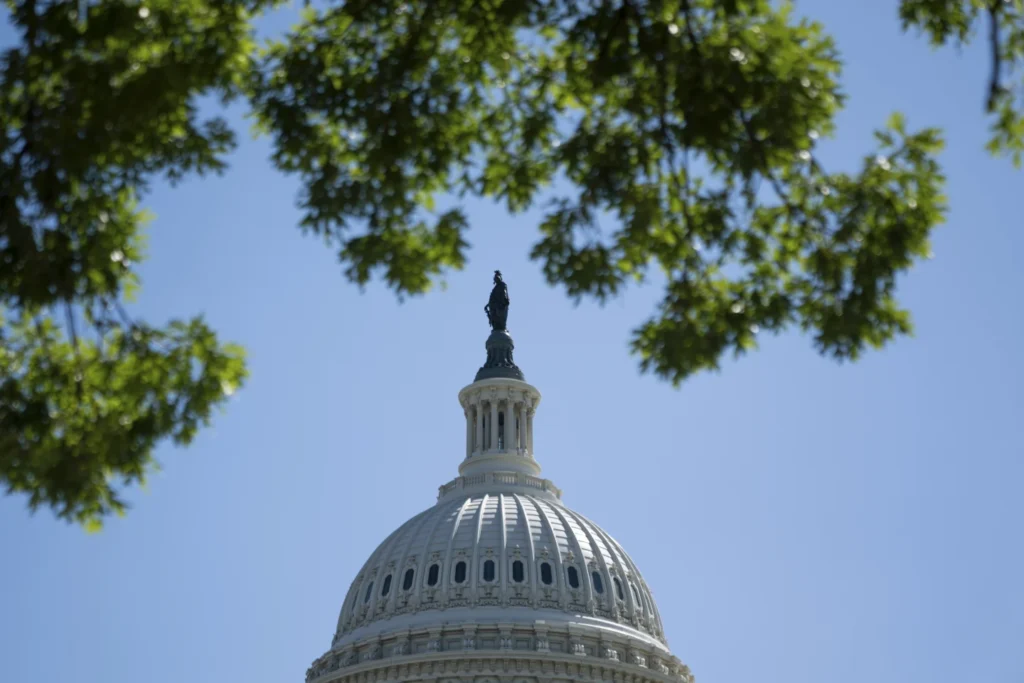
WASHINGTON, June 4 – The U.S. House of Representatives approved a major legislative package on Thursday, aimed at strengthening support for Ukraine and increasing pressure on Russia through fresh sanctions, highlighting deep divisions within Washington over the future of American involvement in the ongoing conflict. The measure passed despite objections from Republican leadership and reflects increasing frustration among lawmakers over the pace and direction of President Donald Trump’s handling of the war.
The legislation, introduced by Representative Gregory Meeks of New York, combines direct financial assistance, security support and economic pressure measures intended to reinforce Ukraine’s ability to sustain its defense efforts. Supporters argued the package would strengthen Kyiv’s negotiating position at a critical stage of the war, while opponents questioned its timing and effectiveness.
The bill’s passage also marks another notable moment in Congress where lawmakers moved independently of the White House on a major international issue. Earlier this week, the House also passed a war powers measure related to U.S. military involvement in Iran, signaling broader debates over executive authority and foreign policy decisions.
Lawmakers Split Over Future of U.S. Support for Ukraine
The proposal approved by the House includes more than $1 billion in security and reconstruction assistance for Ukraine. In addition, it opens access to roughly $8 billion in defense-related financing structured through loans that Ukrainian authorities could use to maintain military operations and strengthen national defense capabilities.
The bill passed by a vote of 226 to 195, reflecting a coalition of Democrats and a small group of Republicans who joined in support. In total, 207 Democrats, 18 Republicans and one independent lawmaker voted in favor. Representative Ilhan Omar was among the Democrats who voted against the measure, joining nearly all Republican opponents.
Supporters managed to force consideration of the legislation through a discharge petition, a congressional procedure that allows a simple majority of House members to bypass leadership and bring legislation directly to the floor. The petition reached the required 218 signatures, allowing the measure to move ahead despite resistance from Republican leaders.
The use of discharge petitions has become increasingly visible during this Congress. While historically viewed as difficult and rarely successful procedural tools, lawmakers have recently used them to advance several measures that leadership had been reluctant to schedule for votes.
Representative Gregory Meeks argued during House debate that the legislation represented more than a financial decision and instead involved broader questions regarding U.S. commitments and international credibility.
Addressing fellow lawmakers, Meeks said Congress faced a straightforward choice between helping Ukraine negotiate from a position of strength or allowing Russia to outlast international resolve. He warned against abandoning support that has defined American policy since the war began.
Supporters of the bill repeatedly framed the conflict in moral and strategic terms. Representative Don Bacon of Nebraska, one of the Republicans who broke with much of his party, voiced strong support for the legislation and described the decision as a test of values.
Bacon argued during debate that lawmakers faced a clear question regarding whether they intended to stand with democratic principles or allow aggression to prevail.
However, many Republicans expressed concerns that the bill no longer reflected current realities surrounding the war or ongoing discussions taking place between Congress and the White House.
Representative French Hill of Arkansas, who chairs the House Financial Services Committee, said he remains a consistent supporter of Ukraine but described the proposal as outdated and potentially problematic. According to Hill, portions of the legislation actually provide lower security funding than amounts already contemplated under this year’s defense framework.
Hill also warned that certain provisions could unintentionally influence defense spending behavior among some NATO members.
Representative Brian Mast of Florida, chairman of the House Foreign Affairs Committee, criticized the measure more sharply, suggesting it had become less about helping Ukraine and more about challenging President Trump’s foreign policy agenda.
Mast argued that the proposal relied on older policy assumptions and did not adequately account for changing diplomatic and military circumstances.
Senate Prospects Remain Uncertain as Political Pressure Builds
Although House approval marks an important step, the measure’s future remains unclear in the Senate, where supporters acknowledge significant challenges remain.
Several lawmakers backing the proposal said they understand that obtaining the 60 votes necessary in the Senate could prove difficult without direct support from President Trump. Still, advocates believe the House vote itself carries political significance beyond the legislative outcome.
Representative Brian Fitzpatrick of Pennsylvania, another Republican who supported the bill and signed the discharge petition, said the vote sends an important message not only to lawmakers but also to Ukrainians defending their country.
Fitzpatrick suggested the measure demonstrates that support for Ukraine still exists within Congress and that lawmakers are prepared to use their constitutional authority to influence policy.
The legislation arrives at a time when securing additional assistance for Ukraine has become increasingly difficult compared with earlier years of the war. According to figures released in recent federal oversight reports tied to Operation Atlantic Resolve, the United States has approved approximately $195 billion connected to Ukraine response efforts since Russia launched its full-scale invasion. Around one quarter of that amount has been directed toward replenishing U.S. military stockpiles and supporting domestic defense readiness.
The last major aid package specifically designed to expand support for Ukraine was approved in April 2024, although smaller allocations have since appeared within broader government spending legislation.
House Republican leadership attempted to prevent passage of the current measure. Majority Leader Steve Scalise argued that lawmakers and White House officials were already involved in active discussions designed to produce a stronger and more comprehensive package.
Scalise said those negotiations remained complex but were progressing in good faith. He cautioned that approving separate legislation could complicate or delay ongoing discussions.
Meanwhile, events on the battlefield continue shaping political discussions in Washington. More than four years after Russia’s full-scale invasion of Ukraine, fighting continues with no clear conclusion in sight. Recent days have seen renewed long-range missile attacks and intensified military operations from both sides.
Efforts to achieve a negotiated settlement have also struggled. Diplomatic initiatives led by the United States have shown little progress, while international attention has recently shifted toward tensions involving Iran.
Ukrainian President Volodymyr Zelenskyy previously agreed to an unconditional ceasefire proposal supported by President Trump. Russian President Vladimir Putin, however, declined to accept the proposal, leaving peace efforts stalled.
In the Senate, attention has increasingly focused on separate legislation that would impose broad tariffs and secondary sanctions targeting countries purchasing Russian oil, natural gas, uranium and other key exports that help finance Moscow’s military activities. Despite considerable discussion, that proposal has yet to move forward.