
WASHINGTON/KYIV, Nov 25 – Efforts to push forward a new peace framework for the war in Ukraine entered a tense new phase as senior United States and Russian officials met quietly in Abu Dhabi. The meeting came at a moment when Ukraine faced another deadly night of missile and drone strikes on its capital, adding urgency to a diplomatic process already marked by deep uncertainty and suspicion. While Washington is working to accelerate discussions, Kyiv remains wary that any rushed compromise could force it into concessions it has long refused.
Fresh Negotiations Under Pressure
The meeting in Abu Dhabi, led by United States Army Secretary Dan Driscoll, was not announced in advance and was confirmed only by a United States official familiar with the administration’s latest diplomatic push. Details of who represented Russia or what specific issues were addressed were not disclosed. However, it is understood that Driscoll has taken a central role in the current phase of United States diplomacy and is also expected to hold further talks with Ukrainian representatives while in the region.
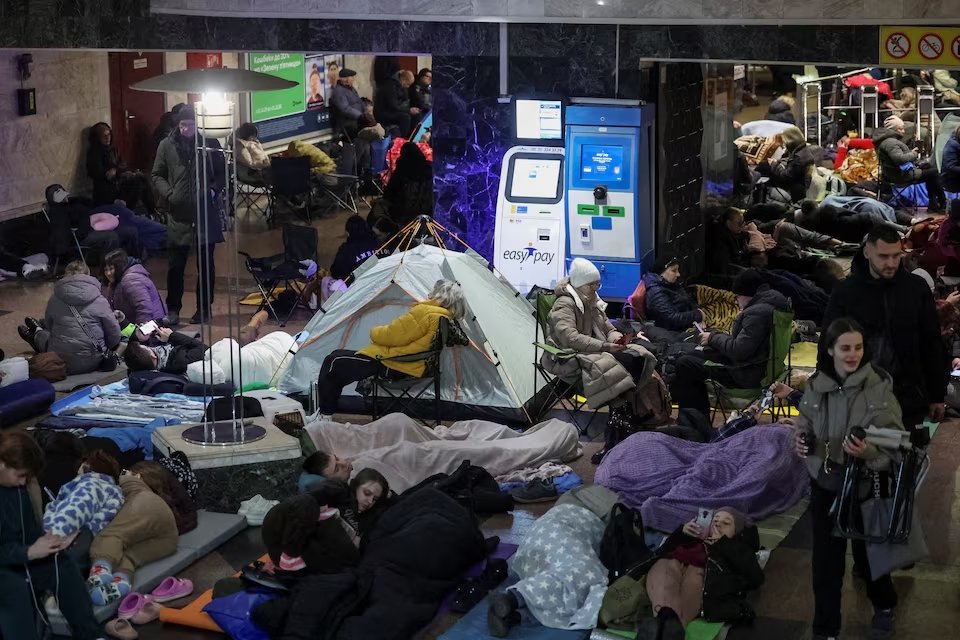
The visit came during a moment of heightened violence. Overnight strikes on Kyiv, involving missiles and large numbers of drones, killed at least six people and pushed thousands of residents to seek shelter underground. Many waited in basements or subway stations wearing winter jackets, with some even setting up tents as the bombardment stretched deep into the night.
The contrast between ongoing diplomacy and the renewed attacks underscored the stakes. For Kyiv, the push for a new peace plan arrives at a time of political pressure, battlefield challenges, and concerns that foreign partners may be reconsidering their long term strategies.
Zelenskiy Signals Openness but Holds Firm on Key Issues
Ukrainian President Volodymyr Zelenskiy acknowledged that elements of the latest United States proposal had improved after recent conversations in Geneva, noting that the original 28 point outline had been revised and trimmed. He said the updated draft included some points that better matched Ukraine’s interests, yet several sensitive matters still demanded direct discussion with President Donald Trump.
In his nightly address, Zelenskiy said that producing a final document would involve difficult decisions and careful analysis. He emphasized that the most delicate topics would require one on one engagement with President Trump, and that Ukraine would continue to insist on terms that protect its sovereignty and future security.
The Kremlin, meanwhile, offered no details about the Abu Dhabi meeting, stating only that the peace framework emerging from Washington represented the main active proposal on the table. A Kremlin spokesperson noted that the document could form the basis for negotiation but stopped short of expressing support for its specific terms.
The proposal has drawn intense scrutiny because it is widely believed to ask Ukraine to give up additional territory, restrict the size of its military, and abandon any future effort to join NATO. Ukrainian leaders have repeatedly rejected such conditions, arguing that they amount to forced capitulation rather than genuine peace.
Europe Urges Caution and Avoidance of Capitulation
European governments, particularly those that have been strong supporters of Ukraine since the start of the conflict, expressed concern that an accelerated peace plan might pressure Kyiv into accepting terms favorable to Moscow. A group of allied nations, sometimes referred to as the coalition of the willing, is scheduled to hold a virtual meeting to review the situation and coordinate positions.
French President Emmanuel Macron said efforts toward peace were welcome, but warned sharply that Europe must not back a settlement that would leave Ukraine weakened or coerced. He stressed that only Ukraine can determine what, if any, territorial compromises are acceptable, and that Europe must stand behind Kyiv’s right to decide its own future.
Macron added that any plan limiting the size of Ukraine’s armed forces would be unacceptable, stating that such restrictions would leave the country vulnerable to future aggression. He also noted that frozen Russian assets held in Europe remain under European discretion and that decisions regarding their use would not be dictated by outside proposals.
Rising Tensions Beyond Ukraine
Beyond the immediate battlefield, tensions along NATO’s eastern edge continued to rise. Romania reported that multiple drones had crossed into its airspace near the Ukrainian border early Tuesday. Fighter jets were scrambled to intercept, and at least one drone was tracked as it moved deeper into Romanian territory. The incident heightened concerns about spillover risks from the war, which has already seen suspected Russian drones enter the airspace of several neighboring nations in recent months.