
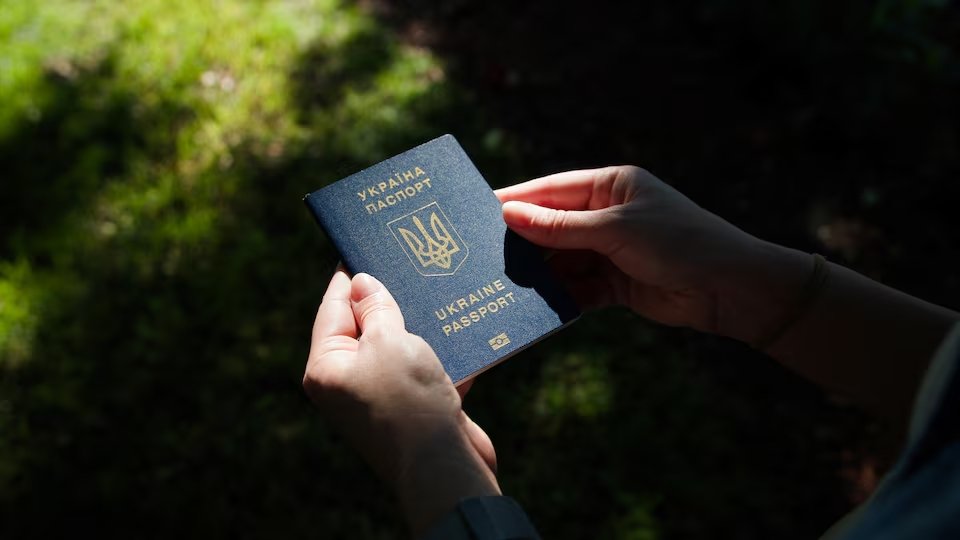
WASHINGTON, Nov 23 – Thousands of Ukrainians who fled the war and found temporary refuge in the United States are now confronting a new crisis, one created not by conflict overseas but by stalled immigration decisions at home. As processing delays stretch for months, many individuals who once felt a measure of safety now live with the fear of detention, job loss, and the possibility of being forced to leave the country they hoped would give them stability. Their lives, careers, and families have been thrown into turmoil as they wait for answers that never seem to come.
A Growing Community in Limbo
The humanitarian program launched in 2022 allowed nearly 260,000 Ukrainians to enter the United States for an initial period of two years. For many, it provided a lifeline during one of the darkest periods of their lives. Yet internal government data shows that nearly 200,000 people were at risk of falling out of legal status by late March due to slowdowns in application processing. When work permits expire before renewals are approved, individuals lose not only their employment but often their health coverage, financial stability, and sense of safety.
One of them is Kateryna Golizdra, 35, who had built a new life in Florida after leaving her home in Bucha, a city devastated by violence in the early days of the invasion. When her legal status expired in May, everything she had worked to rebuild came undone. She lost her job at a luxury hotel, where she earned over $50,000 a year. Losing the position also meant losing her health insurance, leaving her unable to access essential check ups for a liver condition. On top of her personal stress, she could no longer help support her mother in Germany, who was also displaced by the war.
Golizdra said she wakes up every day uncertain about what might happen. She worries she could be detained at any moment now that her permission to stay has lapsed. Despite months of waiting, she still has no update on her renewal. She describes her life as running in circles, always exhausted, always anxious, and never sure how long she can keep living this way.
Deepening Hardship for Families and Workers
Interviews with two dozen Ukrainians reveal a shared pattern of struggle. Many lost their jobs after their work permits expired. Some were tech specialists, teachers, designers, or planners. Others were students trying to balance education with survival. With no income, people have emptied their savings, borrowed from friends, or turned to community aid groups just to cover rent and groceries.
Because of fear of arrest, some individuals now stay mostly indoors, limit travel, or avoid public places. A few have already left the United States for places like Canada, European countries, or parts of South America. Their choice to leave has nothing to do with opportunity elsewhere. Instead, it reflects fear of detention and the possibility of long term bans if they remain without legal status.
Returning to Ukraine is simply not an option for many. Golizdra, for instance, could not return to Bucha. Her home was set on fire when Russian troops stormed the city. Later, after Ukrainian forces regained control, hundreds of civilian bodies were found. The trauma of what she witnessed and the danger that remains make the idea of returning unimaginable.
Processing delays have worsened uncertainty. Earlier this year, approvals were paused for several months. Even after a federal judge ordered the government to resume renewals, only a small number of applications were processed. A new fee requirement of more than $1,000 per applicant has added another barrier for families already struggling financially.
Ukrainian community advocates say they are receiving steady calls from people reporting detentions of loved ones. Individuals have been taken into custody while working construction jobs, delivering food, driving for ride share companies, or simply being present during large enforcement sweeps in areas like Chicago and northern Ohio. Many who followed every rule now feel as if they are being treated unfairly despite their efforts to comply with the law.
A Difficult Decision for Those Choosing to Leave
For some, the fear of detention has become so intense that they have chosen to leave voluntarily. Out of the two dozen people interviewed, six decided to depart the United States rather than risk what could happen if authorities detained them.
Among them is Yevhenii Padafa, a software engineer who moved to Brooklyn in 2023. He submitted his renewal application early, hoping to avoid complications, but his permission to stay expired in September before any decision was made. Terrified that remaining without status could bar him from ever returning, he tried to arrange his own departure using a government app meant to facilitate travel for those voluntarily leaving the country.
The administration had previously promised that such individuals would be provided a free outbound flight and a financial bonus upon departure. Padafa planned to relocate to Argentina, a country that offers a humanitarian pathway for Ukrainians and has a lower cost of living. But the app would not allow him to book a flight there, only to Ukraine. Because returning to Ukraine would put him at immediate risk of being sent to the front lines, he decided to travel to Buenos Aires on his own, even though he could barely afford it. He reached the city in mid November with almost no money and planned to sell his laptop to pay for his first month of rent. For him, leaving the United States was devastating but necessary. He said he would rather face homelessness elsewhere than risk returning to Ukraine.
The stories of Golizdra, Padafa, and many others reveal a community caught between war abroad and uncertainty at home. Their futures remain tied to decisions still pending, and until those decisions are made, thousands will continue living in fear, waiting for the next update that could determine the direction of their lives.