
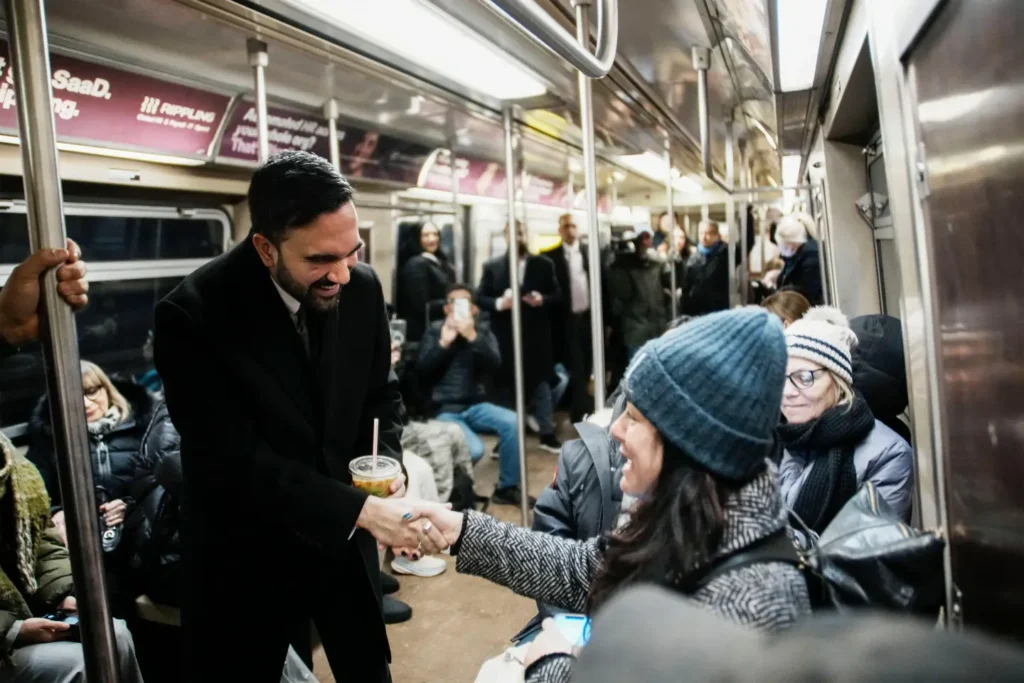
NEW YORK, Jan 02 – Less than a day after thousands of energized supporters packed Manhattan to witness a historic inauguration, Zohran Mamdani stepped into his first full day as mayor of New York City with a scene many residents know well. Wrapped in winter layers against biting cold and showing signs of an oncoming flu, the city’s youngest mayor in modern history left his modest Queens apartment and headed for the subway.
The image was instantly symbolic. The 34 year old democratic socialist, whose election reshaped the city’s political conversation, chose not to retreat behind motorcades or closed doors. Instead, he began governing the nation’s largest city the same way millions of New Yorkers start their day, navigating public transit while preparing for a packed schedule of decisions, announcements, and scrutiny.
Unlike a typical commuter, Mamdani’s trip was accompanied by security personnel, aides, and cameras documenting every step. Neighbors paused him in the hallway and on the sidewalk, offering congratulations and encouragement. For a mayor whose campaign leaned heavily on grassroots energy and accessibility, the morning commute set the tone for what his administration wants to project.
A Commute Meant to Signal Connection
On the Manhattan bound train, Mamdani blended public engagement with preparation. He posed for selfies with surprised riders, chatted briefly with commuters, then settled into a corner seat to review briefing documents for his first day of meetings at City Hall. At one stop, two French tourists approached him, puzzled by the attention. Introducing himself simply as New York’s new mayor, Mamdani was met with skepticism until he lifted a tabloid newspaper featuring his inauguration photo on the front page.
Public transit has long been a stage for New York mayors seeking to demonstrate relatability. Former mayors including Eric Adams, Bill de Blasio, and Michael Bloomberg all made subway appearances early in their terms, often to emphasize policy priorities or personal style. For Mamdani, the symbolism carried added weight. Throughout his campaign, he pledged that city leadership should reflect the daily realities of working New Yorkers, not operate above them.
By the time Mamdani arrived at City Hall, images and video from the subway ride were already circulating widely on social media. Supporters praised the gesture as authentic, while critics dismissed it as carefully choreographed. Either way, the message was clear. Mamdani intended to be seen, accessible, and visibly engaged with the city he now leads.
The commute was also consistent with his inaugural address, in which he promised a government that, in his words, looks and lives like the people it serves. His early actions on housing and public engagement suggest that this theme will remain central to his administration’s identity.
Early Decisions and Policy Signals
Housing policy, a cornerstone of Mamdani’s campaign, featured prominently in his first hours as mayor. Shortly after his swearing in ceremony the previous day, he traveled to a Brooklyn apartment building where tenants have long accused their landlord of neglect and unsafe conditions. Addressing a crowd organized by a tenants union, Mamdani pledged that the city would intensify its legal battle against landlords accused of violating housing laws.
City housing advocates present at the event said the appearance marked a clear shift in tone from previous administrations. According to tenant organizers, the mayor’s office committed to coordinating more closely with enforcement agencies and legal teams to hold property owners accountable.
Back at City Hall on Friday, Mamdani began formal administrative work. He signed a series of internal directives and announced the creation of a new “mass engagement” office. The office, according to aides, is designed to replicate elements of his campaign’s field operation, focusing on direct outreach, community meetings, and participation from residents who have historically felt excluded from city politics.
The announcement drew attention from governance experts, who noted that while community engagement offices exist in various forms across city agencies, formalizing it at the mayoral level reflects Mamdani’s emphasis on participatory politics. City Hall officials said details about staffing and budget allocations for the new office would be released in the coming weeks.
However, not all of Mamdani’s early actions were met with applause. One of his first executive decisions involved revoking several orders issued late in his predecessor’s term. Among them were measures related to Israel, including the adoption of a controversial definition of antisemitism and restrictions preventing city agencies and employees from supporting boycotts or divestment related to the country.
Political Backlash and a Cautious Response
The decision immediately sparked backlash from some Jewish advocacy organizations and political leaders. The Israeli government publicly criticized the move on social media, accusing the new mayor of inflaming tensions at a sensitive moment. Several local groups echoed concerns that rescinding the orders could weaken protections against antisemitism.
Facing questions from reporters on Friday, Mamdani addressed the controversy using prepared remarks. He emphasized that his administration remains committed to combating hate and discrimination in all forms. He pointed out that the Mayor’s Office to Combat Antisemitism remains intact and operational, and said the revoked orders were intended to reset policies he believes were rushed and divisive.
Political analysts say the episode highlights the intense scrutiny Mamdani faces, particularly given his outspoken criticism of Israeli government policies and support for Palestinian human rights. Unlike many new mayors, Mamdani enters office already well known nationally, with both strong supporters and vocal critics watching his every move.
Standing outside City Hall, surrounded by supporters and onlookers several rows deep, phones raised to capture the moment, Mamdani acknowledged the stakes. He said New Yorkers are allowing themselves to believe again in the potential of city government, but warned that faith will only last if it is matched by tangible results.
As his first full day came to a close, practical matters remained on his agenda. Mamdani is expected to move into Gracie Mansion, the official mayoral residence on Manhattan’s Upper East Side, before the lease on his Queens apartment expires later this month. For now, the mayor who rode the subway to work is balancing symbolism with substance, aware that the expectations surrounding his administration are as immense as the city itself.