
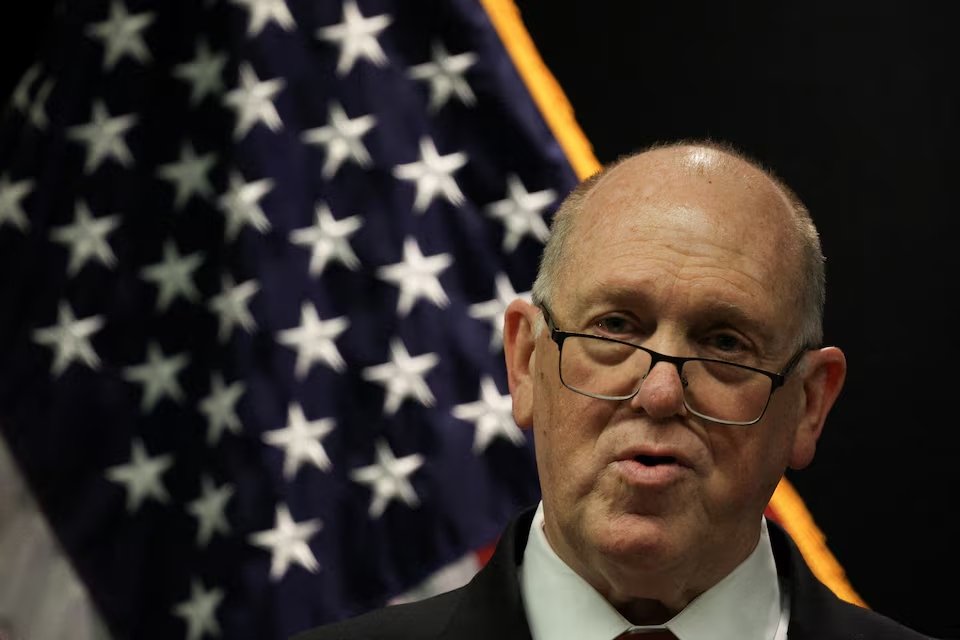
WASHINGTON, Feb 12 – The White House has confirmed that President Donald Trump has agreed to bring an end to the large scale immigration enforcement surge that has unfolded over the past several weeks in Minnesota, following mounting public backlash, legal challenges, and growing criticism from both Democratic and Republican officials. The decision, announced by Trump’s border czar Tom Homan during a press briefing in Washington, marks a significant shift in the administration’s approach after one of the most controversial immigration operations of Trump’s current term.
According to Homan, the drawdown of federal immigration agents in Minnesota is already underway. He said he personally recommended concluding the operation and that the president agreed with that assessment. The surge, formally known within the administration as Operation Metro Surge, involved the deployment of roughly 3,000 armed immigration enforcement officers to the state by late January. Prior to the operation, Minnesota had an estimated 150 federal immigration agents assigned to it, making the scale of the deployment unprecedented for the region.
The operation was framed by the Trump administration as a necessary response to what it described as an increase in undocumented migration and related criminal activity in the Upper Midwest. However, from its earliest days, the surge sparked unrest, particularly in Minneapolis, the state’s largest city. Residents organized street protests, with community members using whistles and coordinated alerts to signal the presence of federal agents conducting arrests. Masked officers wearing military style equipment became a common sight in several neighborhoods, fueling fear and anger among local residents.
Tensions escalated dramatically in January when two U.S. citizens, later identified by officials as Renee Good and Alex Pretti, were fatally shot by immigration agents during separate encounters. Both individuals had reportedly been observing or protesting enforcement activity at the time of the incidents. The deaths drew national attention and intensified scrutiny of the operation, prompting demands for accountability from civil rights groups and elected leaders.
Homan acknowledged that the situation in Minnesota had evolved and cited what he described as “unprecedented” cooperation with local law enforcement agencies as one reason the surge was no longer necessary. He said that about 700 agents had already been withdrawn the previous week and that many of the remaining personnel, most of whom had been temporarily reassigned from other states, would return to their home postings within days. Homan emphasized that the administration believed its enforcement objectives had largely been met.
Minnesota’s political leadership has been among the most vocal critics of the surge. Governor Tim Walz, a Democrat, repeatedly condemned the operation, calling it harmful to community trust and public safety. His office did not immediately comment following Homan’s announcement, but Walz has previously argued that the federal presence undermined local policing efforts and traumatized immigrant families. Walz, along with Minneapolis Mayor Jacob Frey, filed a lawsuit last month seeking to limit the scope of the operation, arguing that it violated constitutional protections.
Mayor Frey welcomed news of the drawdown in a public statement, describing the surge as catastrophic for Minneapolis. He said the city had endured weeks of fear and disruption and praised residents for standing together despite what he characterized as an occupation. Frey’s remarks echoed sentiments expressed by local community leaders who argued that the operation disproportionately targeted minority neighborhoods and eroded trust between residents and authorities.
Judicial authorities in Minnesota have also raised serious concerns. The state’s chief federal judge recently reprimanded officials within U.S. Immigration and Customs Enforcement, stating that the agency had failed to comply with dozens of court orders to release migrants who were wrongfully detained. Legal experts say such findings could have long term implications for how immigration enforcement operations are conducted and supervised by the courts.
Criticism has not been limited to Democrats. Several Republicans have publicly questioned how the operation was carried out and how the administration responded to the deaths of Good and Pretti. Initially, senior administration figures, including Homeland Security Secretary Kristi Noem, referred to the two Americans as domestic terrorists, a description that drew swift backlash when further details emerged. Civil liberties advocates argued that such language was reckless and contributed to an already volatile environment.
These concerns were echoed during a Senate hearing in Washington on the same day Homan announced the end of the surge. Minnesota Attorney General Keith Ellison testified before the Senate committee responsible for overseeing homeland security matters. During the hearing, Senator Rand Paul of Kentucky, the committee’s Republican chairman, criticized the administration’s rhetoric surrounding the killings. Paul emphasized that constitutional rights do not disappear during periods of unrest or protest, referencing protections for free speech and the right to bear arms. He warned that imprecise language from government officials could inflame tensions rather than restore order.
The Minnesota episode has become a flashpoint in the broader national debate over immigration enforcement, federal authority, and civil liberties. Supporters of the surge argue that aggressive enforcement is necessary to uphold immigration law, while opponents say the operation demonstrated the risks of militarized policing and insufficient oversight. Analysts note that the administration’s decision to scale back may reflect a calculation that the political and legal costs of continuing the operation outweighed its benefits.
As agents depart and normal enforcement levels resume, questions remain about accountability for what occurred during the surge. Investigations into the fatal shootings are ongoing, according to statements from federal authorities, and civil lawsuits are expected to proceed. For many Minnesota residents, the end of the operation brings relief, but also lingering distrust and unresolved grievances.