
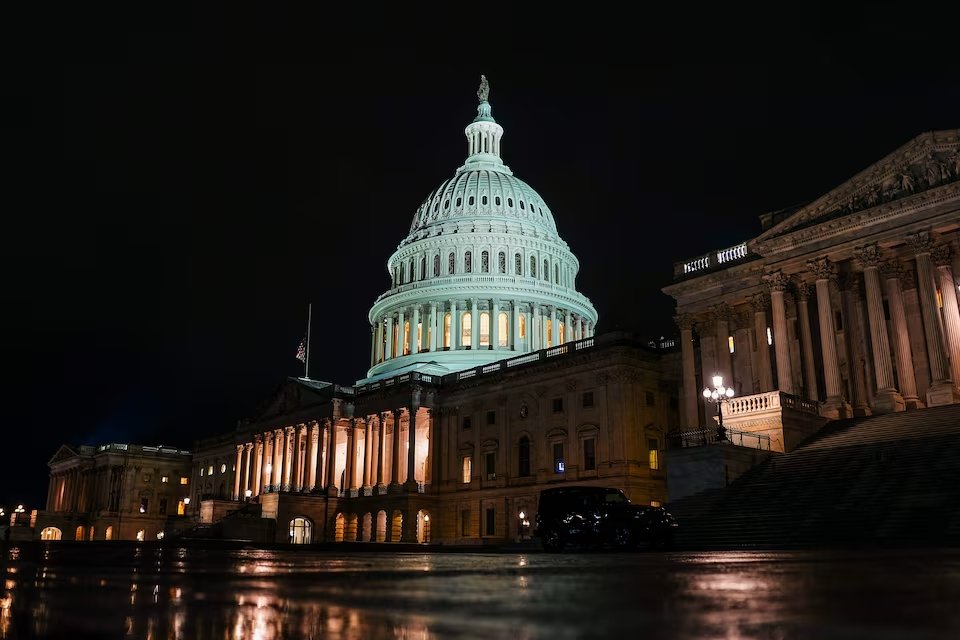
WASHINTON, Feb 2 – Lawmakers in the U.S. House of Representatives returned to Capitol Hill on Monday to begin consideration of legislation aimed at ending a partial federal government shutdown that took effect over the weekend, with leaders signaling that a final vote could take place as early as Tuesday if procedural hurdles are cleared.
The lapse in funding began Saturday after Congress failed to approve new spending authority for several major federal departments, including Defense, Homeland Security, State, and Treasury. The breakdown stemmed largely from disagreements over immigration enforcement policy, which has become one of the most contentious issues dividing lawmakers from both parties. Despite the shutdown, the immediate impact on the public has been limited, as most essential personnel have continued to work without interruption. Military service members, air traffic controllers, border agents, and other critical staff have remained on duty under federal law.
The current funding gap follows a familiar pattern in modern congressional history. According to data compiled by a congressional research office that tracks budget disruptions, the federal government has experienced multiple short shutdowns over the past several decades, many lasting only a few days and producing minimal real world disruption. This episode is widely expected to follow that pattern, particularly when compared with last year’s shutdown that stretched on for more than six weeks and caused widespread furloughs, delayed services, and economic uncertainty.
At the center of the current effort is a bipartisan agreement approved by the Senate late last week. The package would temporarily restore funding for shuttered agencies while allowing lawmakers additional time to negotiate longer term solutions, particularly around immigration enforcement authorities. Senate passage was decisive, with support from both major parties, reflecting a shared desire to prevent a prolonged shutdown and its political fallout.
Attention has now shifted to the House, where the path forward is more complicated. Republican leaders control the chamber by a slim margin, leaving little room for defections. Party leadership has begun laying the procedural groundwork for a swift vote, starting with committee consideration scheduled for Monday. Lawmakers familiar with the process said debate could extend late into the night as members from both parties press for changes or air objections.
Representative Tom Emmer of Minnesota, the third ranking Republican in the House leadership, said lawmakers are aiming to bring the bill to the floor on Tuesday. His comments echoed broader leadership messaging that emphasized urgency and the need to stabilize government operations quickly. Speaker Mike Johnson has also indicated that restoring funding as soon as possible is a top priority, though he has acknowledged the challenges posed by the narrow margin and internal divisions.
Passage, however, is far from guaranteed. Some House Democrats have expressed strong reservations about the deal, arguing that it does not go far enough in addressing concerns about immigration enforcement practices. Their criticism intensified following recent incidents involving federal agents that resulted in the deaths of two U.S. citizens in Minnesota, events that have drawn national attention and prompted calls for increased oversight. Several Democratic lawmakers have said the funding extension should include clearer limits or additional time to negotiate constraints on enforcement actions carried out under the current administration.
At the same time, opposition is also emerging from the Republican Party’s right flank. Some conservative lawmakers have signaled they are uncomfortable supporting any spending measure that does not include stricter immigration provisions or deeper cuts to federal programs. This ideological split places leadership in a difficult position, as losing even a small number of votes from either side could derail the bill.
The vote math is becoming even tighter with the expected arrival of a new Democratic member. Representative elect Christian Menefee of Texas won a special election over the weekend and is anticipated to be sworn in soon. He will fill a vacancy left by the late Representative Sylvester Turner, who died earlier this year after only weeks in office. Once Menefee takes his seat, the Republican majority will shrink further, leaving Speaker Johnson with virtually no margin for error. With only one vote to spare, every absence or defection takes on added significance.
House leaders are keenly aware of the political risks associated with a drawn out shutdown. While there is disagreement over policy details, there appears to be little appetite on Capitol Hill for repeating last year’s prolonged funding lapse. Lawmakers from both parties have publicly stated that another extended shutdown would erode public trust, disrupt government services, and complicate an already volatile political environment.
Behind the scenes, aides and negotiators continue to frame the current deal as a temporary bridge rather than a final resolution. The funding measure would keep agencies operating through the end of the fiscal year while creating space for further negotiations on immigration, border security, and oversight of federal law enforcement agencies. officials familiar with the talks note that such stopgap agreements have become a common tool in managing deep partisan divides, even as they postpone more comprehensive solutions.
As the House committee debates unfold and leadership works to secure votes, federal workers and the public are watching closely. While essential services remain intact for now, a failure to act could soon lead to broader disruptions, including delayed pay for some workers and interruptions to government programs that rely on annual appropriations.
1 thought on “US House moves toward vote on deal to restore government funding as shutdown continues”