
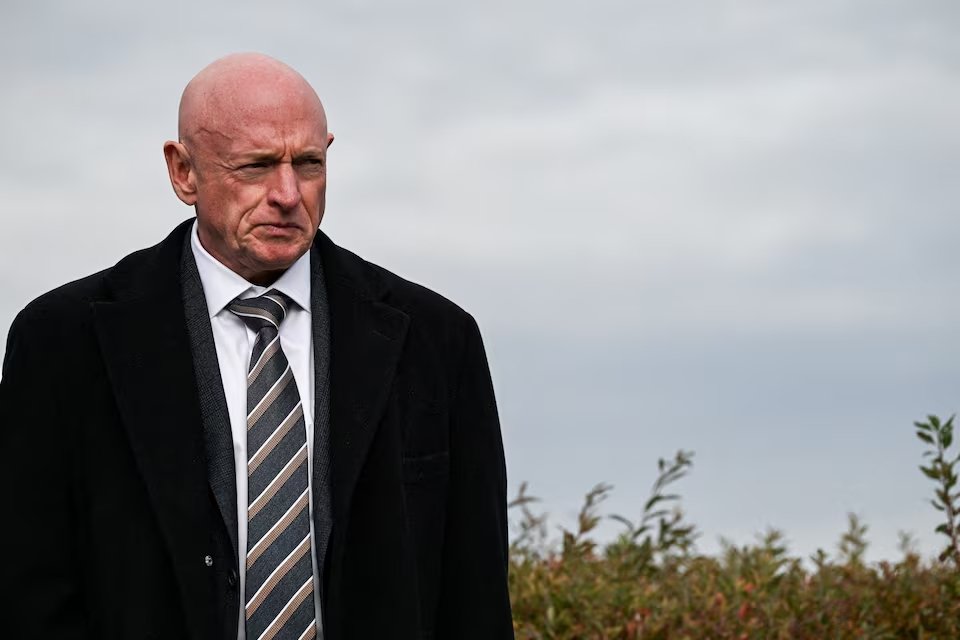
NEW YORK, Nov 26 – The recent threats by the administration of President Donald Trump to recall Senator Mark Kelly to active Navy duty and prosecute him under military law have sparked intense debate among military law scholars. According to several experts in the field, such a move would confront significant legal obstacles because the military justice system places strong emphasis on due process, clear standards of evidence, and procedural safeguards. Kelly, a former Navy captain and astronaut, appeared in a video with several other Democratic lawmakers who have military or intelligence backgrounds, urging service members to reject illegal orders. Trump labeled their messages as dangerous and disloyal, prompting federal authorities to look into the matter.
Democratic critics have accused the Trump administration of misusing military power and of endorsing controversial operations, including the destruction of suspected drug smuggling vessels from Latin America and the deployment of the National Guard in American cities. In his video message, Kelly stated plainly that service members are allowed to refuse unlawful orders, which is a long standing principle in military law. Whether his statements cross a legal boundary is now at the center of the discussion, although most experts believe they do not.
Military law principles and expert views
Military cases rarely advance unless the alleged misconduct is unmistakable. This is because charges must go through several stages of review before they ever reach a courtroom. A senior officer must authorize an initial inquiry, another official must review the findings, and legal advisers must determine whether the evidence supports the possibility of a conviction. A military judge can also reject a case outright if the allegations fall short of legal standards. These layers of scrutiny exist to prevent weak accusations from entering the system.
For this reason, many specialists doubt that Kelly’s remarks meet the threshold for misconduct. Victor Hansen, a former military prosecutor who now teaches at New England Law Boston, emphasized that a public threat of prosecution by Defense Secretary Pete Hegseth does not automatically translate into the start of legal proceedings. Hansen explained that the process is deliberate and cannot be triggered by a single high ranking official simply declaring that a court martial should take place.
The White House responded to criticism by arguing that the administration issued no illegal orders and instead accused Kelly and other lawmakers of encouraging defiance of lawful commands. A spokesperson stated that public officials should not urge service members to undermine their commander in chief. Despite those claims, specialists in military justice overwhelmingly stated that Kelly’s comments aligned with established legal doctrine, since the Uniform Code of Military Justice protects troops from being compelled to follow unlawful commands.
Geoffrey Corn, a former Army officer and law professor at Texas Tech University, expressed confidence that Kelly acted within the boundaries of the law. He explained that Kelly communicated a standard principle rather than inciting disobedience, and in his view, nothing Kelly said would qualify as contempt toward the president or as conduct unbecoming an officer.
Complex process and constitutional protections
If the case were somehow pushed forward despite the hurdles, it would still have to survive the multi step process that governs all court martial decisions. After investigators present their findings, a convening authority must determine whether a trial is appropriate. In theory, that authority could be Hegseth or even Trump, but the decision would still be subject to judicial review. At that point, Kelly would have the opportunity to raise constitutional defenses.
Kelly has already stated publicly that he will not be intimidated and does not intend to remain silent. One of his key defenses would likely involve the 1st Amendment, since his comments addressed general principles rather than directing troops to reject specific commands. He could also invoke the Speech or Debate Clause of the Constitution, which protects members of Congress from prosecution for official acts. Stephen Vladeck, a law professor at Georgetown University, has noted that Kelly has a strong argument under that clause because his statements relate directly to public service and oversight responsibilities.
There is also the issue of unlawful command influence, which has long been considered one of the most serious threats to the fairness of military trials. When senior leaders make public accusations or statements that could be interpreted as attempts to shape the outcome of a case, the integrity of the process is jeopardized. Several experts have said that public remarks by Trump and Hegseth blaming the lawmakers for disloyal behavior raise major concerns about whether Kelly could receive an impartial hearing.
Military prosecutors do have authority over retired or former service members under certain circumstances, although such cases are uncommon. One example is the conviction of retired Marine Staff Sergeant Steven Larrabee, who faced charges for conduct that occurred after he left active duty. His challenge to the court martial jurisdiction was rejected by a federal appeals court. Even so, specialists in military justice emphasize that Kelly’s case differs sharply because it centers on speech tied to constitutional protections rather than personal misconduct.