
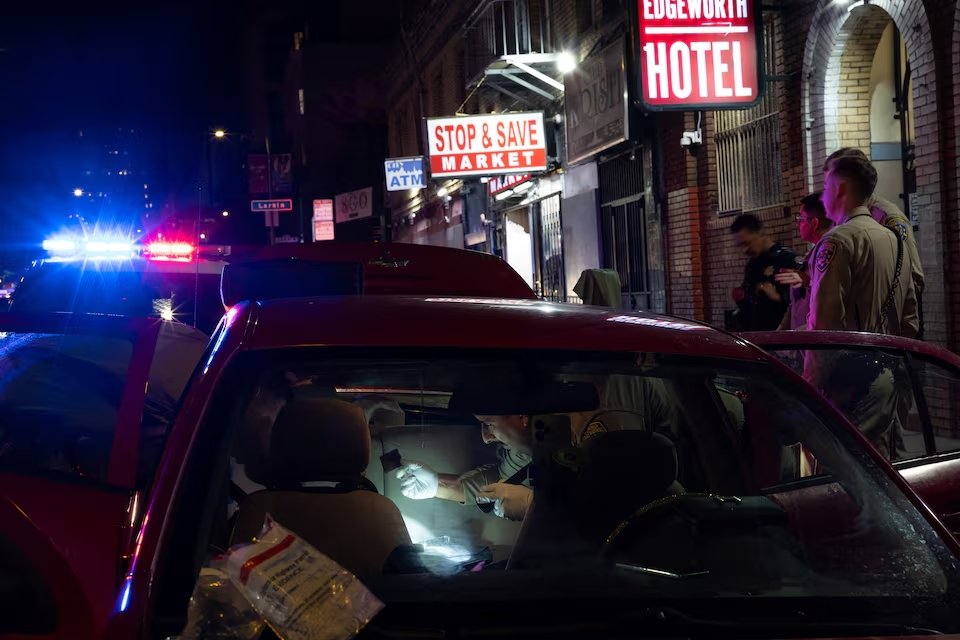
SAN FRANCISCO, Dec 2 – San Francisco was told to expect a surge of federal muscle after President Donald Trump pledged to confront what he described as a city drowning in crime and disorder. The promise included talk of agents and even soldiers to restore control. Instead of reinforcement, the opposite occurred. Federal involvement shrank, leaving local authorities with fewer hands to confront a worsening drug epidemic centered on fentanyl.
Across northern California, federal prosecutions have plummeted. Through November 1, charges filed against individuals in San Francisco and surrounding communities fell by about 40% compared to the previous year. Drug related prosecutions dropped even more, slipping by roughly half. The numbers reflect one of the steepest pullbacks in federal criminal enforcement anywhere in the country.
Most of the agents who once carried out long term investigations into traffickers and gun offenders are now busy with immigration related duties. According to several current and former officials familiar with the situation, the shift has left little capacity to pursue the complex operations needed to dismantle criminal networks. One former Justice Department official put it simply, they just do not have the agents to work traditional criminal cases anymore.
Shrinking Federal Attention
The reduction in crime focused activity arrived even as the administration continued criticizing San Francisco. Trump repeatedly referred to the city as destroyed and claimed it desperately needed federal help. As recently as October, he declared that a major federal operation was being prepared to sweep through the city. According to his own account, the plan was canceled after acquaintances reportedly urged him to stand down.
This diversion of resources is part of a broader change in federal priorities. Thousands of agents nationwide have been reassigned to immigration matters. While administration officials argue that their immigration efforts remove dangerous offenders, they offer few specifics regarding San Francisco.
Locally, the effect is unmistakable. Federal charges have fallen to their lowest level in at least two decades. Only 355 individuals had been charged by early November, significantly down from 575 the previous year. This decline touches nearly every category of federal enforcement, from gun violations to conspiracy cases. Charges connected to gun crimes in northern California fell from 70 to 42 in the same period, a drop of 40%. Drug conspiracy prosecutions were hit the hardest, falling by about two thirds.
Officials responsible for the region have suggested that many factors may be influencing the numbers, although they have avoided identifying them. They maintain that drug enforcement remains a priority, yet records show a steady slowdown that contradicts the stated commitment.
A Crackdown That Lost Momentum
The change in focus arrived not long after a high intensity federal initiative that targeted drug dealing in San Francisco’s Tenderloin district. The Tenderloin covers a dense stretch where open air drug activity has been a long running challenge. Early in the operation, federal agents worked closely with local police, conducting undercover buys and surprise operations to catch dealers who supplied the rapidly spreading fentanyl market.
To strengthen the deterrent effect, prosecutors selected specific days when they would charge nearly every arrested dealer in federal court. This meant stiffer penalties and tougher conditions, which briefly pushed many daytime dealers from the sidewalks. While the strategy created temporary disruption, the momentum faded once agents were reassigned, leaving fewer resources to track the higher level networks responsible for flooding the streets with fentanyl.
Investigations into these networks require time, surveillance, and manpower. Without consistent involvement from federal agencies, the more complex cases become difficult to complete. Several officials have acknowledged that if teams are constantly redirected to immigration duties, persistent investigative work becomes nearly impossible.
San Francisco’s police department, already strained by staffing shortages, has little capacity to replace the lost federal support. Years of departures have left the force with hundreds fewer officers than needed. Local officers continue to make arrests, and drug arrests by city police have risen roughly twenty percent so far this year. Even with those gains, the drug trade persists openly in several neighborhoods.
Health workers and community leaders warn that conditions remain dire. Fentanyl continues to take a heavy toll, claiming thousands of lives in recent years. Overdose deaths through September nearly matched last year’s level, with fentanyl responsible for the majority. In the Tenderloin, it is common to see people using drugs in broad daylight while dealers shift positions whenever patrol cars approach.
State authorities have attempted to fill some of the gap. Governor Gavin Newsom ordered additional state patrol teams into San Francisco and nearby cities. These teams offer some relief, yet the scale of the drug crisis still overwhelms local systems. Experts who work directly with people experiencing addiction say street level activity has not meaningfully declined.
The combination of fewer federal prosecutions, rising overdose deaths, and thinning police ranks has created a difficult landscape. While the city has lower violent crime rates than many major cities, the potency and accessibility of fentanyl have magnified the consequences of the enforcement slowdown.