
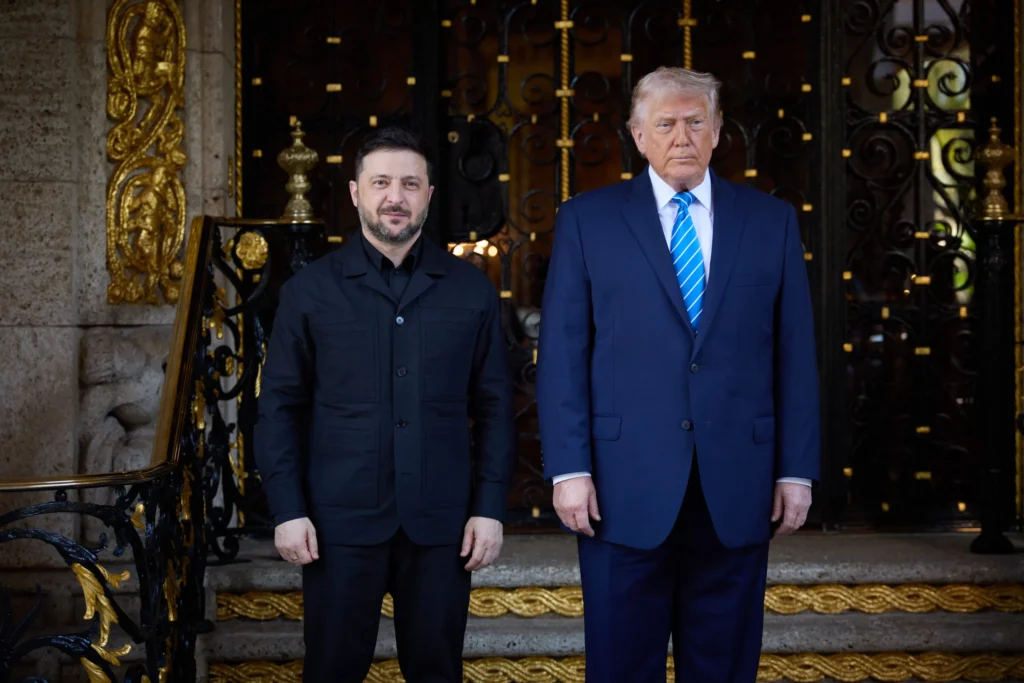
FLORIDA, Dec 29 – Efforts to end the war between Russia and Ukraine moved a step forward but remained deeply complicated following high level talks involving U.S. President Trump and Ukrainian President Zelenskyy. While both sides expressed optimism after their meeting in Florida, major political and territorial questions are still unresolved, particularly the future of eastern Ukraine and the status of critical infrastructure. Statements from Kyiv, Washington, and Moscow on Monday suggested that negotiations may be approaching a decisive phase, even as sharp disagreements persist.
According to Ukrainian officials, the discussions produced no immediate breakthrough, yet they opened the door to potential long term security arrangements for Ukraine. Zelenskyy publicly welcomed certain proposals but emphasized that peace would not come at the cost of sovereignty or public consent. Meanwhile, the Kremlin signaled cautious agreement with Trump’s view that talks are nearing their final stage, while firmly restating Russia’s core demands.
Security Guarantees and Diplomatic Signals
Following nearly three hours of private discussions at Trump’s Mar a Lago estate, both leaders struck a hopeful tone. Trump told reporters that negotiators were close to an agreement, estimating that progress stood at around 90%. However, he acknowledged that one or two unresolved issues could determine whether diplomacy succeeds or fails.
Zelenskyy later expanded on these comments during an online exchange with journalists, explaining that the United States was now offering Ukraine legally binding security guarantees lasting 15 years. He described this as a meaningful shift in Washington’s position, though he made clear that Kyiv had sought guarantees extending much longer, potentially up to 50 years.
Referring to the long history of conflict that began with Russia’s actions in Crimea in 2014 and escalated dramatically in 2022, Zelenskyy said Ukraine needed assurances that went beyond short term political cycles. He noted that Trump appeared open to discussing longer commitments and that the guarantees would include mechanisms for monitoring a peace agreement and the involvement or presence of international partners.
While Kyiv reacted positively to this proposal, details remain scarce. It is still unclear how such guarantees would be enforced or whether Moscow would accept them. Russian officials have historically opposed any arrangements they perceive as tying Ukraine too closely to Western security frameworks, a stance that could complicate negotiations.
Before meeting Zelenskyy, Trump held a lengthy phone call with Russian President Vladimir Putin. According to Ukrainian leadership statements, the U.S. president walked Putin through the proposed 20 point peace framework, addressing each element in detail. Trump later said he believed Putin was serious about ending the conflict, a claim Zelenskyy treated with caution. The Ukrainian president stressed that Russian intentions must be judged by actions, not words, especially given the ongoing fighting on the ground.
The Kremlin’s spokesperson, Dmitry Peskov, echoed Trump’s assessment that talks were approaching a decisive moment. He confirmed that another call between Trump and Putin was expected soon, after which Moscow would evaluate the results of the U.S. Ukraine discussions. However, Peskov also reiterated Russia’s demand that Ukraine fully withdraw from the Donbas region, underscoring how far apart the sides remain.
Territory, Referendums, and the Battlefield Reality
Despite movement on security guarantees, Zelenskyy made clear that the fate of key territories remains the most difficult obstacle to peace. Control of the Donbas region in eastern Ukraine and the Zaporizhzhia Nuclear Power Plant continues to divide negotiators.
Ukraine still holds portions of Donbas and has repeatedly stated it will not surrender land through negotiations. Russia, by contrast, insists on full control of the region and has shown little willingness to compromise. The Zaporizhzhia facility, Europe’s largest nuclear power plant, is currently under Russian occupation, yet both sides consider it strategically and symbolically vital.
American diplomats have previously discussed the idea of turning parts of Donbas into a special economic zone as a possible compromise. Zelenskyy dismissed the notion that such a plan was anywhere near ready, saying there was no detailed framework and that Ukrainian society would need to be consulted before any agreement of that nature could be considered.
He went further by proposing that the entire 20 point peace plan should ultimately be approved through a national referendum. According to Zelenskyy, such a vote would only be possible after a ceasefire lasting at least 60 days, giving citizens time to assess the terms. Russian authorities have already rejected the idea of any temporary ceasefire, stating that they are only interested in a permanent settlement. Trump has said he understands Moscow’s position, though critics argue it places Ukraine at a disadvantage.
Russia’s leadership has continued to project confidence on the battlefield. President Putin, speaking during a televised meeting with military commanders, claimed that Russian forces were advancing effectively and were positioned to take full control of Donbas. He praised his generals for maintaining momentum, language that reinforced the Kremlin’s message that it could pursue its objectives by force if diplomacy stalls.
In Ukraine, public opinion remains cautious. Many citizens are closely watching both the negotiations and developments on the front lines. A Ph.D. student in Kyiv, Hanna Rutkovska, said she followed the Trump Zelenskyy meeting with interest but did not expect dramatic results. In her view, any diplomatic leverage Trump may have with Putin could perhaps help push toward a ceasefire, yet she believes the balance of power on the battlefield will ultimately shape the outcome.