
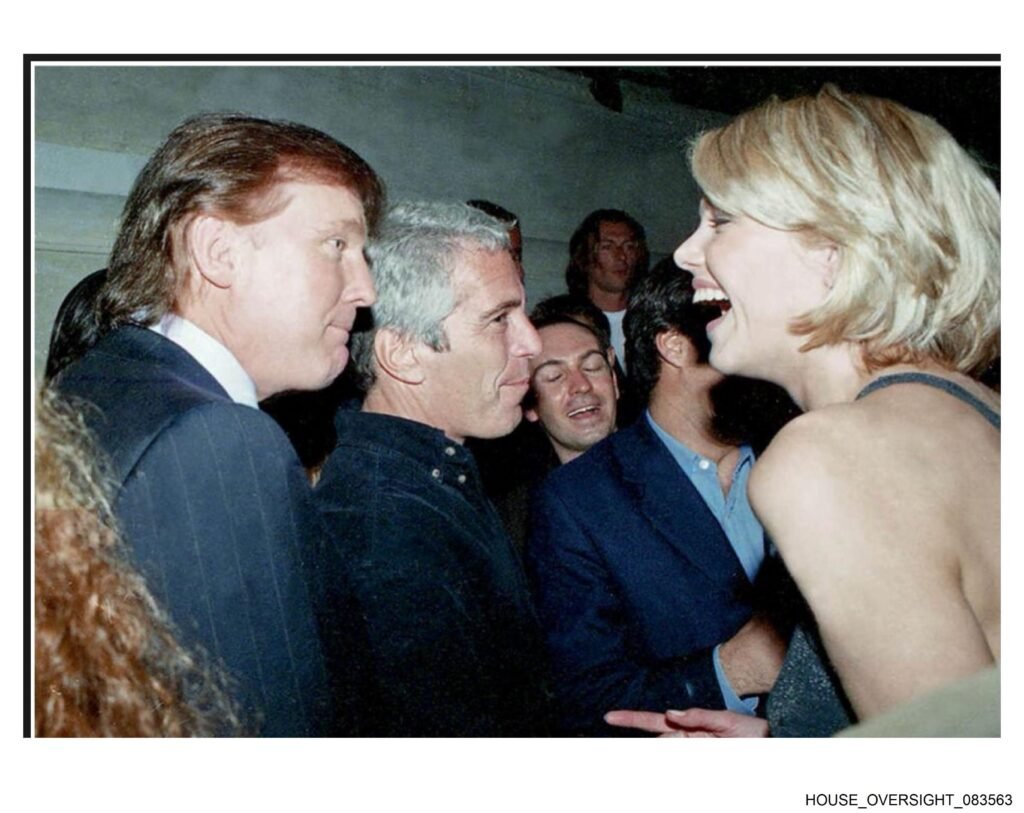
WASHINGTON, Dec 12 – A fresh release of images connected to the late financier Jeffrey Epstein has reignited political tensions in Washington, placing President Donald Trump back at the center of a controversy that continues to shadow his administration. Congressional Democrats have made public a new batch of photographs obtained from Epstein’s estate, part of a broader review of material that lawmakers say could shed light on Epstein’s relationships with influential figures across politics, business, and media.
The newly disclosed collection includes 19 images selected from a much larger archive of more than 95,000 photographs. Among them are three photos showing President Trump, alongside images of several other well known public figures. The release comes just days before a court mandated deadline requiring the U.S. Department of Justice to make public unclassified files related to Epstein’s federal investigation.
Democratic members of the House Oversight Committee said the images are part of their ongoing effort to ensure transparency and accountability in a case that has raised persistent questions since Epstein’s death in federal custody in 2019. Republicans, however, have sharply criticized the move, accusing Democrats of selectively releasing material for political purposes rather than pursuing a fair and comprehensive inquiry.
Photos, Political Reactions, and Trump’s Response
The three images involving President Trump vary in clarity and context. One black and white photograph shows Trump smiling, standing between two women whose faces have been obscured. Another image depicts Trump standing next to Epstein, while a third, less distinct photo appears to show Trump seated beside a woman with his trademark red tie loosened. The exact dates and locations of the photographs have not been confirmed, and committee staff have acknowledged that many images in the archive lack clear metadata.
Speaking to reporters at the White House on Friday, President Trump dismissed the significance of the photos. He emphasized that Epstein was a well known figure in elite social circles, particularly in Palm Beach, Florida, during the 1990s and early 2000s. According to Trump, countless prominent individuals were photographed with Epstein during that period, and such images, in his view, do not imply wrongdoing.
A White House spokesperson reinforced that message, arguing that the administration has taken concrete steps to support victims of Epstein’s crimes. The spokesperson accused Democratic lawmakers of focusing on political optics instead of acknowledging efforts aimed at justice and victim assistance. The administration has also pushed back against suggestions that it has sought to shield powerful individuals connected to Epstein.
Despite those defenses, the renewed attention has highlighted divisions within Trump’s own political base. For years, speculation and conspiracy theories surrounding Epstein’s connections and death have circulated widely, many amplified by social media and political commentary. Ironically, some of those theories gained traction among Trump supporters after the president himself previously questioned aspects of the Epstein case. Recent polling has shown that approval of Trump’s handling of the Epstein matter is noticeably lower among Republicans than his overall approval rating within the party.
Trump has repeatedly stated that while he and Epstein were acquainted in the past, he ended their association before Epstein pleaded guilty to prostitution related charges. He has consistently denied any knowledge of Epstein’s abuse of underage girls or involvement in sex trafficking activities.
Broader Implications and the Push for Full Disclosure
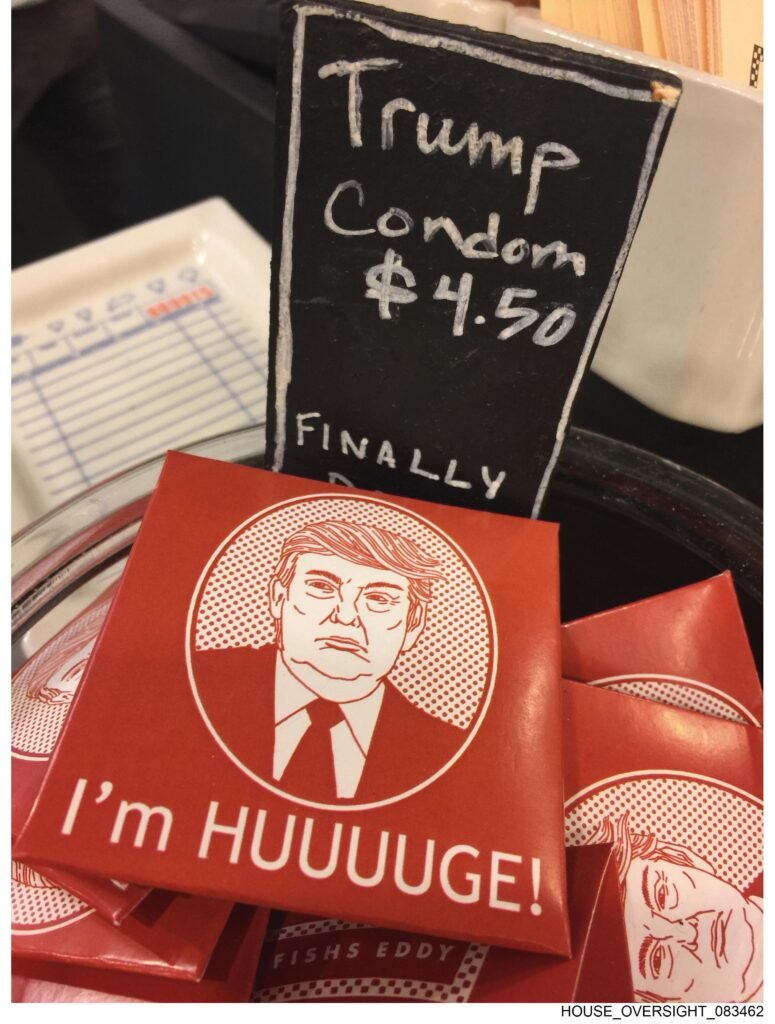
The latest photo release does not focus solely on President Trump. Images in the batch also include former Democratic President Bill Clinton, former Trump adviser Steve Bannon, Microsoft co founder Bill Gates, and former Treasury Secretary Larry Summers. In addition, some photographs show items found at Epstein’s properties, including sex toys and a novelty condom package featuring Trump’s likeness and a crude slogan. Lawmakers emphasized that such items were documented as part of the estate’s inventory rather than evidence of criminal conduct by any individual depicted.
Representative Robert Garcia of California, the senior Democrat on the Oversight Committee, said the images raise serious questions about Epstein’s social network and the access he had to some of the most powerful people in the world. Garcia stressed that the committee’s goal is not partisan advantage but uncovering the full truth surrounding Epstein’s activities and relationships. He called on the Department of Justice to release all remaining files without delay.
Republicans on the committee, led by Chairman James Comer of Kentucky, strongly disagreed with that characterization. A committee spokesperson accused Democrats of cherry picking images and using selective redactions to shape a misleading narrative about the president. According to Republicans, releasing isolated photos without full context risks damaging reputations while failing to advance genuine accountability.
Democrats countered that they deliberately redacted the faces of women in the images to protect the identities of potential victims. They also noted that the vast archive includes photographs of Epstein’s properties and numerous individuals who interacted with him socially or professionally. Committee members have indicated that additional images and documents may be released in the coming days as their review continues.
The controversy is unfolding as the Justice Department approaches a key deadline. Under a bipartisan law signed by President Trump last month, the department is required to release unclassified files related to Epstein within 30 days. The legislation was introduced by Representative Ro Khanna of California and Representative Thomas Massie of Kentucky and passed with overwhelming support from both parties. December 19 marks the end of that window, increasing pressure on federal officials to follow through.
The Justice Department has previously stated that it found no evidence of a hidden client list, blackmail scheme, or criminal involvement by unnamed third parties. Officials have also reaffirmed that Epstein’s death was ruled a suicide following multiple investigations. Even so, public skepticism remains high, fueled by years of unanswered questions and mistrust in institutions.