
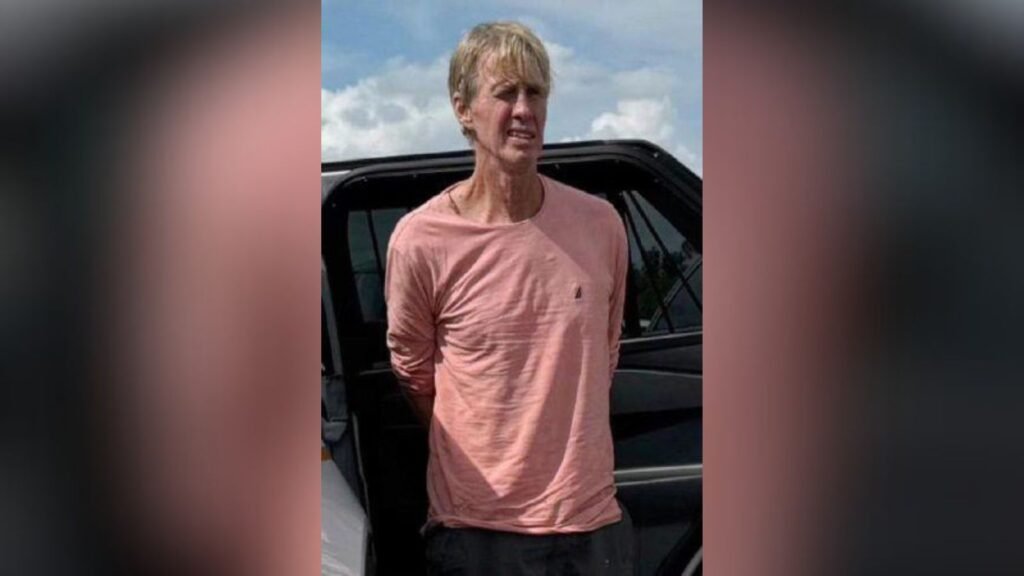
February 4 – Ryan Routh was sentenced on Wednesday, to spend the rest of his life in federal prison for attempting to assassinate President Donald Trump during a foiled attack at Trump’s Florida golf course in September 2024. The sentence, handed down by U.S. District Judge Aileen Cannon, brings a decisive end to one of the most closely watched federal criminal cases involving political violence in recent years.
Routh received a life sentence, along with an additional seven years tied to a second count in the indictment, ensuring he will remain incarcerated for the remainder of his life. In delivering the sentence, Judge Cannon strongly condemned Routh’s actions, describing them as morally reprehensible and a direct threat to democratic governance. She emphasized that the case underscored both the dangers faced by public officials and the importance of a justice system capable of responding decisively to such threats.
Courtroom reporting from media outlets present at the hearing indicated that Cannon also praised the work of law enforcement officers and witnesses who acted swiftly to stop the attack before anyone was harmed. “Despite all the evil we see, there is a sliver of hope, a sliver of light,” the judge said, pointing to the role of vigilance and accountability in preventing tragedy.
Routh attempted to address the court before sentencing but quickly veered into comments about Ukraine and broader political issues unrelated to the crimes for which he was convicted. Cannon interrupted him and made clear that the sentencing hearing was not a forum for political speeches. Observers noted that Routh appeared composed as the sentence was read. As he was led out of the courtroom by federal marshals, he smiled and blew a kiss toward relatives seated behind him, a gesture prosecutors later cited as further evidence of his lack of remorse.
Federal officials responded to the sentencing by reiterating the seriousness of the crime. FBI Director Kash Patel said in a public statement that the attempted assassination represented a “despicable attack on our democratic system” and stressed that the life sentence demonstrated that political violence would not be tolerated. The statement praised investigators and prosecutors for what Patel described as a thorough and determined pursuit of justice.
Routh’s legal team said an appeal would be filed. His attorney argued that Routh never intended to physically harm Trump and maintained that the trial process was flawed, largely because Routh was allowed to represent himself for much of the proceedings. The defense contends that this decision severely undermined his ability to mount an effective case, particularly given his mental health history.
Prosecutors sharply rejected those claims. In filings submitted ahead of sentencing, they argued that Routh spent months carefully planning the attack and took concrete, deliberate steps toward carrying it out. A federal jury agreed, convicting Routh in 2025 on five felony counts, including attempted assassination of a sitting president and assault on a federal officer.
Evidence presented at trial showed that Routh concealed himself in dense bushes near the Trump International Golf Club in West Palm Beach while Trump was present on the course. Armed with a military grade SKS rifle, Routh allegedly aimed the weapon toward Trump and a Secret Service agent before being spotted and detained. Prosecutors described the act as the culmination of extensive premeditation and a willingness to kill anyone who interfered.
In court documents, prosecutors wrote that Routh’s conduct demonstrated “careful planning, extensive premeditation, and a reckless disregard for human life.” They argued that his motivation was particularly disturbing, an effort to interfere with the democratic process by eliminating a national political figure. While the attack occurred during the 2024 election cycle, prosecutors emphasized that the crime targeted an individual who would later return to office, amplifying its gravity.
Routh represented himself during the trial and attempted to portray his actions as a form of political protest rather than an assassination attempt. Jurors rejected that narrative. Following the guilty verdict, Routh stunned the courtroom by attempting to stab himself with a pen in front of the jury, an incident that prompted his immediate removal and the subsequent appointment of legal counsel.
After his conviction, Routh requested a sentence of 27 years, arguing that such a term would allow him to eventually regain his freedom. His attorney asserted that the jury had been misled by Routh’s inability to properly question witnesses or introduce evidence aimed at challenging the government’s claim of intent.
The defense also submitted letters from friends and acquaintances describing Routh as a compassionate and community minded individual. A psychiatric evaluation submitted to the court suggested that he suffers from narcissistic personality disorder and bipolar II disorder. One supporter, a resident of Kyiv who said she met Routh during his efforts to volunteer in support of Ukraine, wrote that he deserved an opportunity to rehabilitate and return to society.
Prosecutors countered that Routh’s own post conviction writings undermined any claim of rehabilitation. In recent submissions, he referenced a separate attempt on Trump’s life and expressed hostility toward the president, statements the government said demonstrated continued anger and an absence of remorse. In another filing, Routh suggested he would welcome personal punishment from Trump, language prosecutors characterized as deeply troubling.
Judge Cannon also addressed and dismissed Routh’s earlier effort to have her removed from the case, rejecting claims that her appointment by Trump constituted a conflict of interest. She noted that judicial independence does not hinge on the political identity of a defendant and that her prior rulings, including a 2024 decision in an unrelated matter involving Trump, had no bearing on Routh’s case.