
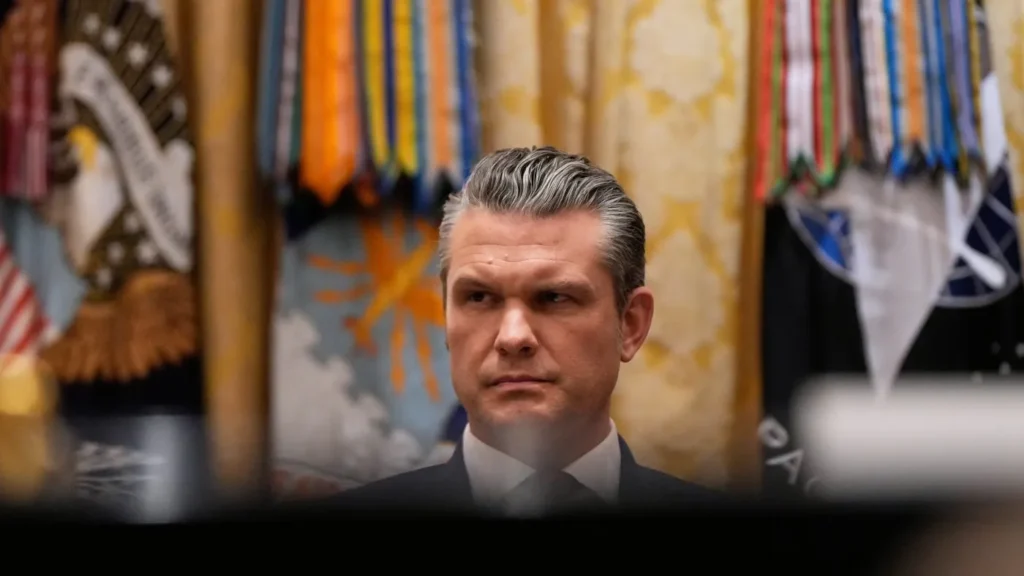
WASHINGTON, Dec 3 – Rising concern among Republicans has shifted sharply toward the leadership of Defense Secretary Pete Hegseth as key committees in Congress undertake their most aggressive oversight efforts since he assumed the role. What began as quiet frustration over limited transparency has now grown into a visible challenge to the Pentagon’s decision making, particularly after a deadly September operation that left lawmakers alarmed and demanding accountability.
Growing Friction Over Classified Briefings
Tension first escalated during a classified briefing intended to clarify the administration’s actions against suspected drug smugglers across Latin America. Multiple lawmakers in the room expressed disbelief when the Pentagon chose not to send any legal representatives. This decision left several attending members, including leading Republicans, frustrated by the lack of clear justification for targeting civilian vessels and by the ambiguity surrounding the mission’s boundaries.
Defense officials present at the meeting struggled to explain the reasoning behind the actions or offer clarity about the legal footing. Their explanations fell short, and the mood among Republican lawmakers hardened when they realized that critical information had been withheld. Meanwhile, President Donald Trump openly hinted that the operation could broaden to include land based targets inside Venezuela, adding to the sense of urgency and concern.
Rep. Mike D. Rogers of Alabama, who leads the House Armed Services Committee, openly criticized what he viewed as excessive secrecy. According to individuals familiar with the exchange, he noted that Biden administrations, including the one before Trump, had been more forthcoming with essential details. His spokesperson later stated that it would be inappropriate to disclose anything from a classified setting and declined to respond to claims about the conversation.
Questions Over the Sept. 2 Strike
The flashpoint that pushed concerns into the public arena centers on a September operation that resulted in the deaths of 11 people. Two individuals survived the first strike on their vessel, only to be killed by a second strike while clinging to the debris. Lawmakers and independent experts have questioned whether the actions taken during the mission meet the standards of U.S. military law and international conduct.
Both the House and Senate Armed Services committees have opened separate inquiries focused on whether improper orders were issued by senior officials including Adm. Frank M. Bradley. Bradley oversaw the operation and is slated to meet with lawmakers to discuss what happened. Sources familiar with his planned remarks say he is expected to argue that he viewed the two survivors as active threats rather than defenseless individuals.
Within the Pentagon, responsibility for the follow up strike has become a central point of debate. Defense Secretary Hegseth has attempted to redirect attention toward Bradley’s interpretation of the mission’s goals while also defending the outcome. Sitting beside President Trump earlier this week, Hegseth stated that Bradley had made the correct call to sink the vessel and remove what he viewed as a continuing danger.
However, lawmakers have taken issue with reports indicating that Hegseth himself gave an oral order before the first missile strike indicating that no one on the vessel should be left alive. When two survivors remained, Bradley is said to have taken the additional strike to carry out that directive. In later strikes unrelated to the Sept. 2 event, the military has worked to recover survivors or coordinate rescue efforts with partner countries, raising further questions about consistency in the application of policy.
Sources familiar with Bradley’s planned briefing say he will claim that U.S. personnel observed the survivors handling communications equipment and attempting to retrieve narcotics from the burning wreckage. The suggestion is that the survivors were still functioning as part of a trafficking operation and therefore remained valid targets. Lawmakers, however, have indicated they intend to scrutinize that claim closely, along with Hegseth’s involvement and the priorities assigned during the operation.
Lawmakers have requested access to video and audio recordings of the incident, but so far the Pentagon has not provided those materials. President Trump has said he supports releasing whatever footage exists.
Shifting Support for Hegseth
The broader concern among Republicans focuses on what they see as a pattern of limited transparency and unilateral decision making within Hegseth’s department. His time in office has already generated unease due to sweeping actions such as the removal of several senior officers and an unprecedented inquiry into a sitting senator. While some Republicans still voice confidence in him, others privately concede that support is waning.
There is also lingering resentment over the Pentagon’s decision to withdraw a brigade from Romania without consulting Congress. Lawmakers stated that the move reduced a critical deterrent against potential threats in Eastern Europe. Trump’s nominees for senior Pentagon roles have faced sharp criticism for limited communication with oversight committees.
Sen. Thom Tillis of North Carolina voiced one of the strongest reactions to the Sept. 2 incident. He stated that the episode represented a clear breach of ethical and legal boundaries. Sen. Roger Wicker of Mississippi, who chairs the Senate Armed Services Committee, called the allegations very serious and has demanded complete documentation of the strike.
Some lawmakers believe the inquiries could eventually lead to a broader investigation, with potential consequences for several defense leaders. Even if Hegseth is cleared, the erosion of trust may weaken his authority at a pivotal moment.