
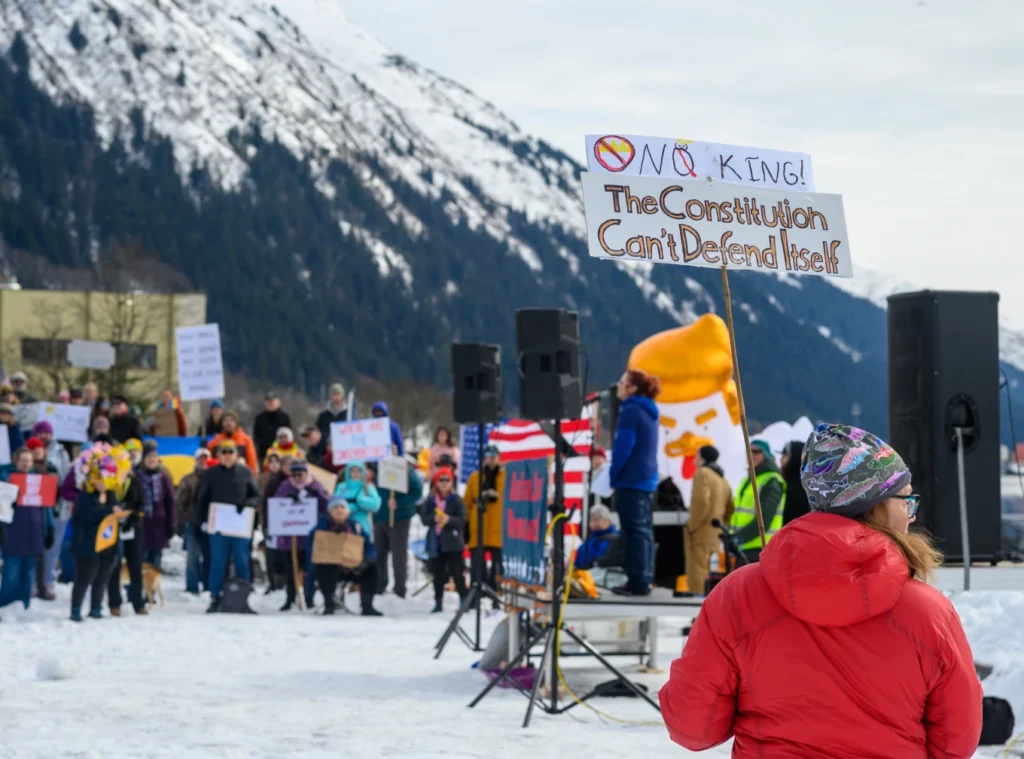
ST. PAUL, Minn., March 28 – A wave of coordinated demonstrations under the banner of “No Kings” spread across the United States and into several European cities on Saturday, drawing large crowds united by opposition to the war in Iran and policies associated with President Trump. From major metropolitan hubs to small rural communities, protesters gathered in what organizers described as one of the most expansive days of civic action in recent years.
Minnesota emerged as the symbolic center of the movement, where thousands assembled outside the state Capitol in St. Paul. The event combined political messaging with cultural expression, highlighted by a headline performance from Bruce Springsteen, who used music and remarks to amplify the rally’s themes of resistance and national identity.
Minnesota Becomes the Movement’s Focal Point
The St. Paul gathering was designated as the flagship event, attracting activists, public figures, and national attention. Demonstrators packed the Capitol grounds, many referencing recent tensions tied to federal immigration enforcement activity in the state.
Bruce Springsteen, serving as the event’s headliner, delivered a performance that resonated deeply with the crowd. He introduced a song written in response to the fatal shootings of Renee Good and Alex Pretti, incidents linked to federal agents that have fueled protests in recent months. Speaking to the audience, Springsteen reflected on both the loss and the public response.
“Your strength and your commitment told us that this was still America,” he said, addressing the crowd. His remarks framed Minnesota’s resistance as a broader symbol of civic engagement across the country.
The program also featured prominent voices from politics and entertainment, including Senator Bernie Sanders, activist and actor Jane Fonda, and singer Joan Baez. A recorded message from actor Robert De Niro was played, in which he expressed concern over the current political climate while praising the scale of public mobilization.
Nationwide Turnout Shows Broad Reach
Demonstrations were reported in all 50 states, with participation ranging from densely populated urban centers to small towns. According to organizers, more than 3,100 events were registered nationwide, reflecting a growing network of grassroots coordination.
Large cities such as New York and San Diego saw particularly strong turnouts. In San Diego, local law enforcement officials estimated that around 40,000 people took part in the march. Meanwhile, in Washington, D.C., protesters moved from the Lincoln Memorial toward the National Mall, carrying signs with messages criticizing government authority and calling for political accountability.
Participants came from diverse backgrounds, and many rallies incorporated creative elements. In one instance in Washington, a group of demonstrators dressed in insect-themed costumes parodying immigration enforcement agencies, illustrating how humor and satire have become tools of political expression within the movement.
Organizers emphasized that a significant portion of attendees came from outside major urban areas, including regions that traditionally lean conservative. This geographic diversity, they argued, reflects a widening base of engagement beyond typical political strongholds.
Mostly Peaceful Protests with Isolated Clashes
While the majority of events proceeded without major incident, some cities experienced tensions between demonstrators and law enforcement. In Los Angeles, authorities used tear gas near a federal detention facility after crowds were ordered to disperse. The Los Angeles Police Department later confirmed that several individuals were taken into custody for failing to comply.
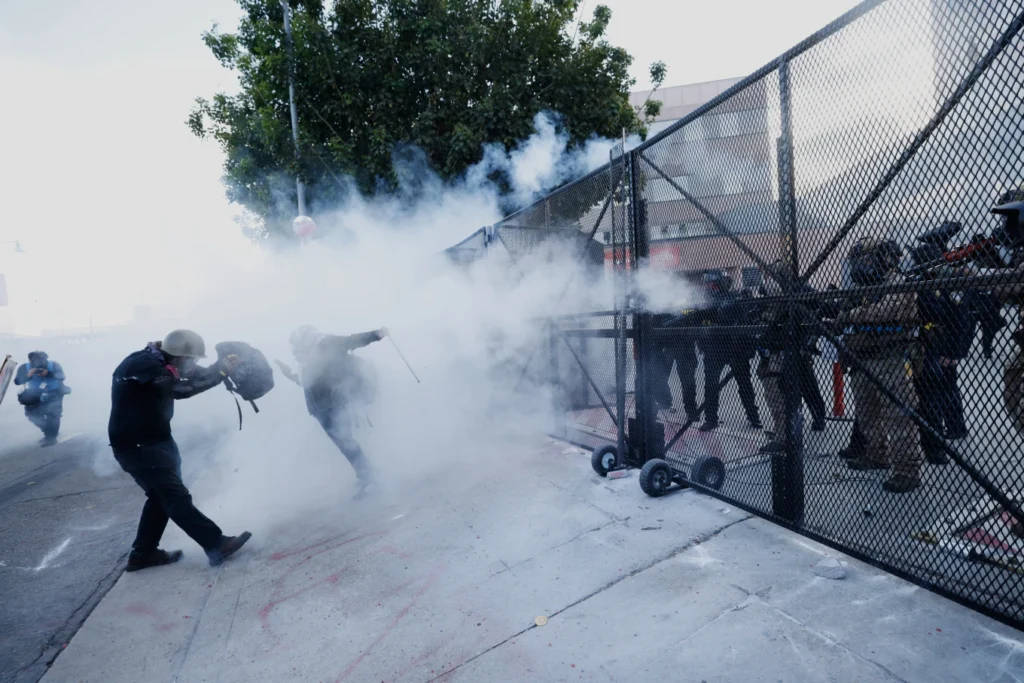
Earlier in the day, the atmosphere in the same area had been markedly different, with live music and dancing contributing to a festival-like setting before conditions escalated.
In Denver, police declared an unlawful assembly after a group of protesters blocked a roadway and refused to leave. Officers deployed smoke canisters, and some demonstrators reportedly threw them back. According to statements released by the Denver Police Department, multiple arrests were made in connection with the confrontation.
Despite these incidents, organizers maintained that the overwhelming majority of gatherings remained peaceful and focused on their intended message.
Rallies Overseas Gain Momentum
The demonstrations drew sharp reactions from political figures in Washington. White House spokesperson Abigail Jackson dismissed the rallies, describing them as lacking genuine public support and attributing their organization to partisan networks. Similarly, the National Republican Congressional Committee issued a statement criticizing the events in strong terms.
On the other side, civil liberties advocates and protest leaders argued that the rallies represented a necessary expression of democratic participation. Donna Lieberman, executive director of the New York Civil Liberties Union, told reporters during a press briefing that public demonstrations are essential in countering fear and political pressure.
Beyond U.S. borders, the “No Kings” movement found resonance in several European cities. In Rome, large crowds marched while voicing opposition not only to U.S. foreign policy but also to domestic political developments in Italy. In London, demonstrators carried banners calling for action against far-right ideologies and discrimination.
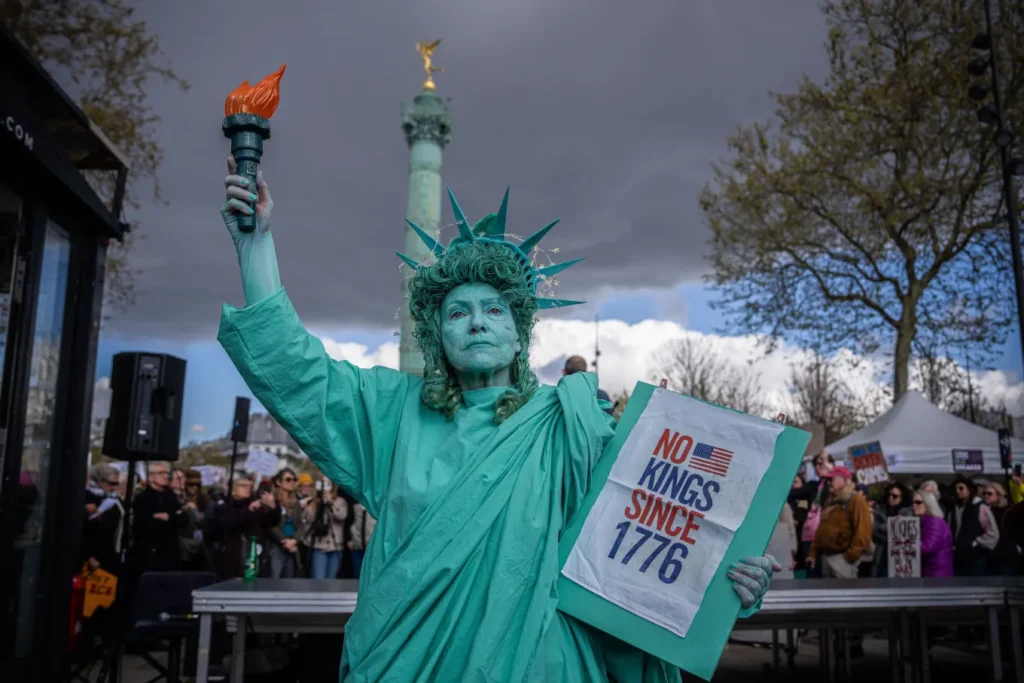
Paris also saw a gathering of hundreds, including American expatriates and local activists, who assembled in the Bastille area. One organizer described the protests as a response to what they viewed as ongoing global instability tied to political leadership and military conflict.