
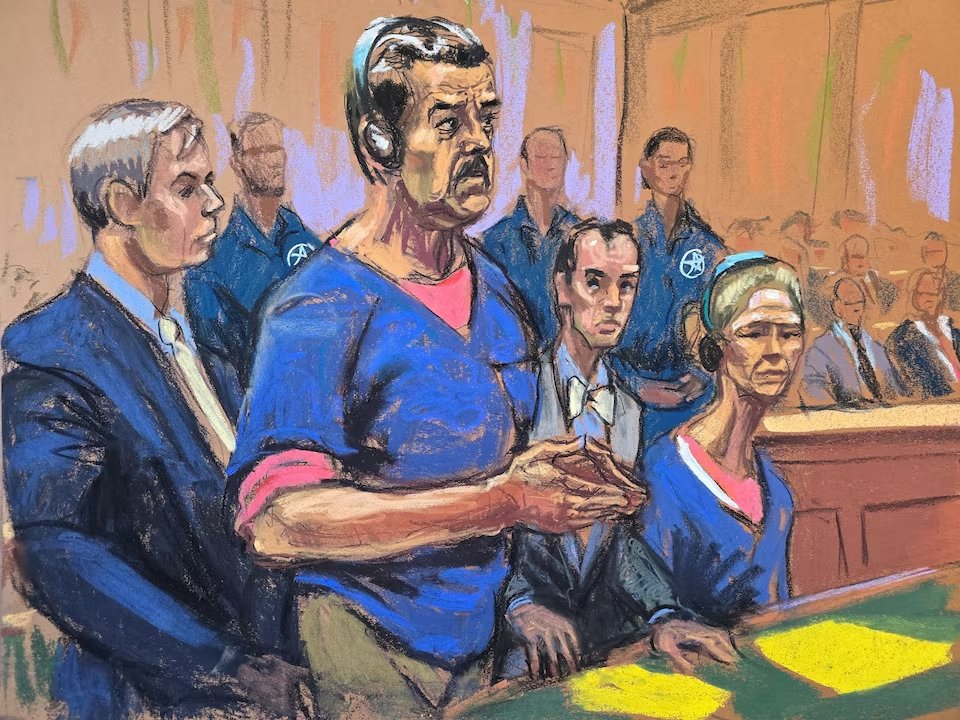
NEW YORK, Jan 5 – Ousted Venezuelan President Nicolás Maduro appeared before a federal court in New York this Monday, rejecting sweeping U.S. drug trafficking charges and insisting he remains the legitimate leader of Venezuela. His court appearance, following a U.S. military operation that removed him from power, has triggered intense debate over international law, sovereignty, and the future of governance in the oil rich South American nation. World capitals, legal experts, and Venezuelans themselves are now grappling with the implications of an unprecedented move against a sitting head of state.
Maduro, 63, stood shackled and dressed in prison clothing as the charges were read out with the help of an interpreter. Speaking briefly, he declared his innocence and claimed he had been forcibly taken from his country. The presiding judge curtailed his remarks and formally entered a not guilty plea on his behalf, along with a similar plea from his wife, Cilia Flores, who faces related allegations. Their next court appearance is scheduled for mid March.
Outside the courthouse, demonstrators gathered on both sides of Venezuela’s political divide. Some denounced Maduro as a criminal who had long evaded justice, while others described his arrest as an illegal act of foreign aggression. The tense atmosphere reflected the deep polarization that has defined Venezuelan politics for more than a decade.
Court Proceedings and Charges
U.S. prosecutors accuse Maduro of leading or protecting a vast cocaine trafficking operation linked to international drug cartels. The indictment includes charges of narco terrorism, conspiracy to import cocaine into the United States, and possession of prohibited weapons. According to the prosecution, these activities were not isolated crimes but part of a long running effort that blended organized crime with state power.
Maduro has repeatedly denied such accusations over the years, portraying them as politically motivated attempts to undermine Venezuela’s sovereignty and seize control of its vast oil reserves. In court, he reiterated that narrative, asserting that he was unlawfully abducted and stripped of his authority.
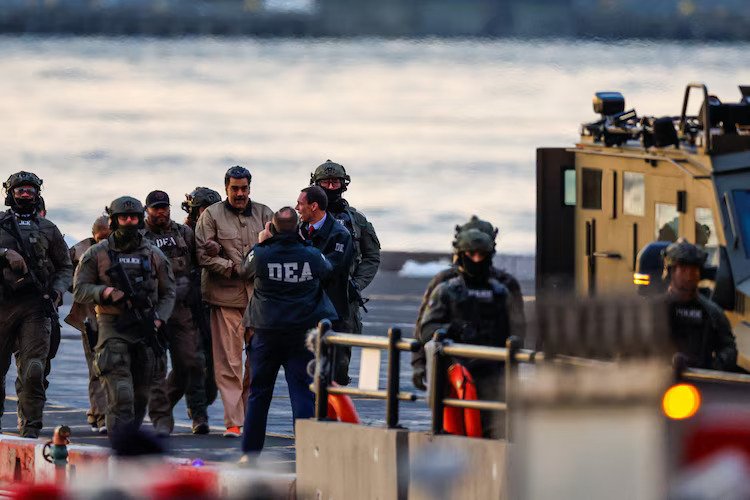
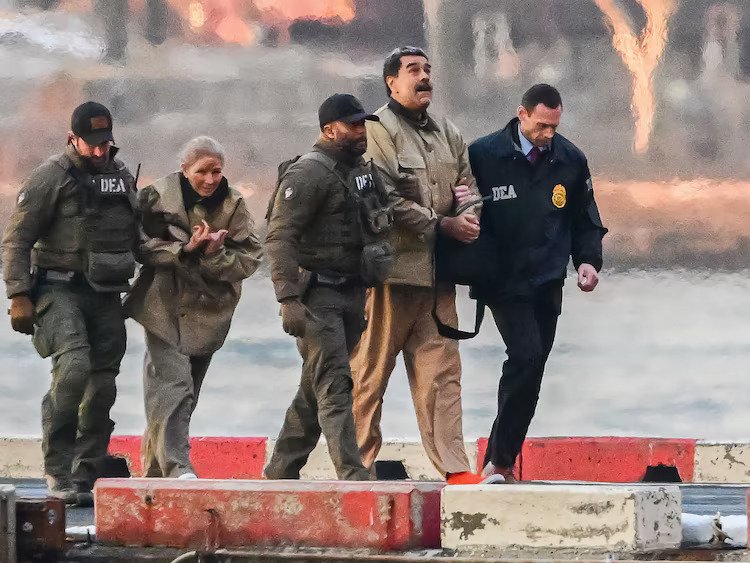
His defense attorney, Barry Pollack, indicated that the legal battle would extend far beyond the substance of the drug charges. Pollack argued that Maduro’s capture amounted to a military abduction and said the defense would challenge the legality of how U.S. authorities took custody of his client. Legal analysts say this argument could lead to complex litigation touching on international treaties, jurisdiction, and the limits of U.S. power abroad.
The case has already reignited a broader legal debate. Some experts in international law have questioned whether the operation violated established norms governing relations between states. Others counter that the charges, which have been pending for years, give the United States the right to pursue Maduro wherever he may be found. In interviews with NBC News, senior Justice Department officials have insisted that the arrest complied with domestic and international law.
Question of Legality
While Maduro was appearing in court, events were unfolding rapidly in Caracas. Vice President Delcy Rodríguez was sworn in as interim president, signaling continuity within the existing power structure rather than a handover to long sidelined opposition figures. Rodríguez pledged loyalty to Maduro and emphasized stability, though she stopped short of directly challenging Washington’s actions.
According to The Wall Street Journal, a recent U.S. intelligence assessment concluded that Rodríguez was the most viable option to lead a temporary government in Maduro’s absence. The assessment reportedly suggested that prominent opposition leaders would struggle to gain legitimacy or maintain order. Asked about this evaluation, White House officials said the administration was focused on making pragmatic decisions that align Venezuela’s future with U.S. interests.
The move appears to have surprised many anti Maduro activists, who had hoped the collapse of his rule would open the door to an opposition led transition. Instead, U.S. officials have publicly indicated that they are in contact with remaining government figures in Caracas. In interviews with Fox News, the White House confirmed that Secretary of State Marco Rubio has been in regular communication with Venezuelan officials and that Washington believes it retains significant leverage.
International reaction has been swift and divided. Russia, China, and several left leaning governments in Latin America condemned the operation, raising the issue at the United Nations Security Council and warning that it undermines the rules based international order. Other governments have taken a more cautious stance, expressing concern while withholding judgment until more details emerge.
Within the United States, political leaders are also split. Some lawmakers praised the administration for taking decisive action against what they describe as a narco state. Others questioned the long term strategy and warned of dangerous precedents. Senate Democratic Leader Chuck Schumer said after a classified briefing that the plan for U.S. involvement in Venezuela’s governance remained unclear and raised more questions than answers.
President Donald Trump has defended the operation forcefully. In interviews with NBC News, he said the United States was not at war with Venezuela itself but with drug traffickers who, in his words, have devastated lives across borders. He dismissed the idea of rapid elections, arguing that Venezuela’s institutions and infrastructure must first be rebuilt to allow a fair vote.
Economic interests are also looming large. Trump has openly spoken about bringing American energy companies back into Venezuela to revive its collapsed oil industry. He suggested that the United States could help subsidize rebuilding efforts and claimed the sector could be restored within 18 months. CBS News reported, citing unnamed sources, that representatives from major U.S. oil companies are expected to meet with senior energy officials to discuss potential plans.
As Maduro awaits his next court date, Venezuela faces a period of profound uncertainty. The country remains under the control of longtime government figures, even as Washington asserts unprecedented influence. Whether this moment leads to lasting change, deeper instability, or prolonged foreign involvement remains unclear. What is certain is that the arrest and prosecution of Nicolás Maduro have reshaped the political landscape, not only for Venezuela but for international relations as a whole.