
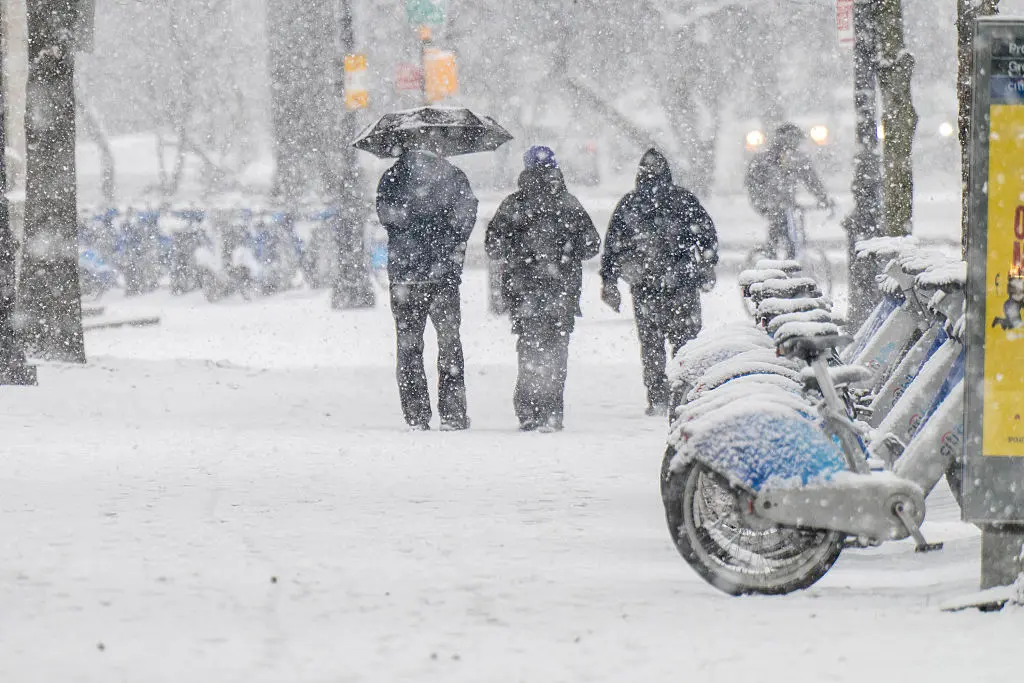
US, Jan 24 – A powerful winter storm sweeping across the United States has forced widespread flight cancellations, prompted emergency declarations in 17 states, and placed more than 200 million people under severe weather alerts. Forecasts warn of heavy snow, freezing rain, dangerous ice accumulation, and plunging temperatures that could disrupt travel, strain power systems, and pose serious risks to public safety over several days.
Airports, highways, and energy infrastructure are all facing mounting pressure as the storm stretches from the Southern Rockies through the Midwest and into the Northeast. Officials at the federal, state, and local levels are urging residents to prepare for prolonged impacts and avoid unnecessary travel as conditions continue to deteriorate.
Emergency Actions
Governors in at least 17 states, along with leaders in Washington, D.C., have declared states of emergency as the storm advances. These declarations allow states to mobilize emergency resources more quickly, coordinate response efforts, and activate assistance programs aimed at protecting residents and infrastructure.
In 9 states, National Guard units have been placed on active duty to assist with storm response. Their roles may include helping stranded motorists, delivering supplies, supporting shelters, and assisting local authorities with recovery operations once conditions allow.
At the federal level, the Department of Homeland Security issued a public warning emphasizing the seriousness of the storm. Homeland Security Secretary Kristi Noem urged Americans to stay off the roads over the weekend, citing the combined threats of ice-covered highways, whiteout conditions, and extreme cold. Several federal offices across affected regions have already announced closures for Monday, reflecting concerns that hazardous conditions may linger beyond the weekend.
Weather officials warn that this storm is not a brief event. In many areas, heavy precipitation is expected to transition from snow to sleet and freezing rain, increasing the risk of ice accumulation on roads, trees, and power lines. Wind chills are forecast to reach dangerous levels, particularly across the Plains and Midwest, raising the risk of frostbite and hypothermia for anyone exposed to the elements for extended periods.
Travel Disruptions
The storm has already caused major disruptions to air travel across the country. According to data from flight tracking site FlightAware reported, more than 3,300 flights scheduled for Saturday have been canceled, with hundreds more delayed. Airports serving major hubs in the South and Midwest have been especially hard hit.
Dallas Fort Worth International Airport has canceled roughly three-quarters of its scheduled departures and arrivals, while Nashville International Airport has scrapped nearly 60% of its flights. Airlines are taking aggressive steps to reduce congestion and prevent passengers from traveling to airports where conditions may quickly become unsafe.
Sunday is expected to bring even greater disruption, with more than 5,900 flight cancellations already recorded nationwide. Airlines have issued travel waivers allowing passengers to change or rebook flights without additional fees, a move aimed at easing both customer frustration and operational strain.
Emily Estapa, a dispatcher for Southwest Airlines, explained during a CBS Saturday Morning interview that airlines are actively discouraging unnecessary airport travel. She said safety considerations extend beyond passengers to include flight crews and ground personnel who must operate in severe weather. Airlines are attempting to balance maintaining service with ensuring that employees and travelers are not placed in harm’s way.
Even once snowfall and ice accumulation subside, the aviation system may take days to recover. Frigid temperatures following the storm could slow aircraft servicing, runway treatment, and ground operations. At Hartsfield Jackson Atlanta International Airport, the world’s busiest airport, winter storm crews have already begun treating runways and taxiways.
Gus Hudson, the airport’s senior deputy general manager for operations, said preparations are well underway. He noted that while flights may continue, operations could move at a slower pace due to safety requirements and weather limitations.
Power Outages
Beyond travel, officials are increasingly concerned about the storm’s potential impact on the power grid. Ice poses a particularly serious threat, as it is heavier than snow and can cause power lines and tree branches to snap under its weight.
As of Saturday morning, power outage monitoring services reported more than 39,000 customers without electricity in Texas alone. No other state had reached the 10,000 outage mark at that time, but emergency managers warn that outages could spread quickly as freezing rain expands eastward.
The risk is especially acute in Southern states, where a majority of homes rely on electricity for heating. In at least 11 states across the region, prolonged outages could leave residents without heat during some of the coldest temperatures of the season.
Chris Johnson, assistant director of operations and field services at the Tennessee Emergency Management Agency, said his primary concern is the combination of power outages followed by extreme cold. He referenced the devastating 2021 winter storm in Texas, when prolonged outages contributed to more than 200 deaths.
Johnson emphasized that vulnerable populations, including the elderly, children, and those with medical needs, face the greatest risk when heating systems fail. Emergency shelters are being prepared in some areas, but officials stress that prevention and preparedness remain critical.
Authorities are also warning residents not to use unsafe heating alternatives if power is lost. Propane heaters, generators, outdoor grills, and vehicles should never be used indoors due to the risk of carbon monoxide poisoning. State officials in Texas previously reported that several deaths during the 2021 storm were linked to toxic fumes as people sought warmth using unsafe methods.