
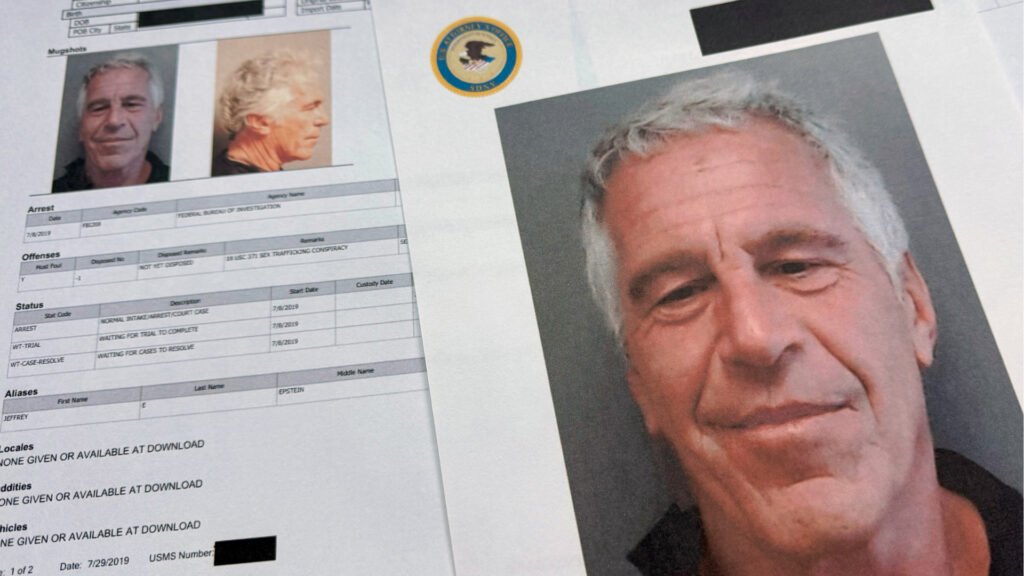
Washington, Jan 30 – The U.S. Department of Justice has begun one of the largest document disclosures in its history, releasing millions of pages connected to the federal investigation of convicted sex offender Jeffrey Epstein. The move follows months of public pressure, congressional scrutiny, and legal requirements aimed at increasing transparency around a case that has long fueled controversy, mistrust, and political debate.
Deputy Attorney General Todd Blanche announced that the release includes a massive volume of documents, images, and video files, marking what the department describes as the final phase of compliance with a law mandating disclosure of unclassified Epstein related materials. The process, according to officials, involved an extensive review to balance public access with the protection of survivors and the integrity of ongoing investigations.
What the Newly Released Epstein Records Contain
At a Justice Department news conference, Blanche said the latest release alone consists of more than three million pages of records, alongside over 2,000 videos and 180,000 images. In total, the administration has produced approximately 3.5 million pages under the Epstein Files Transparency Act, a statute passed by Congress and signed into law last year.
The law required the Justice Department to make public all unclassified material related to its investigations of Epstein and his longtime associate, Ghislaine Maxwell, by a December 19 deadline. Department officials acknowledged that the scale of the material made meeting that deadline difficult, but insisted the current release fulfills the department’s legal obligations.
Blanche emphasized that significant redactions were applied to the visual material. According to him, every woman appearing in any image or video was redacted, with the sole exception of Maxwell. Men appearing in the same materials were generally left unredacted unless doing so would compromise the effort to conceal the identity of a woman. The department said these steps were taken to protect survivors of Epstein’s crimes from further harm.
Ghislaine Maxwell was convicted in 2021 for her role in recruiting and grooming underage girls for Epstein and is currently serving a 20 year federal prison sentence. Her case remains a central reference point in many of the newly released records.
Blanche described the disclosure as the conclusion of a lengthy and unprecedented review process. He said the Justice Department is also submitting a final report to Congress that outlines the scope of the work and provides written explanations for each category of redaction. Those justifications are expected to be published in the Federal Register, a standard practice for formal government notices.
Once those steps are complete, Blanche said, the department’s responsibilities under the transparency law will be considered fully satisfied.
Congress Pushes Back as DOJ Defends Redactions
The document release has unfolded against a backdrop of intense political scrutiny. Blanche stated that while more than 6 million pages were collected in response to the law, a portion is being withheld. He cited reasons including the presence of survivors’ personal information and concerns that disclosure could interfere with an active federal investigation. He rejected claims that the department selectively shielded any individual.
“I can assure that we complied with the statute and did not protect anyone,” Blanche said, adding that public demand for information may persist regardless of the volume of material disclosed.
Jay Clayton, the U.S. attorney for the Southern District of New York, is overseeing an investigation into Epstein’s connections to prominent political figures and major financial institutions. That inquiry was initiated at the request of President Trump in November, according to statements from the administration. Blanche stressed that the White House had no role in the document review process and exercised no oversight during the final 60 days leading up to the release.
Prior to this latest disclosure, the Justice Department had already released more than 100,000 pages of Epstein related records. Those earlier materials included emails, court filings, photographs, and videos. Observers noted that while the first batch contained limited references to President Trump, a subsequent wave included more frequent mentions of him. The president has not been accused of wrongdoing in connection with Epstein.
Some of the earlier documents included internal emails from prosecutors discussing flight logs, possible co conspirators, and investigative strategies dating back several years. Other materials featured photographs of well known figures, including former President Bill Clinton, some of which were partially redacted. Clinton’s representatives have denied any knowledge of Epstein’s crimes and accused the administration of using selective disclosures to deflect attention.
Congressional reaction has been mixed. While some lawmakers praised the release as a step toward accountability, others criticized the Justice Department for what they described as delays and incomplete compliance. Representative Ro Khanna of California, a co sponsor of the transparency law, accused the department of defying congressional intent by withholding large portions of the material.
The controversy intensified after a Justice Department and FBI memo released last July indicated that no further Epstein information would be made public. That position sparked bipartisan backlash and led lawmakers to launch their own investigation into the government’s handling of Epstein’s case. Congressional committees have since obtained additional records and photographs from Epstein’s estate.
Epstein’s history with the criminal justice system has long been a source of public outrage. He was first investigated by Florida authorities in 2005 and later reached a controversial plea agreement in 2008 that allowed him to avoid federal prosecution at the time. In 2019, he was indicted on federal sex trafficking charges but died by suicide in a Manhattan jail while awaiting trial.