
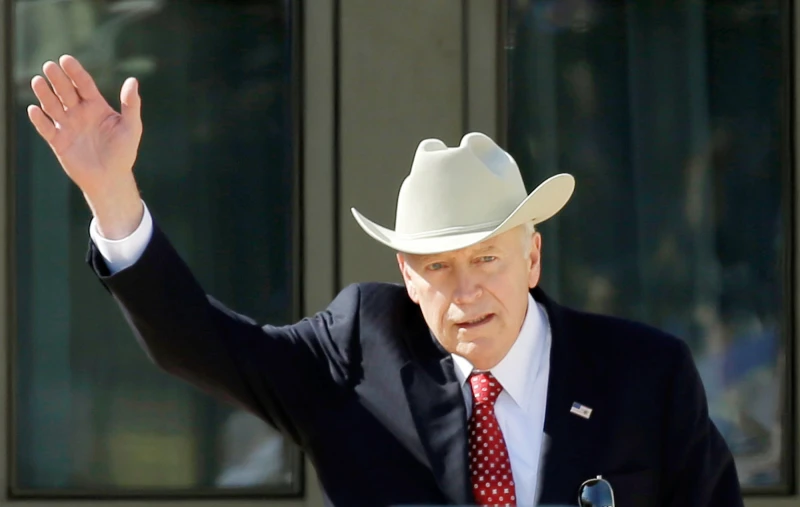
Washington, Nov 04 – Former U.S. Vice President Dick Cheney, a dominant figure in American politics who left an indelible mark on national security and foreign policy, passed away at the age of 84. His family confirmed that he died on Monday due to complications related to pneumonia and long-standing cardiac and vascular disease. Cheney’s legacy remains deeply complex, shaped by decades of public service, controversial wartime policies, and unwavering conservative convictions.
A Powerful Presence in the White House
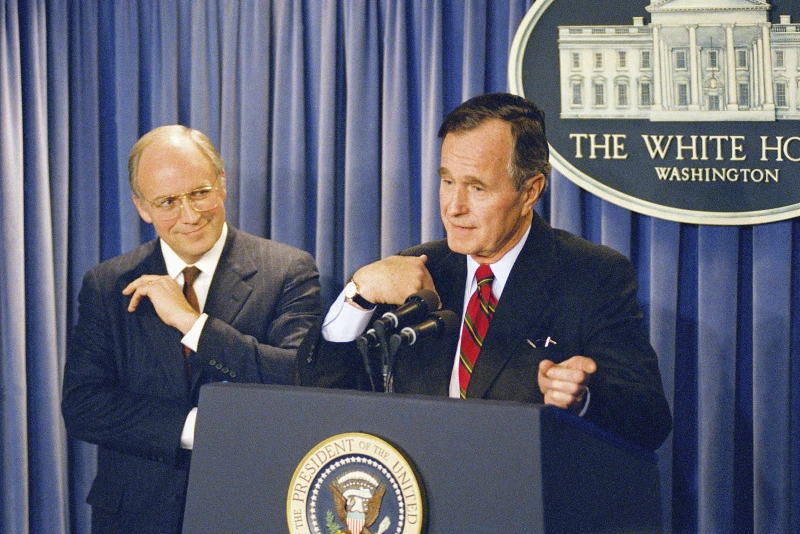
Cheney’s career stretched across generations of American leadership. He served under both President George H. W. Bush and his son, George W. Bush, becoming one of the most powerful vice presidents in the nation’s history. Under the H. W. Bush, Cheney held the position of Secretary of Defense and was instrumental during the Persian Gulf War, leading U.S. military operations that successfully pushed Iraqi forces out of Kuwait.
When George W. Bush entered the White House in 2001, Cheney became his second-in-command, though many viewed him as more of a co-pilot. Behind the scenes, he wielded immense influence, shaping decisions that defined the administration’s approach to national security, energy, and foreign affairs. Following the September 11 attacks, Cheney played a leading role in crafting the nation’s aggressive counterterrorism response, endorsing expanded surveillance, interrogation, and detention policies.
His health struggles, including five heart attacks and a later heart transplant, did little to slow his momentum. Cheney himself once said that he woke each morning grateful for another day, a sentiment at odds with the unflinching toughness that became his public image.
Former President George W. Bush honored Cheney’s memory, calling him a man of decency and integrity who served his country with unwavering patriotism, wisdom, and a deep sense of duty in every role he undertook.
The Iraq War and Cheney’s Enduring Controversy
Cheney’s defining and most contentious chapter came with the Iraq War. He was one of the leading advocates for the 2003 U.S. invasion, insisting that Saddam Hussein possessed weapons of mass destruction and suggesting links between Iraq and the September 11 terrorists—claims that were later disproven. He famously asserted that U.S. troops would be “welcomed as liberators,” a prediction that never came true as the conflict dragged on and insurgency took hold.
By 2005, with thousands of American troops lost, Cheney still maintained that the war was the right course of action. Supporters admired his steadfastness and refusal to retreat from difficult positions, while critics saw him as emblematic of a government that had overreached both abroad and at home.
Even as his influence waned during Bush’s second term, Cheney continued to defend the administration’s actions, including the controversial use of enhanced interrogation techniques. Courts and shifting political tides eventually curtailed many of the policies he had pushed, but his imprint on America’s post-9/11 era remained unmistakable.
Cheney’s dry humor and reserved nature often fueled the aura surrounding him. With a touch of irony, he once quipped about his behind-the-scenes reputation, saying it wasn’t such a bad thing to be seen as the quiet strategist who preferred to work from the shadows.
A Political Journey from Wyoming to Washington
Richard Bruce Cheney’s path to power began far from Washington. Born in Lincoln, Nebraska, and raised in Casper, Wyoming, he was the son of a government employee and showed early promise as a student leader and athlete. After a brief stint at Yale, he returned home, attended the University of Wyoming, and married his high school sweetheart, Lynne Vincent.
His political career began in earnest in the late 1960s when he joined Washington as a congressional fellow. There, he caught the attention of Donald Rumsfeld, beginning a long professional partnership. By the age of 34, Cheney became the youngest White House Chief of Staff under President Gerald Ford.
In 1978, Cheney won Wyoming’s sole seat in the House of Representatives, where he served six terms and rose to become the second-ranking Republican in the chamber. Known for his calm, strategic manner, Cheney built a reputation as a disciplined and deeply conservative policymaker.
He returned to the executive branch in 1989 as Secretary of Defense, where he oversaw the U.S. response to Iraq’s invasion of Kuwait and helped guide the military through a swift and decisive campaign in the Gulf War. Between his two major government roles, Cheney led Halliburton, a major oilfield services company based in Texas, gaining experience that would later inform his energy policies as vice president.
Later Years and Political Shifts
Even after leaving office, Cheney remained a prominent voice in conservative politics. However, in later years he became an outspoken critic of Donald Trump, especially after his daughter, former Congresswoman Liz Cheney, took a leading role in investigating Trump’s efforts to overturn the 2020 election.
In a rare political twist, Cheney openly denounced Trump, calling him “a greater threat to our republic than any other individual in American history.” He also revealed that he voted for Kamala Harris in the last election, an extraordinary stance for a lifelong Republican.
Despite years of criticism and controversy, Cheney’s career stands as one of unmatched influence. His unwavering conviction, strategic mind, and dominance behind the scenes transformed the role of the vice presidency from a ceremonial office into a seat of genuine power.
Cheney leaves behind his wife, Lynne, along with their daughters, Liz and Mary. As condolences continue to arrive, the nation looks back on a figure who, whether praised or criticized, played a defining role in shaping America’s direction in the 21st century, leaving behind a legacy both lasting and deeply debated.