
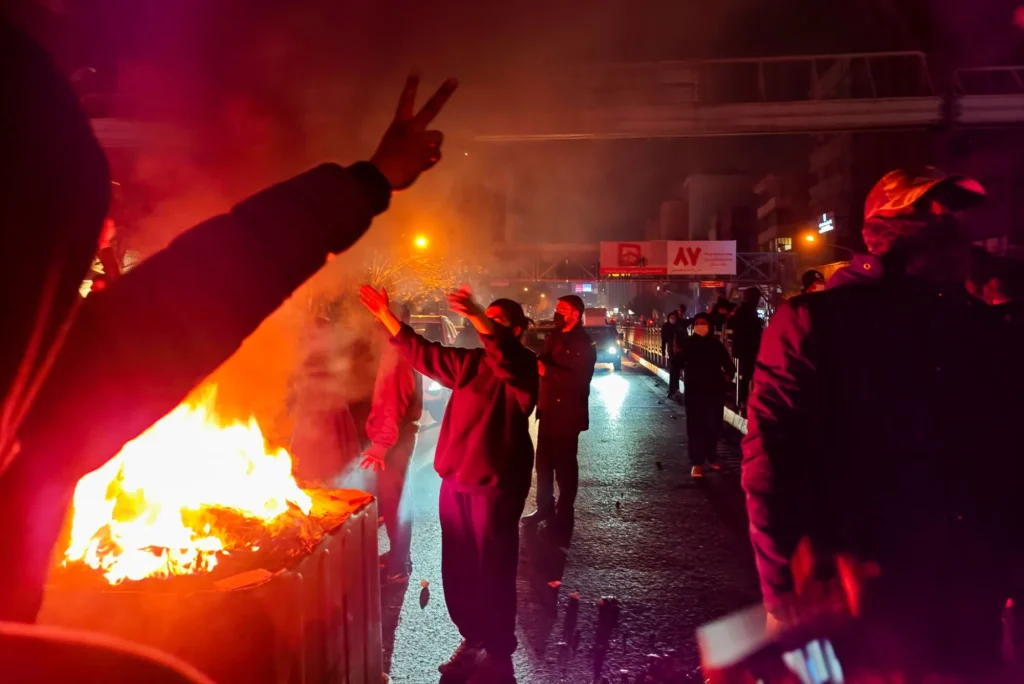
TEHRAN, Jan 14 – The United States has begun withdrawing a portion of its military personnel from bases across the Middle East after Tehran issued direct threats against American facilities in the region. The move, described by US officials as precautionary, comes amid escalating tensions over Iran’s internal unrest and warnings from Iranian leaders that any US intervention would be met with military retaliation.
According to senior American officials speaking to major international news agencies, the drawdown is not a full evacuation but a strategic step aimed at reducing risk to personnel stationed in sensitive locations. Diplomats familiar with the matter said that some forces had already been advised to leave the al-Udeid Air Base in Qatar, one of the most significant US military hubs in the region. The decision reflects growing concern that Iran could act on its threats if Washington moves beyond rhetoric and into direct action.
Tensions intensified after Iranian officials publicly warned that US bases across the Middle East would be targeted if the United States intervenes in Iran, particularly in response to nationwide protests that have shaken the country. Tehran has previously demonstrated its willingness to strike regional targets, including an attack on al-Udeid earlier this year following US strikes on Iranian nuclear facilities. That incident, while largely symbolic and preceded by warnings, underscored how quickly regional stability could unravel.
Rising Regional and Military Tensions
Iranian authorities have been particularly vocal in cautioning Washington against involvement in what they describe as domestic affairs. The warnings were reportedly delivered not only through public statements but also through messages to regional governments hosting US forces, including Saudi Arabia and Turkey. A senior Iranian official said these countries were informed that their territories could become legitimate targets if US forces launch strikes against Iran.
At the same time, US President Trump has been openly reviewing military options, according to Israeli and regional security assessments cited by international media. While no official decision has been announced, these assessments suggest that some level of intervention is being actively considered, though the scale and form remain unclear.
Trump has repeatedly issued strong statements in support of Iranian protesters, previously pledging to “rescue” them if authorities continued using lethal force. In a televised interview with CBS News, the president warned that the United States would take “very strong action” if executions of protesters began. He referenced past US military operations, including targeted strikes against militant leaders, as examples of how Washington might respond.
Regional governments have urged caution. Officials from neighboring countries, including Turkey, Egypt, and Saudi Arabia, have reportedly warned the US that military intervention could ignite a full-scale regional conflict. A diplomat based in Cairo told the Associated Press that such a war would almost certainly have devastating consequences, not only for the Middle East but for the global economy, particularly if Iranian-backed militias across the region retaliate.
Western diplomats also remain skeptical that the unrest in Iran will lead to the collapse of the government. One Western official said that while the protests are unprecedented in scale, Iran’s security apparatus appears firmly in control, making a rapid political transformation unlikely.
Protests, Crackdown, and Human Rights Concerns
Inside Iran, the situation remains volatile. Authorities have launched an intense crackdown on demonstrators following weeks of mass protests that erupted across the country. According to the US-based Human Rights Activists News Agency, at least 2,571 people have been killed and more than 18,100 arrested. The group noted that the death toll from the current unrest already surpasses that of any protest movement since Iran’s 1979 revolution.
Iranian officials have made clear that they intend to act swiftly against those they accuse of destabilizing the state. The head of Iran’s judiciary, Gholamhossein Mohseni-Ejei, told state media that delayed punishment would lose its deterrent effect, signaling that rapid trials and executions could follow.
Human rights organizations have expressed alarm. Amnesty International highlighted the case of Erfan Soltani, a 26-year-old protester sentenced to death, warning that authorities may once again resort to swift trials and arbitrary executions to silence dissent. A relative of Soltani, Somayeh, told CNN she was in shock and pleaded for international intervention, saying many protesters had trusted Trump’s promises of support.
Iranian state television has offered its first official acknowledgment of fatalities, with an unnamed official stating that the country had suffered “a lot of martyrs.” Meanwhile, tens of thousands of government supporters attended a mass funeral near Tehran University for around 100 security personnel killed during the unrest. State media footage showed mourners carrying images of Supreme Leader Ayatollah Ali Khamenei and chanting anti-American slogans.
Communications inside Iran have been heavily restricted during the crackdown. After days of near-total blackout, some Iranians were able to make international phone calls again on Tuesday. Activists reported that security forces were searching for Starlink satellite internet terminals, raiding apartment buildings in northern Tehran in an effort to cut off alternative communication channels.
Human rights groups also reported that Iranian state media have aired dozens of televised confessions from detained protesters. HRANA said it had documented at least 97 such confessions since late December, adding that testimony from released detainees indicated many were coerced under torture. These confessions, the group warned, often pave the way for severe sentences, including execution. Last year alone, Iran carried out at least 1,500 executions, according to the Norway-based Iran Human Rights organization.
As diplomatic pressure mounts, the US State Department has warned American citizens to leave Iran immediately, a message echoed by several other Western governments. Iran’s mission to the United Nations dismissed Washington’s stance, accusing the US of pursuing regime change through sanctions, threats, and engineered unrest, and warning that such a strategy would fail.