
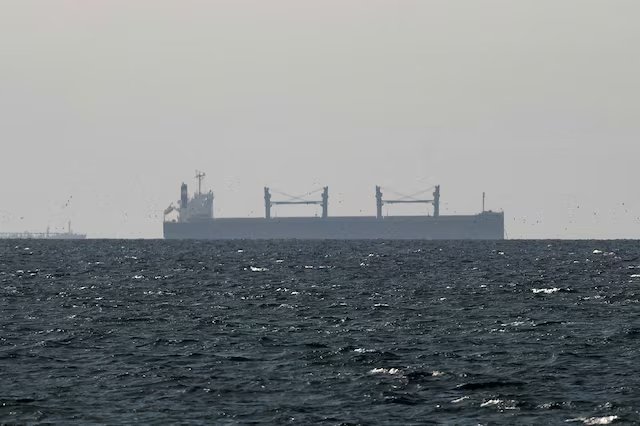
WASHINGTON, April 3 – Fresh assessments emerging from within the U.S. intelligence indicate that Iran is expected to maintain its grip over the Strait of Hormuz for the foreseeable future, underscoring growing concerns in Washington about the long-term implications for global energy markets and regional stability. According to multiple individuals familiar with classified briefings, Tehran increasingly views its control over the narrow maritime passage as a powerful strategic tool, one that provides leverage not only in ongoing tensions but also in any future negotiations with the United States.
The Strait of Hormuz remains one of the most critical chokepoints in the global economy, with roughly one-fifth of the world’s oil supply passing through its waters. Any sustained disruption has immediate ripple effects, driving up fuel prices worldwide and raising inflation risks in major economies. U.S. officials are now grappling with the reality that Iran may have little incentive to step back, particularly as it recognizes the geopolitical advantage it currently holds.
Iran’s Strategic Leverage Through Energy Disruption
Intelligence findings suggest that Iran’s leadership sees its control over the strait as a rare equalizer in its broader confrontation with Washington. One source familiar with internal assessments explained that Tehran has “discovered a pressure point that delivers global consequences with relatively limited resources,” making it unlikely to abandon such a position voluntarily.
Since the U.S and Israel launched their war on February 28. Iran’s Islamic Revolutionary Guard Corps has adopted a range of tactics to assert dominance over the waterway. These include the deployment of naval mines, drone surveillance, and reported incidents involving commercial vessels being harassed or attacked. Maritime insurers have reacted by raising premiums sharply, while some shipping companies have opted to avoid the route altogether, effectively tightening Iran’s hold without a formal blockade.
Ali Vaez, a senior analyst at the International Crisis Group, highlighted the significance of this strategy, noting that Iran’s ability to influence global oil flows may outweigh even its more traditional forms of military deterrence. In remarks attributed to the organization, he argued that the country’s capacity to disrupt energy markets grants it a form of influence that extends far beyond the region.
Meanwhile, political pressure is building inside the United States. Rising fuel costs are beginning to affect consumers, adding another layer of complexity for President Trump as he faces declining approval ratings and prepares for upcoming mid-term congressional elections. Analysts warn that prolonged instability in oil supply chains could further strain domestic economic conditions, making the situation not just a foreign policy challenge but also a political one.
Despite public statements from the White House expressing confidence that the strait will eventually reopen, internal divisions appear to persist. A senior administration official, speaking on condition of anonymity, indicated that while the U.S. remains committed to ensuring freedom of navigation, there is also recognition that other nations, particularly those heavily dependent on Gulf energy exports, have a significant stake in resolving the crisis.
Military Risks and the Challenge of Reopening the Strait
While some policymakers have floated the possibility of military intervention to restore safe passage through the strait, defense experts caution that such an operation would be fraught with danger and uncertain outcomes. The geography of the region presents immediate challenges. At its narrowest point, the strait spans just over 30 kilometers, with shipping lanes even tighter, creating an environment where vessels are highly vulnerable to attack.
Military analysts point out that Iran does not need to achieve total control to disrupt traffic. Even limited strikes using drones or missile systems could be enough to deter commercial shipping. According to defense assessments discussed in policy circles, maintaining continuous security across such a confined and heavily contested space would require significant resources and could quickly escalate into a broader conflict.
Former CIA Director William Burns, speaking during a policy discussion hosted by Foreign Affairs magazine, emphasized that Iran is likely to integrate its control over the strait into its long-term strategy. He suggested that Tehran could use this leverage not only as a bargaining chip in negotiations but also as a potential revenue stream, possibly through the imposition of transit fees on commercial vessels once active hostilities subside.
This perspective is echoed by other experts who argue that even in a post-conflict scenario, Iran may seek to institutionalize its influence over maritime traffic. The financial strain of rebuilding after months of confrontation could further incentivize such measures, effectively transforming the strait into both a strategic and economic asset.
At the same time, the risks of escalation remain high. Any direct attempt by U.S. forces to seize control of coastal areas or neutralize Iranian capabilities could provoke a wider regional conflict, drawing in additional countries and extending the duration of the conflict. Analysts warn that what might begin as a limited operation could evolve into a prolonged engagement with unpredictable consequences.
In Washington, the debate continues over how best to respond. While some officials advocate for a more assertive posture, others urge caution, emphasizing the need for diplomatic channels to remain open. The challenge lies in balancing the immediate need to stabilize global energy flows with the longer-term goal of avoiding a deeper and more costly conflict.
One conclusion appears increasingly clear among intelligence and policy circles, Iran’s control over the Strait of Hormuz is not a temporary development but a calculated strategy. Whether through negotiation, deterrence, or confrontation, addressing this reality will require careful consideration, as the stakes extend far beyond the narrow waters of the Gulf.