
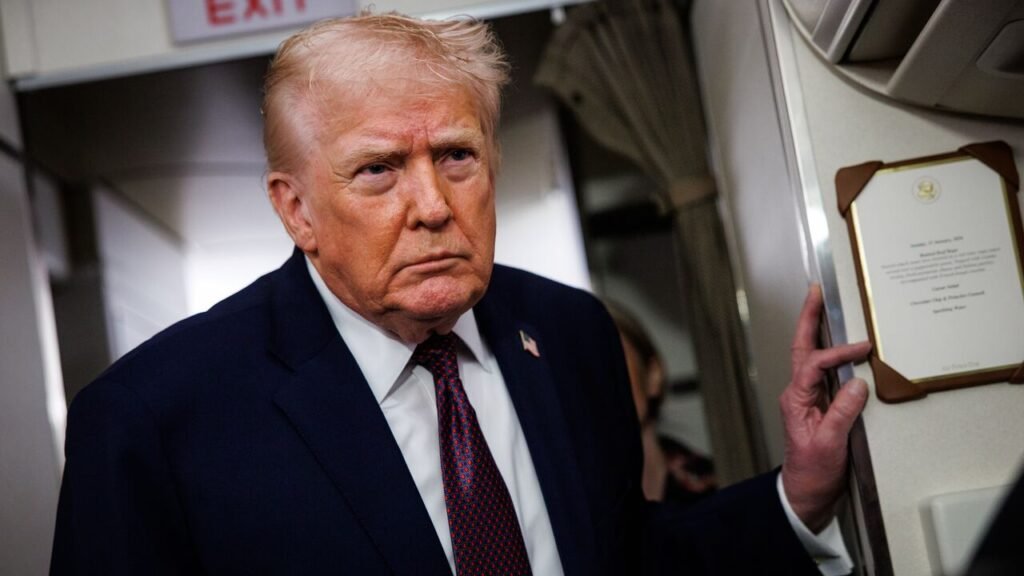
TEHRAN, Jan 13 – US president Donald Trump has delivered one of his strongest public messages yet on the escalating unrest in Iran, urging demonstrators to continue protesting while signaling that the United States could take decisive action against Tehran. His remarks, posted on his Truth Social platform, came amid mounting reports of widespread violence against protesters and growing international concern over the Iranian government’s response.
Trump’s statement marked a sharp escalation in rhetoric at a moment when demonstrations inside Iran appeared to be slowing, largely due to the intensity of the security crackdown. By encouraging protesters directly and hinting at outside support, Trump introduced a new layer of uncertainty into an already volatile situation, both for Iran’s leadership and for the global community watching events unfold.
Rising Pressure on Tehran Amid Deadly Crackdown
In his public message, Trump addressed what he called “Iranian patriots,” telling them to continue protesting and declaring that assistance was forthcoming. He also stated that he had canceled all planned meetings with Iranian officials, citing what he described as the “senseless killing” of demonstrators. The language was notable not only for its direct appeal to citizens of another country but also for its implication that diplomatic engagement with Tehran was no longer a priority.
These remarks came as reports emerged suggesting that the death toll from the protests may be far higher than Iranian authorities have acknowledged. While officials in Tehran previously admitted to around 600 deaths, independent human rights monitoring groups have estimated that as many as 2,000 people may have been killed. Such figures are difficult to verify due to strict reporting restrictions, internet shutdowns, and limitations on foreign media access, but they have fueled international outrage and intensified calls for accountability.
Trump’s stance appears to signal a rejection of Iran’s recent offer to reopen discussions on its nuclear program. Instead of renewed diplomacy, his comments suggest a willingness to consider stronger measures, including the possibility of military action. According to individuals familiar with discussions inside Washington, Trump has been consulting with advisers on a range of responses, indicating that economic pressure alone may no longer be seen as sufficient.
Economic measures are already being expanded. On Monday, Trump announced a 25% tariff on any country that continues to do business with Iran. The move effectively threatens secondary sanctions by penalizing trade partners through increased costs on their exports to the United States. Trump stated that the tariff would take effect immediately, although he did not clarify whether exemptions would apply, including for humanitarian goods such as medicine and food.
The announcement prompted a swift reaction from China, Iran’s largest trading partner. Data from the energy analytics firm Kpler shows that China accounted for roughly three quarters of Iran’s oil exports last year. Liu Pengyu, spokesperson for the Chinese embassy in Washington, warned that Beijing would take “all necessary measures” to protect its interests. In a post on X, Liu criticized tariff and trade wars as harmful to all parties and ineffective as tools of coercion.
Other major economies could also be affected. Countries such as India, the United Arab Emirates, Japan, and South Korea maintain significant trade ties with Iran. Japan and South Korea, both of which recently concluded tense trade negotiations with Washington, now face renewed uncertainty. It remains unclear whether the new tariff would be layered on top of existing US import taxes, a detail that has left governments and businesses scrambling for clarity.
Inside Iran, there have been limited signs of easing restrictions. Authorities briefly allowed citizens to make international phone calls via mobile networks, a step that offered families a rare opportunity to contact relatives abroad. However, broader internet controls remain in place, and messaging services are still largely blocked. These measures have made independent verification of events extremely challenging.
Despite the communication blackout, reports from the Associated Press cited the Human Rights Activists in Iran news agency, an organization with a track record of documenting past unrest, which placed the death toll at at least 2,000. According to that group, a portion of those killed were individuals affiliated with the government, underscoring the scale and intensity of the unrest.
International reaction has continued to build. UK Foreign Secretary Yvette Cooper announced new sector based sanctions targeting Iran’s financial system, energy transport networks, and software industries. Speaking publicly, Cooper condemned what she described as the brutal killing of peaceful demonstrators and confirmed that the Iranian ambassador had been summoned to emphasize the seriousness of the situation. She rejected Tehran’s claims that foreign interference was responsible for the violence, calling such assertions false and warning against narratives designed to inflame hostility toward the West.
The protests themselves have evolved significantly. What began as demonstrations against worsening economic conditions, including inflation and unemployment, has transformed into broader demands for political change. Many protesters are now openly calling for the end of Iran’s clerical leadership, a shift that represents one of the most direct challenges to the regime in recent years. In response, authorities have relied on mass arrests, forceful dispersal tactics, and public warnings that participation in protests could carry severe penalties, including capital punishment.
Against this backdrop, Trump’s national security team was expected to meet at the White House to review options. While it was unclear whether Trump would attend personally, discussions reportedly included scenarios ranging from targeted strikes on Iranian security infrastructure to covert operations. White House Press Secretary Karoline Leavitt told reporters that military action, including airstrikes, was among the possibilities being considered, while stressing that diplomacy remained the preferred initial approach.
From Tehran’s perspective, there has been little indication that the leadership views the crisis as existential enough to warrant concessions on its nuclear program. Foreign Minister Abbas Araghchi has been prominent among officials insisting that the protests were manipulated by hostile external actors. This narrative has been echoed across state media, even as demonstrations continue to flare despite the crackdown.
European leaders have also weighed in. German Chancellor Friedrich Merz suggested that the scale of the unrest could signal a turning point, arguing that regimes relying solely on violence to maintain control often face eventual collapse. While such statements stop short of endorsing direct intervention, they reflect a growing sense that Iran may be entering a critical phase.