
RIYADH, Dec 30 – Saudi Arabia has issued an unusually firm national security warning amid rapidly escalating tensions in Yemen, after the head of Yemen’s presidential leadership council formally asked United Arab Emirates forces to leave the country within 24 hours. The warning came shortly after airstrikes were carried out at the southern Yemeni port of Mukalla, marking a sharp deterioration in relations between two Gulf states that have long been close allies in the Yemen conflict.
The developments underline how Yemen’s already fragile political and military balance is under renewed strain, with regional rivalries now playing out more openly. While Riyadh and Abu Dhabi have cooperated for years against the Houthi movement, recent clashes involving UAE backed southern separatists have pushed their alliance to its most serious test yet.
Escalating Rift Between Former Allies
Saudi officials stated that the country’s national security represented a red line and expressed full backing for the Yemeni leadership council’s demand that UAE forces withdraw from Yemen within a day. The statement reflected the strongest language used by Riyadh so far against Abu Dhabi, signaling that the dispute had moved beyond quiet diplomacy into open confrontation.
The warning followed airstrikes on Mukalla port, located in Yemen’s eastern Hadramout province. According to statements issued by the Saudi led coalition, the strike targeted military support allegedly being provided to southern separatist forces aligned with the Southern Transitional Council, commonly known as the STC. Coalition officials said the operation was carefully conducted and resulted in no casualties or damage to civilian infrastructure.
Rashad al Alimi, head of Yemen’s presidential leadership council, accused the UAE of actively fueling internal conflict through its backing of the STC. In a televised address broadcast by Yemeni state media, Alimi said the Emirati leadership had pressured and directed the STC to undermine the authority of the internationally recognized government through military escalation. He announced the cancellation of a defense cooperation agreement with the UAE, describing it as a necessary step to protect Yemen’s sovereignty and stability.
Saudi Arabia publicly urged the UAE to comply with Alimi’s demand, an appeal that carried added weight due to the deep political and economic ties between the two Gulf powers. Both countries play central roles within the Organization of the Petroleum Exporting Countries, and any serious rift risks complicating coordination on oil production at a time when energy markets remain sensitive. Gulf financial markets reacted quickly, with major stock indexes trading lower as news of the dispute spread.
The UAE’s foreign ministry did not issue an immediate public response, maintaining silence as regional and international observers assessed the implications of the unfolding crisis.
Yemen Conflict and Strategic Fallout
The roots of the current standoff trace back to Yemen’s long running civil war. The UAE joined the Saudi led coalition in 2015 to counter the Houthi movement, which is aligned with Iran and controls much of northern Yemen, including the capital Sanaa. Although Abu Dhabi began drawing down its ground forces in 2019, it continued to support allied factions, including the STC, while maintaining its stated commitment to Yemen’s recognized government.
The STC later shifted its focus toward seeking self rule for southern Yemen, a move that placed it at odds with the central government backed by Saudi Arabia. Earlier this month, STC forces launched a surprise offensive against government troops, breaking years of relative stalemate and seizing territory across the south. The advance brought the UAE and Saudi Arabia closer than ever to direct confrontation, with Riyadh warning that the escalation risked reigniting full scale civil war.
Hadramout province, where Mukalla is located, holds particular strategic and symbolic importance. It borders Saudi Arabia and has deep historical and cultural ties with the kingdom. Many prominent Saudi families trace their roots to the region, making developments there especially sensitive for Riyadh.
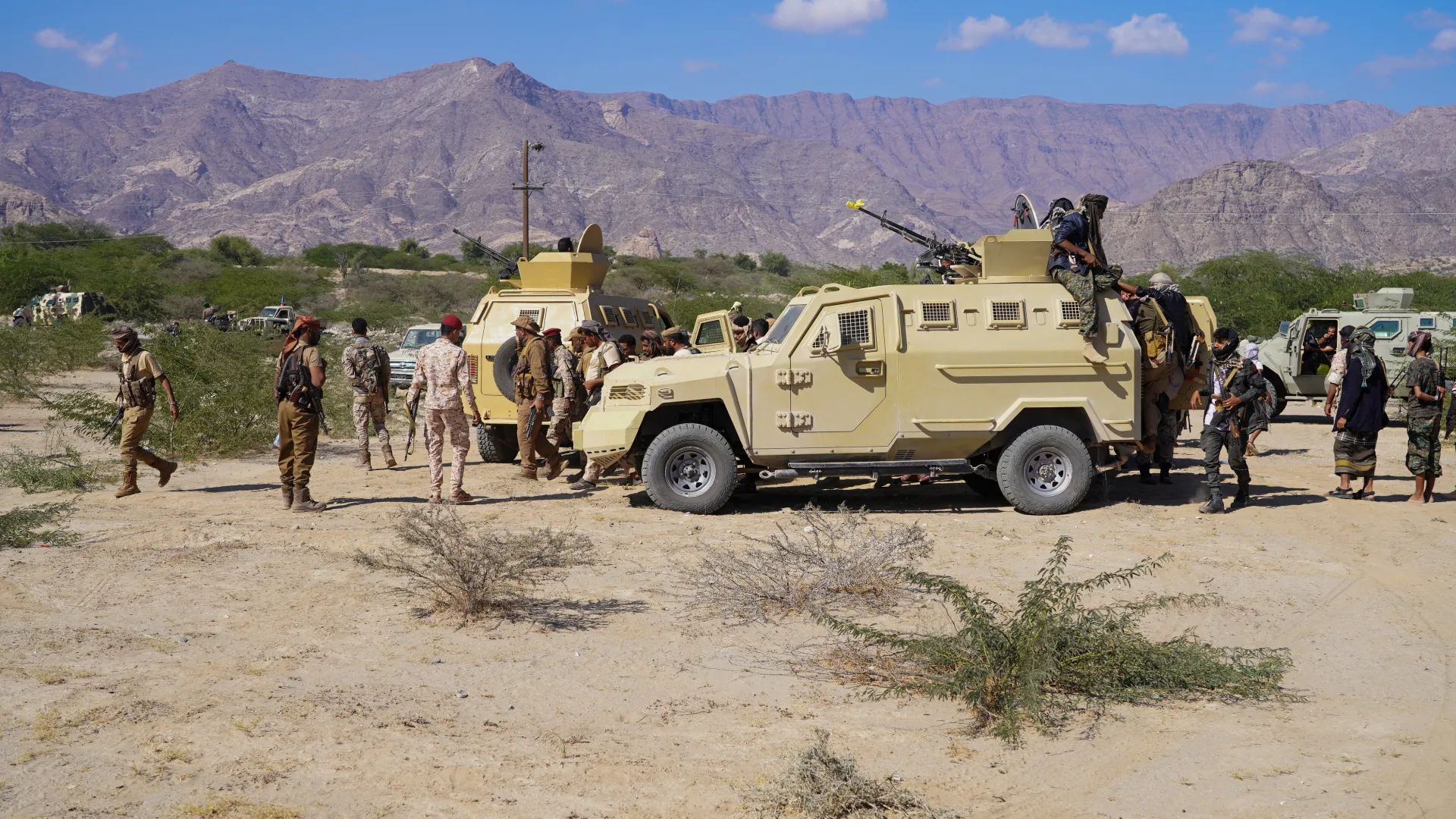
According to coalition statements, the Mukalla strike followed the arrival of two vessels that had departed from the Emirati port of Fujairah without coalition authorization. Officials said the ships disabled their tracking systems upon arrival and unloaded large quantities of weapons and combat vehicles intended to support the STC. Saudi state media later aired video footage showing a vessel identified as Greenland, which authorities said had transported military equipment from Fujairah.
Yemeni state television broadcast images of black smoke rising from the port area in the early hours after the strike, along with footage of burned vehicles. Independent verification of the cargo or the exact targets struck was not immediately possible. Yemeni officials imposed a temporary no fly zone and announced a sea and land blockade on ports and crossings for 72 hours, with exemptions requiring coalition approval.
Despite the presidential council’s actions, divisions within Yemen’s leadership were laid bare when Aidarous al Zubaidi, head of the STC and deputy head of the council, rejected Alimi’s orders. In a joint statement with three other council members, Zubaidi insisted that the UAE remained a key partner in the fight against the Houthis and argued that no single official had the authority to expel a member of the Arab coalition. The statement emphasized that such decisions were governed by regional alliances and international agreements, not individual directives.
Since 2022, the STC has been part of a Saudi backed power sharing arrangement that governs southern areas outside Houthi control. However, the latest confrontation has exposed how fragile that arrangement remains. Coalition officials reiterated that they would continue to prevent any uncoordinated military support from foreign states to Yemeni factions, stressing the need for alignment with the legitimate government.