
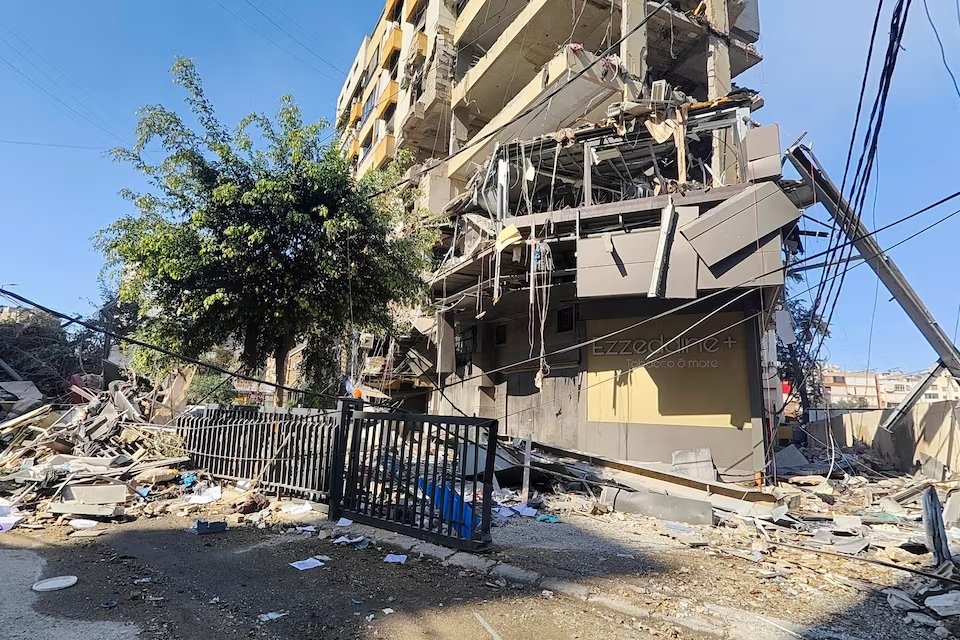
DUBAI, March 3 – The war in the Middle East intensified sharply on Tuesday as Israeli and United States forces carried out another wave of strikes across Iran, triggering retaliatory attacks around the Gulf, deepening instability in Lebanon, and sending shockwaves through global energy and financial markets. Oil prices surged, stocks fell across major exchanges, and governments rushed to protect diplomatic staff as the conflict spread far beyond its initial fronts.
The fourth day of fighting marked one of the most volatile periods the region has seen in decades, with mounting civilian casualties, widespread infrastructure damage, and rising fears that the confrontation could spiral into a broader regional war affecting global trade and energy flows.
Escalating military campaign and deepening regional fallout
US President Donald Trump said on Tuesday that American forces had struck multiple Iranian naval and air defense installations, describing the operation as highly effective and claiming that much of Iran’s military capability had been neutralized. Speaking to reporters, Trump said he had authorized the campaign after negotiations over Iran’s nuclear program collapsed, adding that he believed Tehran was preparing to launch attacks of its own.
Iranian officials strongly rejected that justification, calling the strikes an unprovoked assault on the country’s sovereignty. In response, Iran launched drones and missiles toward US diplomatic missions and military linked targets across the Gulf. Iranian drones struck the US embassy compound in Saudi Arabia after earlier attacks on the US mission in Kuwait, according to regional security officials cited by Middle Eastern media.
Washington responded by shutting its embassies in Saudi Arabia, Kuwait, and Lebanon, ordering non emergency personnel and their families to leave several countries across the region. The US State Department said the measures were precautionary, citing credible threats to American facilities and citizens.
Smoke was seen rising near the US consulate in Dubai after what officials described as a drone impact in a nearby parking area. US Secretary of State Marco Rubio said all diplomatic personnel were safe and accounted for, adding that security around American facilities had been reinforced.
Inside Iran, the scale of the Israeli strikes appeared to widen. Tehran was rocked by repeated explosions throughout the day as Israeli jets hit a range of targets, including the headquarters of the state broadcaster, areas near Mehrabad airport, and what Israeli military officials described as an underground nuclear development site in the capital.
Iranian news agencies reported that an air strike flattened a building housing the Assembly of Experts in the holy city of Qom. The body plays a central role in selecting Iran’s supreme leader. Israeli officials said they were still assessing the results of the strike. It remained unclear how many people were killed, though Trump later claimed senior Iranian figures had died in Tuesday’s attacks.
The conflict has already claimed the life of Iran’s long time leader Ayatollah Ali Khamenei, who was killed during the opening strikes on Saturday, according to multiple regional sources. A person familiar with Israeli planning said the campaign was originally designed to last about 2 weeks but was progressing more quickly than expected due to what Israel viewed as early operational success.
Trump said initial US military estimates suggested the operation could stretch to 4 or 5 weeks. Asked who might govern Iran next, he said bluntly that many potential successors were no longer alive.
The humanitarian impact inside Iran has been severe. Residents described cities emptying as people fled repeated bombardment. Hospitals have struggled to operate amid strikes and power disruptions. One Tehran resident told regional media that families were sheltering in basements each night, unsure how long the violence would last or whether help would come.
In Lebanon, Iran’s ally Hezbollah fired rockets toward northern Israel, prompting Israeli air strikes and the reinforcement of ground positions in southern Lebanon. Thick smoke hung over parts of Beirut as explosions echoed through the city. Lebanese authorities said dozens of people were killed in the latest round of fighting.
Iranian officials said total deaths from the conflict had reached 787, including a large number of civilians. State television broadcast images from the southern city of Minab, where hundreds gathered for funerals of schoolchildren killed when a school was hit on the first day of the war. The United Nations human rights office called for an independent investigation, describing the incident as horrifying and deeply disturbing.
Markets reel as energy supplies and trade routes are disrupted
Global markets reacted swiftly to the expanding conflict. Stock indexes in Asia, Europe, and the United States fell sharply as investors fled risk assets and sought safe havens. Wall Street indexes were down significantly in midday trading, following steep losses across European and Asian markets earlier in the day.
Energy prices surged amid fears of prolonged supply disruptions. Crude oil jumped about 5%, while European wholesale natural gas prices soared roughly 40% as traders priced in the risk of sustained outages from the Middle East.
Retail gasoline prices in the United States rose to an average of $3.11 per gallon, according to data from the American Automobile Association, underscoring the political sensitivity of rising fuel costs ahead of the November midterm elections.
Iran has sought to exert pressure on global markets by targeting shipping lanes. Tehran has fired missiles and drones toward neighboring Arab states hosting US bases and has severely disrupted traffic through the Strait of Hormuz, a vital waterway that carries about one fifth of the world’s oil and liquefied natural gas.
Qatar, one of the world’s largest exporters of LNG, suspended production as tankers dropped anchor in the Gulf rather than risk transiting the strait. Shipping industry officials said the cost of chartering a tanker to carry oil from the Middle East to Asia had nearly quadrupled in a matter of days, reaching record levels above $400,000 per day.
Trump said the US government would provide insurance coverage to commercial tankers operating in the region and that the US Navy stood ready to escort vessels through the strait if required.
Global air travel has also been thrown into disarray. Several major Middle Eastern air hubs linking Asia, Europe, and Africa suspended operations, forcing airlines to cancel or reroute flights and stranding thousands of passengers.
Despite Israeli officials openly stating their desire to see Iran’s current leadership removed, US officials have emphasized that Washington’s stated objective is to dismantle Iran’s ability to project military power beyond its borders. In a closed briefing with foreign diplomats, Israeli Foreign Minister Gideon Saar reportedly said there was no fixed timetable for the campaign and acknowledged that Iran’s government could survive the fighting, though he expressed confidence it would eventually collapse.
Trump echoed calls for political change in Iran but urged caution, warning Iranians against taking to the streets while the fighting continued. In Israel, meanwhile, air raid sirens sounded repeatedly as Iranian missiles targeted cities, killing at least 10 people since Saturday and sending millions into bomb shelters as interceptors thundered overhead.