
TEHRAN, March 8 – The conflict between Israel and Iran entered a dangerous new phase early Sunday as Israeli forces carried out fresh strikes near Tehran while Iranian drone attacks spread across several Gulf states. The escalating violence has intensified regional fears, disrupted critical infrastructure, and raised global concerns about a wider Middle East war.
Israeli strikes targeted large fuel storage facilities near the Iranian capital overnight, sending massive plumes of fire and thick smoke into the sky. At the same time, Gulf governments reported drone attacks on infrastructure and government buildings, suggesting that the confrontation is rapidly expanding beyond the direct battlefield between Israel and Iran.
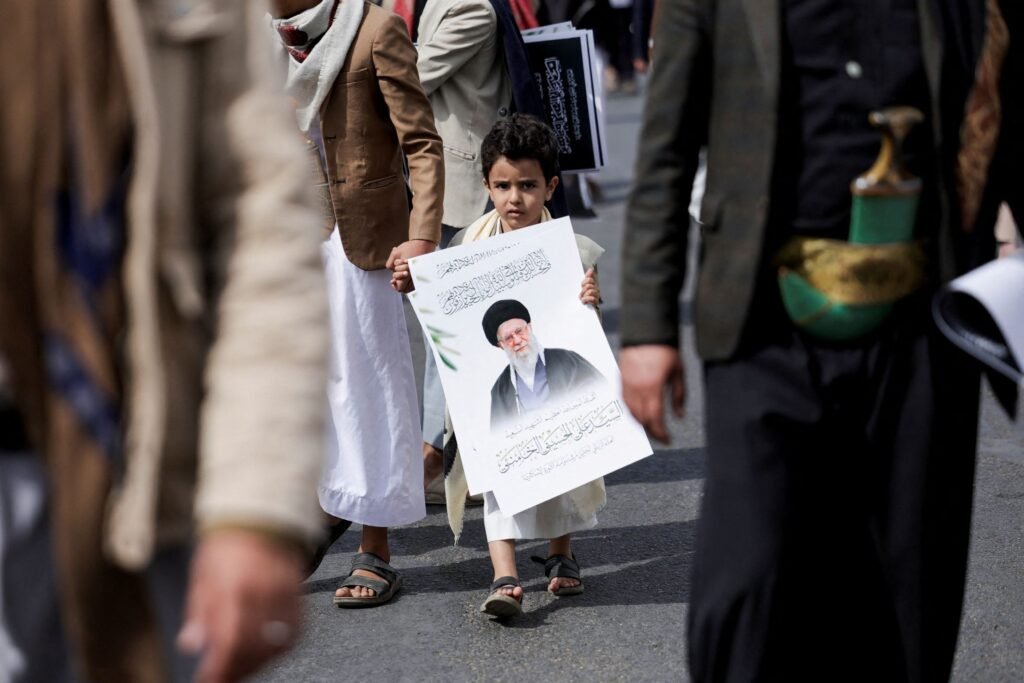
The situation has grown even more volatile as Iran appears close to appointing a successor to its slain supreme leader, Ali Khamenei, who was killed earlier in the conflict. Israeli leaders have warned that any replacement could also become a target.
Israeli Strikes Target Strategic Fuel Sites in Tehran
Witness footage from Tehran showed towering columns of black smoke hanging over the city following Israeli airstrikes on oil storage depots. The explosions lit up the night sky and sparked fires that burned for hours, marking one of the most visible attacks on Iran’s energy infrastructure since the war began.
According to Iran’s national oil distribution authorities, four workers were killed in the strikes. Officials said temporary fuel rationing would be introduced in some areas to ensure supplies remain available while damage assessments and repairs take place.
Israeli officials argued the targeted fuel reserves were being used to support military operations and weapons development. A source familiar with Israel’s military planning said the facilities were connected to operations supporting military bases and weapons production systems.
Israeli Prime Minister Benjamin Netanyahu signaled that the attacks were part of a broader strategy aimed at weakening Iran’s leadership and military command structure. In a video message, Netanyahu said Israel intends to continue the campaign and strike additional targets.
He also suggested that further operations could destabilize Iran’s ruling establishment, indicating that more unexpected developments may unfold in the coming days.
Meanwhile, U.S. President Donald Trump adopted a hardline tone regarding the conflict. Speaking to reporters aboard Air Force One, Trump suggested that the war could continue until Iran’s military structure and political leadership collapse.
Trump also dismissed the possibility of negotiating an immediate end to the fighting, despite rising global energy prices and disruptions to international air travel caused by the hostilities.
Drone Attacks Spread Across Gulf States
While Israeli strikes hit targets inside Iran, Tehran appeared to expand its retaliation across the Gulf region. Governments in Saudi Arabia, Kuwait, the United Arab Emirates, and Bahrain reported Iranian drone attacks late Saturday and early Sunday.
In Kuwait, a large fire engulfed a government office building following a drone strike. Authorities from the interior ministry confirmed that two security officers were killed while responding to the incident.
Bahrain reported damage to a desalination plant after a drone attack struck the facility. Officials from the country’s electricity and water authority said the incident caused structural damage but did not interrupt water production or supply to residents.
The strike marked the first known attack on a desalination facility during the current conflict. Such facilities are essential in Gulf countries where desalinated seawater supplies most drinking water.
Iran has accused the United States of previously striking a desalination plant on Qeshm Island, an attack that disrupted freshwater access for dozens of villages. Iranian officials described that strike as a dangerous escalation with potentially severe humanitarian consequences.
Amid rising tensions with Gulf neighbors, Iranian President Masoud Pezeshkian attempted to ease diplomatic friction. He issued an apology to regional governments after Iranian strikes targeted U.S. military bases located in several Gulf countries.
However, his remarks sparked criticism from hardline political factions within Iran. In response, the president’s office later clarified that Iran’s armed forces would continue responding forcefully to any attacks originating from U.S. military installations in the region.
At the same time, Saudi officials privately warned Tehran that continued attacks on Saudi territory or energy infrastructure could trigger a direct response from Riyadh, according to people familiar with the diplomatic exchanges.
Tehran Moves Toward Choosing a New Supreme Leader
Inside Iran, the political system is also undergoing a critical transition following the death of Ali Khamenei earlier in the conflict.
The Assembly of Experts, the powerful clerical body responsible for selecting Iran’s supreme leader, is reportedly preparing to convene to finalize the appointment of a successor. Iranian media outlets reported that discussions among senior clerics have already produced a broad consensus.
Ayatollah Mohammadmehdi Mirbaqeri, a member of the Assembly of Experts, told the Iranian news agency Mehr that most members have reached agreement on a candidate.
Another cleric involved in the selection process, Ayatollah Mohsen Heidari Alekasir, said the individual chosen aligns with Khamenei’s long stated principle that Iran’s supreme leader must be someone strongly opposed by the country’s adversaries.
Sources within Iran’s political establishment have indicated that the leading candidate is Mojtaba Khamenei, the late leader’s son. Over the past two decades he built significant influence within Iran’s security networks and political institutions.
If confirmed, his selection would signal continuity of Iran’s hardline leadership and reinforce the influence of conservative factions within the country’s power structure.
Meanwhile, the war continues to claim lives across multiple countries. Iranian officials reported that more than 1,300 civilians have been killed since the beginning of the U.S. and Israeli strikes. Iranian attacks have also caused casualties in Israel and among U.S. military personnel stationed in the region.
The Iran backed militant group Hezbollah recently launched rockets and drones toward Israel, prompting Israeli strikes in Lebanon. One of those attacks hit a hotel building in central Beirut, killing several people and raising fears that the fighting could expand deeper into Lebanese territory.