
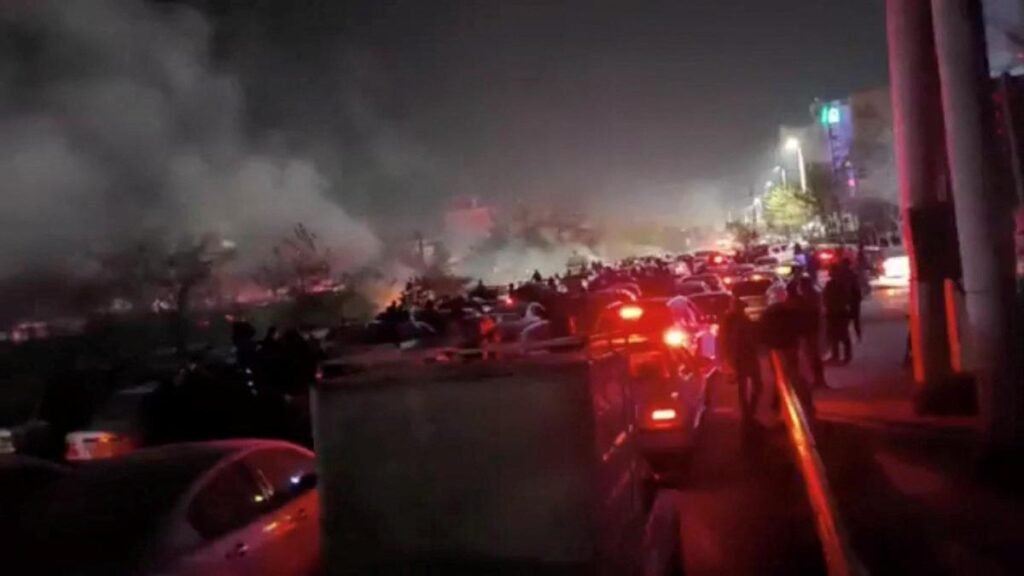
TEHRAN, Jan 11 – Iran has issued stark warnings to the United States and Israel as nationwide protests continue to grip the country, entering their third week with no clear sign of easing. Demonstrations that began over economic hardship have grown into a broader challenge to Iran’s political system, prompting forceful rhetoric from senior Iranian officials and raising fears of a wider regional crisis if foreign powers intervene.
The protests have spread across major urban centers, including Tehran and Mashhad, despite heavy security measures and an extensive communications blackout. Activists and observers say the situation remains volatile, with rising casualties, mass detentions, and increasingly severe threats from both Iranian authorities and the United States.
Rising Protests and Escalating Threats
Crowds have repeatedly taken to the streets in Tehran, Iran’s capital, and Mashhad, the country’s second largest city, marking more than two weeks of sustained unrest. According to information compiled by Iranian human rights monitors operating abroad, at least 116 people have been killed since the demonstrations began, while more than 2,600 individuals have been detained. These figures could rise further as access to information from inside the country remains sharply limited.
Iranian authorities have largely shut down internet access and international phone lines, making independent verification difficult. Activists outside Iran fear the blackout is designed to give security forces greater freedom to suppress protests without scrutiny. Despite these restrictions, videos and images continue to surface, reportedly transmitted via satellite connections, showing gatherings of demonstrators, street blockades, and confrontations with security personnel.
As protests persisted, Iran’s political leadership adopted a more confrontational tone toward Washington. Mohammad Bagher Qalibaf, the speaker of Iran’s parliament and a prominent hard liner, warned that US military forces and Israel would be considered legitimate targets if the United States were to strike Iran. His comments came during a live broadcast session of parliament, where lawmakers chanted anti American slogans and expressed support for security forces responding to the unrest.
Qalibaf praised the police, the Revolutionary Guard, and its volunteer Basij force for what he described as firm action against protesters. He also issued a blunt warning to demonstrators, stating that authorities would deal harshly with those arrested and impose severe punishment.
Referring to Israel as occupied territory, Qalibaf said Iran would not limit itself to a retaliatory response if it perceived signs of an impending attack. Instead, he suggested Iran could act preemptively, targeting US bases, ships, and military installations across the region.
The threat underscores heightened tensions following recent clashes between Iran and Israel earlier this year, which reportedly damaged parts of Iran’s air defense network. Any major military decision, however, ultimately rests with Iran’s Supreme Leader, Ayatollah Ali Khamenei, who has so far signaled little tolerance for dissent.
From Washington, President Donald Trump has publicly voiced support for Iranian protesters, framing their actions as a push for freedom. In social media posts, he said the United States stood ready to help peaceful demonstrators. At the same time, his administration has adopted a tough tone toward Tehran. Senior US officials have confirmed that military options were presented to the president, though no final decision on a strike has been announced, according to reports from major American newspapers citing unnamed officials familiar with the matter.
The US State Department issued a separate warning, stressing that the president’s statements should be taken seriously. US military officials have also said American forces in the Middle East remain fully prepared to defend personnel, allies, and regional interests if tensions escalate.
Inside Iran, scenes from the streets point to a complex and uneven picture. In northern Tehran neighborhoods such as Punak, videos show protesters waving mobile phone lights, blocking roads, and making noise with metal objects and fireworks. Other clips appear to show peaceful marches and coordinated car horn protests. In Mashhad, footage suggests more intense confrontations, with burning debris used to block streets near areas of religious significance, including routes leading toward the Imam Reza shrine, the holiest site in Shiite Islam. Protests have also been reported in cities like Kerman, highlighting the nationwide scope of the unrest.
State television has sought to counter these images by broadcasting reports from selected cities showing calm streets and pro government rallies in places such as Qom and Qazvin. Notably, coverage from Tehran and Mashhad has been absent. Iranian officials have also intensified legal threats. Attorney General Mohammad Movahedi Azad warned that participation in protests would be treated as enmity against God, a charge that carries the death penalty under Iranian law. The warning extended to anyone accused of aiding protesters.
The protests were initially sparked by the sharp collapse of Iran’s currency, with the rial trading at historic lows as international sanctions continue to weigh on the economy, particularly those linked to Iran’s nuclear program. What began as economic anger has since evolved into open criticism of Iran’s ruling system, with some demonstrators reportedly invoking slogans from the pre 1979 era.
Iran’s exiled former crown prince, Reza Pahlavi, has called for continued demonstrations and urged protesters to reclaim public spaces using national symbols associated with Iran’s past monarchy. His involvement has drawn mixed reactions, especially given his public support for Israel, which remains deeply controversial inside Iran.
2 thoughts on “Iran warns US and Israel could be targeted if Washington intervenes amid protests”