
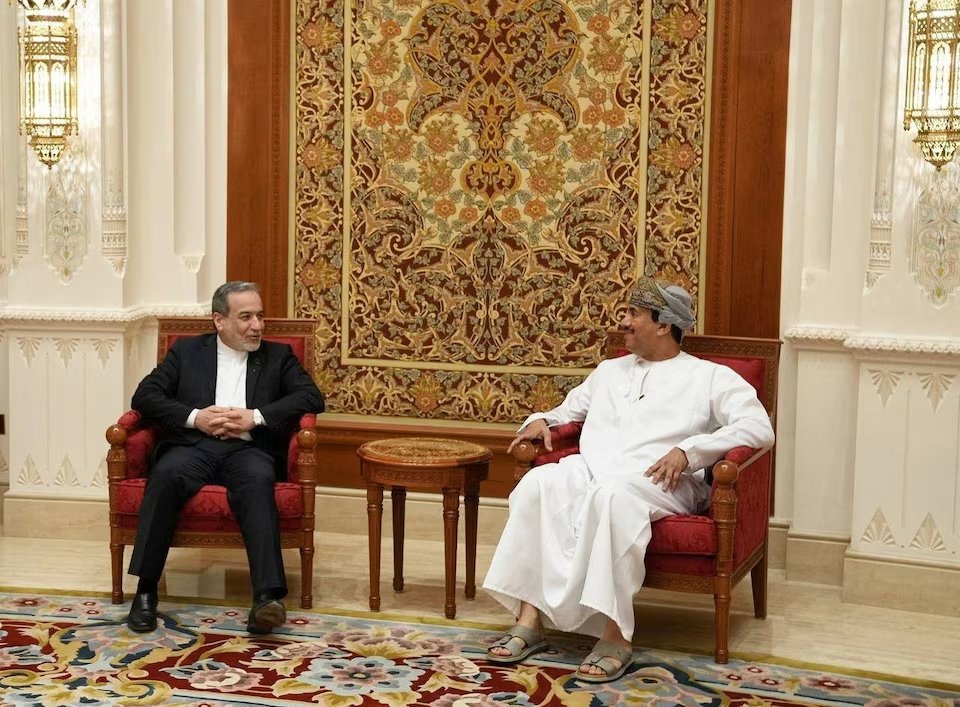
MUSCAT, Feb 6 – Iran and the United States have edged back to the negotiating table in Oman at a moment of intense regional strain, with both sides weighing diplomacy against the risk of open conflict. The indirect talks, facilitated by Omani mediators in Muscat, come amid sharp disagreements over Iran’s nuclear programme, Washington’s expanding military presence in the Gulf, and Tehran’s refusal to discuss its missile capabilities. With mistrust running deep and rhetoric hardening on both sides, the negotiations are widely seen as a critical test of whether diplomacy can still prevent another destabilising crisis in the Middle East.
According to officials familiar with the process, the discussions are expected to follow a shuttle format, with Omani intermediaries carrying messages between the two delegations rather than face to face meetings. Iranian representatives have stressed that the talks should remain narrowly focused on nuclear issues, while U.S. officials have signalled they want a broader agenda that addresses Iran’s regional activities and internal conduct. This fundamental disagreement over scope threatens to overshadow the substance of the negotiations before they formally begin.
Nuclear Focus vs Wider Demands
Iranian officials have made it clear that their priority is the nuclear file and nothing else. Tehran wants explicit recognition of its right to enrich uranium and relief from economic sanctions that have weighed heavily on its economy for years. An Iranian diplomatic source, speaking on condition of anonymity, said Iran’s expectations had already been conveyed to Washington through Oman and warned that introducing military officials or expanding the agenda could derail the fragile process.
From the U.S. perspective, however, the nuclear programme cannot be separated from Iran’s broader behaviour. U.S. Secretary of State Marco Rubio said on Wednesday that any meaningful dialogue must also address Iran’s ballistic missile development, its support for armed groups across the region, and what he described as the authorities’ treatment of their own population. These comments, reported by several international media outlets, underscored Washington’s belief that a narrow nuclear deal would leave other perceived threats untouched.
The choice of negotiators reflects both continuity and controversy. Iran has said Foreign Minister Abbas Araqchi will lead its side, while Washington is represented by Middle East envoy Steve Witkoff. Adding another layer of complexity, Jared Kushner, President Donald Trump’s son in law and a key figure in earlier Middle East diplomacy, is also expected to be involved. His participation has drawn attention in regional media, given his previous role in negotiations related to Gaza and Israel.
For Tehran, one issue remains strictly off limits. Iranian leaders have repeatedly stated that their ballistic missile programme is a core element of national defence and will not be discussed under any circumstances. State media reinforced this stance ahead of the talks by showcasing the deployment of the Khorramshahr 4, described as one of Iran’s most advanced long range missiles, at an underground facility operated by the Revolutionary Guards. The broadcast was widely interpreted by analysts as a message to Washington that military pressure would not force concessions on this front.
At the same time, Iranian officials have hinted at flexibility on nuclear matters. Officials familiar with internal discussions have said Tehran could consider limits on enrichment levels, including transferring a significant stockpile of highly enriched uranium abroad or participating in a multinational consortium that would result in zero domestic enrichment. Such proposals are framed as confidence building measures, provided sanctions are lifted and Iran receives tangible economic relief.
Military Pressure and Regional Stakes
The backdrop to the talks is a growing U.S. military buildup in the region, which Washington says is intended to deter aggression and protect its interests. President Donald Trump has described the deployment of additional naval assets as a massive armada, language that has resonated strongly in Tehran. Iranian leaders remain concerned that the show of force signals readiness for military action if diplomacy fails.
These fears are shaped by recent history. Last June, the United States struck Iranian nuclear facilities during the final phase of an Israeli air campaign that lasted nearly two weeks. Although Iran later said its enrichment activities had been halted, the episode deepened mistrust and hardened attitudes on both sides. Since then, tensions have been further inflamed by unrest inside Iran, where security forces carried out a violent crackdown on nationwide protests last month. U.S. officials have publicly criticised the response, adding another layer of friction to an already strained relationship.
The White House has not ruled out the use of force. Speaking to reporters, Press Secretary Karoline Leavitt said the president had many options beyond diplomacy, a remark that was widely reported and interpreted as a warning to Tehran. Trump himself has said that failure to reach an agreement could lead to serious consequences, language that has been echoed by senior members of his administration.
European governments, which were parties to the 2015 nuclear agreement abandoned by Trump in 2018, have expressed concern that a collapse of talks could trigger another conflict. Russia, a key ally of Iran, said through Kremlin spokespersons that it hoped the negotiations would lead to de escalation and urged all sides to exercise restraint. Such statements, reported by Russian and international news agencies, highlight the broader geopolitical stakes involved.
Iran has also issued warnings of its own. Officials have said any military strike would be met with a strong response and cautioned neighbouring Gulf states hosting U.S. bases that they could become targets if they were involved in an attack. This rhetoric underscores how quickly a bilateral confrontation could spill over into a wider regional crisis, threatening energy supplies and stability in one of the world’s most strategically vital areas.
Israel remains a central factor in the equation. Israeli leaders have long argued that Iran’s missile arsenal poses as much of a threat as its nuclear ambitions. Prime Minister Benjamin Netanyahu has publicly compared the two, using stark imagery to convey what he sees as an existential danger. Israel’s campaign against Iranian aligned groups since the Gaza war began in 2023 has significantly weakened Tehran’s regional network, often referred to as the Axis of Resistance. The fall of Syria’s President Bashar al Assad further shifted the balance, reducing Iran’s influence but also raising the stakes for its remaining deterrents.