
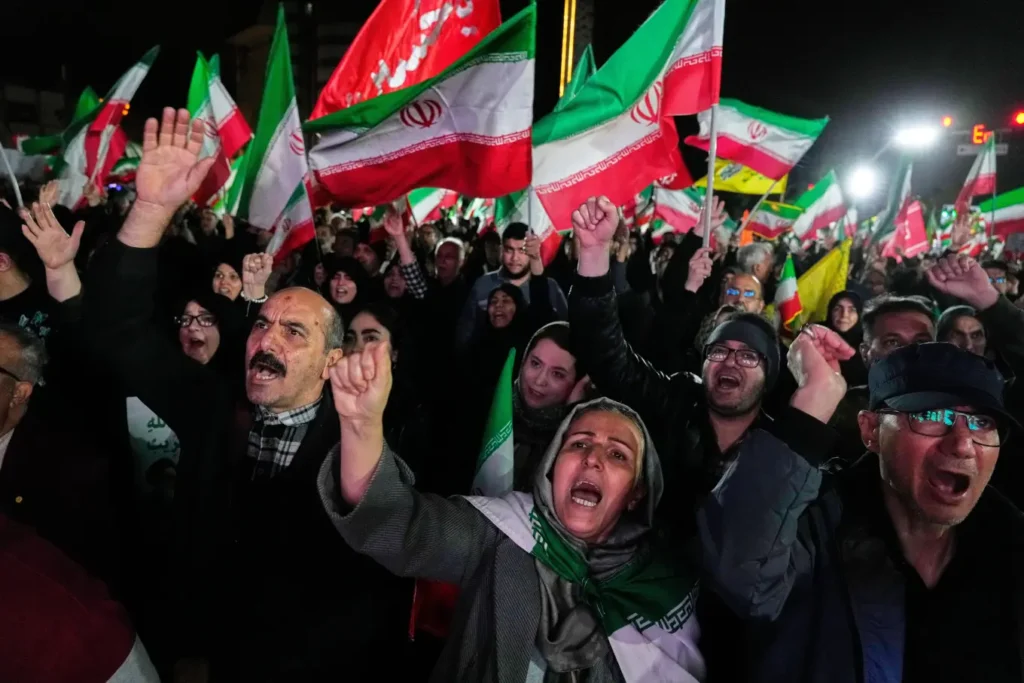
TEHRAN/ WASHINGTON, March 26 – Tensions across the Middle East escalated sharply on Thursday as Iran and the US moved further apart on the possibility of negotiations, raising fears of a prolonged and potentially more dangerous phase of conflict. With military activity intensifying on multiple fronts, including the Strait of Hormuz, southern Lebanon, and key Iranian cities, the situation appears increasingly volatile, with both sides signaling they are prepared for a drawn out confrontation.
Sirens echoed across parts of Israel as incoming missile threats were detected, while Gulf nations scrambled to intercept projectiles in their airspace. Reports from within Iran described powerful explosions in Tehran and other strategic locations, indicating a continuation of large scale strikes targeting military and infrastructure assets. Against this backdrop, diplomatic channels remain strained, with little sign of an immediate breakthrough.
Escalating Military Pressure Across the Region
The conflict has rapidly expanded beyond isolated exchanges into a broader regional crisis. Israel has intensified its operations, confirming the deployment of an additional military division into southern Lebanon as part of its ongoing campaign against Hezbollah. According to Israeli military officials, the move is aimed at weakening the Iran backed group and securing its northern borders from persistent attacks.
At the same time, Israeli defense authorities, including Defense Minister Israel Katz, stated that targeted strikes had eliminated key Iranian naval figures, among them Revolutionary Guard naval commander Alireza Tangsiri and intelligence official Behnam Rezaei. While Iranian authorities have yet to formally confirm these losses, the strikes represent a significant escalation in targeting high ranking personnel.
Iran, for its part, has continued launching missile barrages toward Israel and other regional targets. Emergency services in Israel reported casualties following one such attack in the northern coastal city of Nahariya. Meanwhile, in the United Arab Emirates, officials confirmed that debris from intercepted missiles resulted in civilian deaths in Abu Dhabi, highlighting how the conflict is spilling beyond traditional battle zones.
The United States has also expanded its military footprint in the region. Defense officials confirmed that thousands of additional troops are being positioned closer to the Middle East, including Marines aboard the USS Tripoli and paratroopers from the 82nd Airborne Division. Their presence underscores Washington’s readiness to respond quickly to further escalation or threats to strategic assets.
Strait of Hormuz Becomes Strategic Pressure Point
One of the most critical developments in the conflict has been Iran’s tightening control over the Strait of Hormuz, a vital maritime corridor through which a significant portion of the world’s energy supply passes. In peacetime conditions, nearly one fifth of global oil and natural gas shipments move through this narrow waterway, making any disruption a matter of global concern.
Recent reports from maritime intelligence groups such as Lloyd’s List Intelligence suggest that Iran is effectively operating the strait as a controlled passage, selectively allowing vessels through while restricting others believed to be linked to the United States or its allies. The same reports describe the situation as a “de facto toll system,” with some ships allegedly paying fees in foreign currencies, including Chinese yuan, to ensure safe transit.
Officials from the Gulf Cooperation Council, including Secretary General Jasem Mohamed al Budaiwi, have publicly raised concerns about these developments, noting that such practices could destabilize international trade and energy markets. Iranian media outlets close to the government, including Fars and Tasnim, have quoted lawmakers defending the approach as a legitimate exercise of sovereignty, with discussions underway in parliament to formalize the policy.
The economic impact has already been significant. Oil prices have surged dramatically, with Brent crude crossing the $100 mark, reflecting fears of supply disruptions. European officials, including Germany’s Defense Minister Boris Pistorius, have warned that continued instability in the strait could trigger severe consequences for global economies, affecting everything from fuel costs to food prices.
Tehran Dismisses U.S. Proposals While Washington Warns Time Is Running Out
Despite growing international pressure, diplomatic efforts have yet to yield meaningful progress. The United States has attempted to open indirect communication channels, reportedly using intermediaries such as Pakistan and Egypt to convey proposals aimed at de escalating the conflict. U.S. envoy Steve Witkoff confirmed the existence of a detailed framework outlining steps toward a potential agreement, describing it as a critical moment for Iran to reconsider its position.
However, Iranian leadership has shown little willingness to engage under current conditions. Foreign Minister Abbas Araghchi stated during an interview on state television that no formal negotiations are underway, dismissing indirect messages as insufficient for meaningful dialogue. He emphasized that any future talks would require recognition of Iran’s terms, including its strategic interests in the Strait of Hormuz.
Iranian state broadcaster Press TV also outlined elements of Tehran’s own proposal, which reportedly includes demands for reparations and acknowledgment of its authority over key regional waterways. These positions stand in stark contrast to U.S. expectations, which have ranged from limiting Iran’s missile capabilities to curbing its support for allied armed groups.
President Trump has taken a firm stance, warning that failure to reopen the Strait of Hormuz fully could lead to direct strikes on Iranian infrastructure, including power facilities. In recent remarks, he urged Tehran to act quickly, suggesting that the window for diplomacy may soon close.
As the conflict approaches its one month mark, the human toll continues to rise across multiple countries. Casualty figures reported by regional health authorities and international media indicate thousands of deaths in Iran, along with losses in Israel, Lebanon, Iraq, and among U.S. forces. Civilians in several Gulf states have also been caught in the crossfire, underscoring the far reaching consequences of the confrontation.