
NEW YORK, March 24 – A surge in optimism that lifted U.S. financial markets at the start of the week began to fade on Tuesday, as investors reassessed the reality of ongoing conflict in the Middle East. After an initial rally fueled by comments from President Trump suggesting potential diplomatic progress with Iran, markets pulled back amid continued military activity and renewed uncertainty over global energy supplies.
US Stocks Slip as Iran Denies Trump Talks
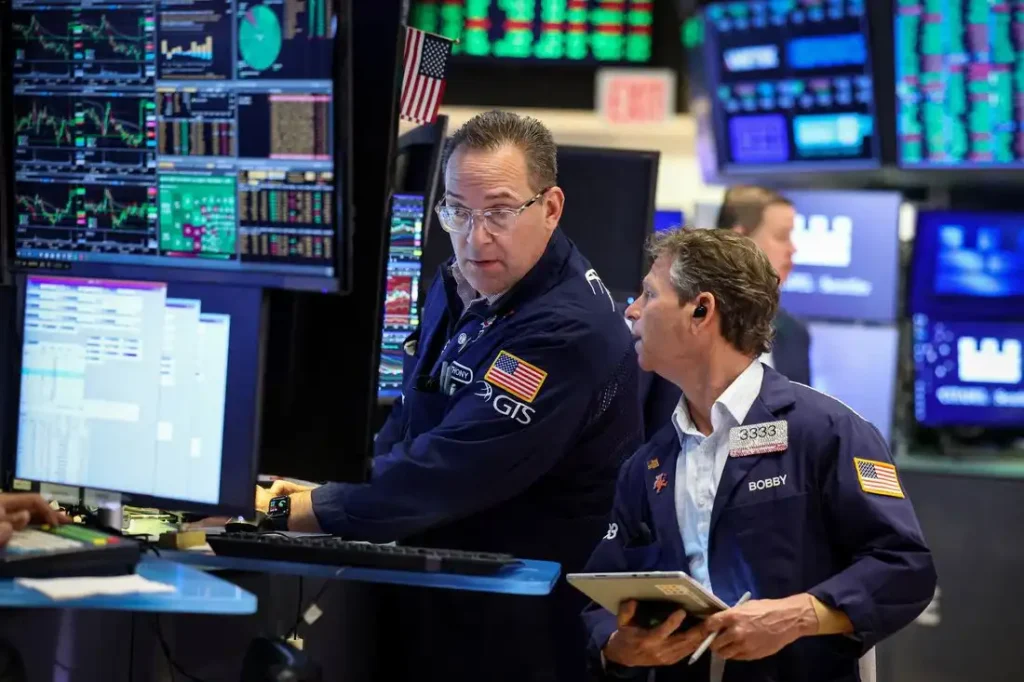
By mid-morning trading in New York, major stock indexes had slipped, giving back a portion of the previous session’s gains. The S&P 500 declined by around 0.4%, erasing a significant chunk of Monday’s rally. The Dow Jones Industrial Average dropped roughly 127 points, or 0.3% as of 10:30 a.m. EST, while the Nasdaq Composite saw a steeper decline of about 0.8%, reflecting pressure on technology stocks.
The shift in sentiment coincided with a rebound in oil prices. Brent crude, the international benchmark, rose nearly 3% to $102.84 per barrel after experiencing a sharp drop the day before. Similarly, U.S. benchmark crude climbed more than 4% to $91.73, recovering some of its earlier losses. These movements signaled that concerns about supply disruptions in the energy-rich Persian Gulf remain very much alive.
The initial rally earlier in the week had been sparked by Trump’s remarks indicating that the United States and Iran had engaged in “productive” discussions aimed at resolving hostilities. That statement briefly eased fears of a prolonged conflict that could severely disrupt oil and gas flows from the region, potentially triggering global inflation.
However, Iranian officials quickly denied that such negotiations were taking place. At the same time, reports of continued airstrikes and missile attacks reinforced the perception that tensions remain high. This disconnect between political messaging and on-the-ground developments led investors to dial back their optimism.
Beyond equities and oil, the bond market also reflected growing caution. Treasury yields moved higher, adding pressure across financial markets. The yield on the 10-year Treasury note climbed to 4.38%, up from 4.34% a day earlier and significantly higher than levels seen before the conflict escalated. Meanwhile, the two-year Treasury yield rose to 3.89%, indicating shifting expectations around monetary policy.
Rising yields have a broad impact. They increase borrowing costs for consumers and businesses, making mortgages, loans, and credit more expensive. This tends to slow economic activity, which in turn can weigh on corporate earnings and stock valuations. Higher yields also reduce the appeal of riskier assets like equities, gold, and cryptocurrencies.
The Federal Reserve’s policy outlook has also been reshaped by recent developments. At the beginning of the year, many investors anticipated that the central bank would begin cutting interest rates to support economic growth. But the surge in oil prices and the associated inflation risks have forced a reassessment. According to market data, expectations for rate cuts have largely faded, with some traders now considering the possibility of rate hikes later in the year.
Corporate developments added another layer of complexity to Tuesday’s trading session. Shares of Estée Lauder fell sharply, dropping more than 9% after the company confirmed it is exploring a potential merger with Spanish cosmetics group Puig. The proposed deal could bring together several well-known beauty brands under one umbrella, including MAC, Clinique, Charlotte Tilbury, and Apivita. While the strategic implications are significant, uncertainty around the outcome weighed on investor sentiment.
Concerns surrounding the private credit sector also contributed to the market’s decline. This rapidly growing segment of the financial industry has been under scrutiny due to its exposure to companies that may struggle in an increasingly competitive and technologically driven environment. Some investors have begun withdrawing funds, creating liquidity challenges for managers holding long-term loans.
One notable example involved a fund linked to Apollo Global Management, which recently limited investor withdrawals. The Apollo Debt Solutions BDC capped redemptions at 5% of its assets after requests exceeded 11%. The move highlighted the strain within the sector and sent Apollo’s shares lower by nearly 5%.
Despite the broader downturn, there were pockets of strength. Smithfield Foods stood out as a notable gainer, with its stock rising 7.6% after reporting better-than-expected quarterly earnings. Strong performance in both revenue and profit helped offset some of the negative sentiment in the market.
International markets offered a mixed picture. European indexes showed modest and uneven movements, reflecting similar uncertainties. In contrast, Asian markets posted gains, reacting to the earlier optimism sparked by Trump’s comments. Hong Kong’s Hang Seng index jumped 2.8%, while South Korea’s Kospi rose 2.7%, marking some of the strongest performances globally for the day.
Overall, Tuesday’s market action underscored the fragile nature of investor confidence in the current environment. While hopes for diplomatic progress can quickly lift sentiment, they can just as easily fade when contradicted by unfolding events. With geopolitical tensions, fluctuating energy prices, and shifting monetary policy expectations all in play, markets are likely to remain volatile in the near term.