
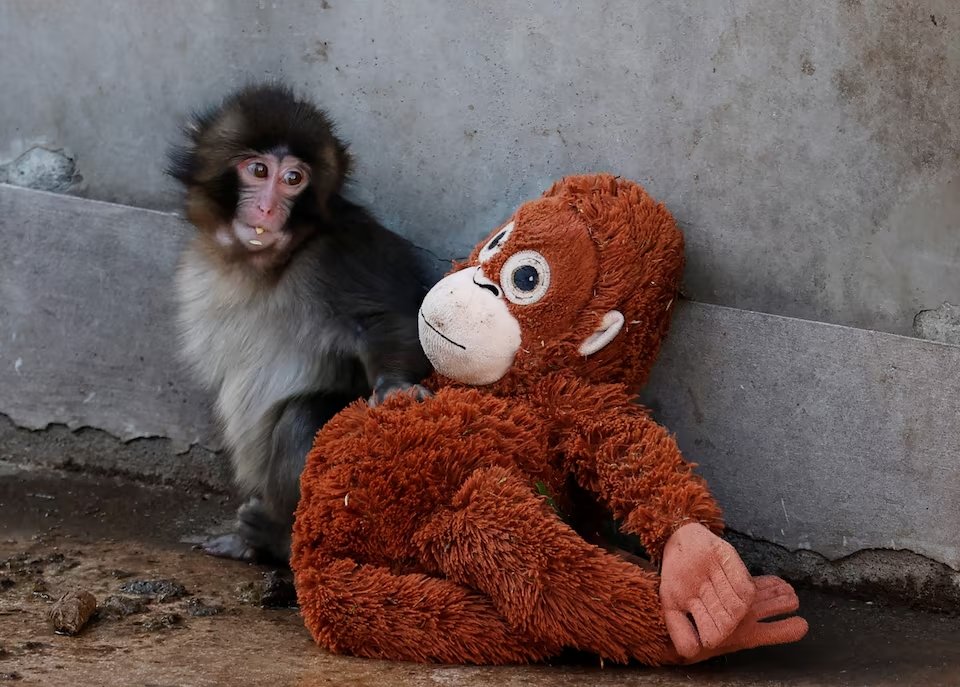
ICHIKAWA, Japan, Feb 20 – At a quiet zoo on the outskirts of Tokyo, a small and unexpectedly tender story has been unfolding, one that has captured the attention of visitors and social media users alike. In one of the enclosures, a baby Japanese macaque named Punch has formed an inseparable bond with an unlikely companion, a large stuffed orangutan toy. The sight of the tiny monkey clinging to the plush figure has become a symbol of resilience and adaptation, turning the enclosure into one of the most talked about spots at the zoo.
Punch was born about seven months ago at Ichikawa City Zoo in Chiba Prefecture. Shortly after his birth, keepers noticed something was wrong. His mother, who under normal circumstances would have carried him closely for warmth, safety, and development, showed no interest in caring for him. An observant visitor alerted zoo staff when the newborn macaque was seen alone, prompting keepers to step in quickly. According to zoo officials, such abandonment is rare but not unheard of, especially when environmental conditions place stress on animals.
Japanese macaques are highly social primates. In their early months, infants spend nearly all their time clinging to their mothers’ bodies. This close contact is essential for muscle development, balance, and emotional security. Without it, a baby macaque can struggle both physically and socially. Zookeeper Kosuke Shikano explained in an interview conducted at the zoo that immediate intervention was necessary to give Punch a chance to survive and eventually integrate with the rest of the troop.
The first challenge for the keepers was finding a suitable substitute for a mother’s constant presence. Initially, they tried rolled towels and smaller stuffed animals to give Punch something to cling to. However, these makeshift solutions did not fully meet his needs. Punch appeared restless and did not hold onto them in the same way he would a living caregiver. After a series of trials, the team introduced a large orange stuffed orangutan, originally sold as a children’s toy. Its long limbs, soft fur, and expressive face made it easier for Punch to grip and curl against.
Shikano noted that the choice was not accidental. The keepers wanted something that roughly resembled a primate in shape and texture. In their professional judgment, this might help Punch develop behaviors that would later allow him to interact more naturally with other monkeys. “This stuffed animal has relatively long hair and several easy places to hold,” Shikano said during a routine briefing with visitors. He added that its resemblance to a monkey-like figure was a key reason it was selected.
From the moment the orangutan toy was introduced, Punch’s behavior changed noticeably. He began clinging to it almost constantly, wrapping his arms and legs around it as he moved through the enclosure. Despite the toy being larger than his small body, Punch drags it along with determination, sometimes stopping to adjust his grip before continuing on his way. Zoo staff say he rarely lets it out of his sight, even during feeding times or short periods of rest.
Videos and photos of Punch and his plush companion soon found their way onto social media, where they spread rapidly. Visitors began arriving specifically to see the young macaque, many describing the scene as both heartwarming and bittersweet. Among them was Miyu Igarashi, a 26-year-old nurse who traveled to the zoo with a friend after seeing Punch online. Speaking to local media at the zoo, she said watching the baby monkey persevere despite being abandoned deeply moved her. For many visitors, Punch represents vulnerability paired with determination, a combination that resonates across species.
While the public response has been overwhelmingly emotional, zoo staff remain focused on Punch’s long-term well-being. According to Shikano, the goal has never been to keep Punch dependent on the stuffed toy indefinitely. Instead, it is meant as a temporary support, a bridge between abandonment and social integration. Over time, Punch has begun interacting more with other young monkeys, attempting to communicate through gestures and vocalizations. These early interactions have not always gone smoothly, but keepers emphasize that this is a normal part of the learning process.
Zoo officials believe environmental factors may have played a role in Punch’s abandonment. The summer when he was born was marked by extreme heat, which can increase stress levels in animals. Shikano suggested that the high temperatures in July may have contributed to the mother’s inability or unwillingness to care for her newborn. This assessment aligns with observations made by veterinary staff at the zoo, who monitor how climate conditions affect animal behavior.
As Punch grows stronger and more confident, keepers have noticed gradual changes. He spends slightly more time exploring independently and engaging with other macaques, though the stuffed orangutan remains close by. The toy has become a source of comfort rather than a barrier to socialization. According to the zoo’s animal care team, there may come a day when Punch no longer seeks it out at all.