
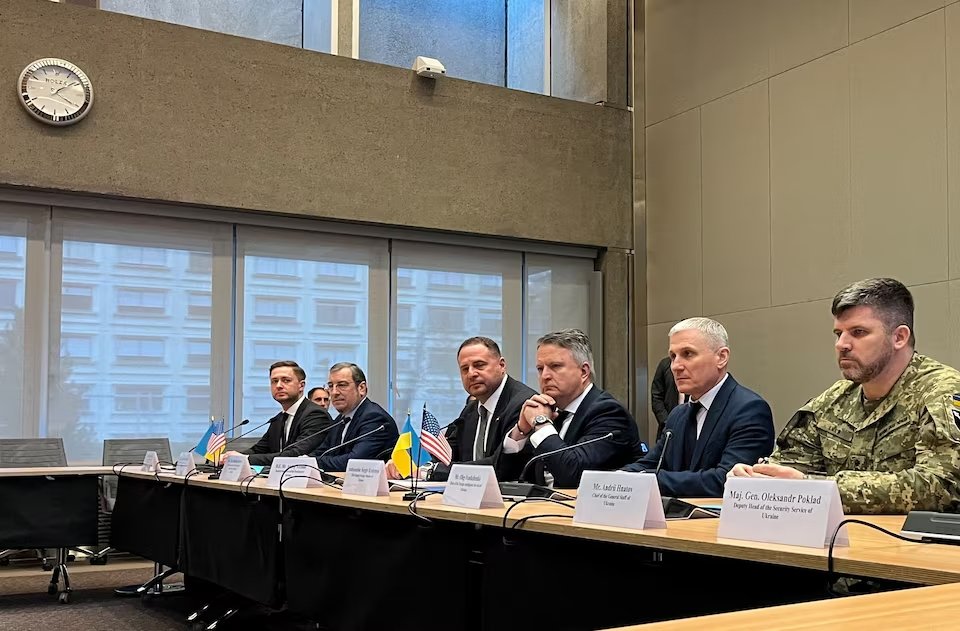
KYIV/GENEVA, Nov 24 – Efforts to bring an end to the ongoing war in Ukraine entered a new phase as officials from the United States and Ukraine worked to narrow divisions around a revised peace framework. The discussions, which took place in Geneva, signaled a shift in tone after earlier criticism that an initial American proposal had leaned too heavily toward Russian interests. While concrete details remained limited, both sides described the updated approach as a “refined peace plan” that could help move long stalled negotiations forward. The talks received cautious acknowledgment from several of Kyiv’s partners, although many stressed that significant work still lies ahead.
The Ukrainian delegation returned to Kyiv to brief national leadership on the conversation’s progress, while President Volodymyr Zelenskiy emphasized that discussions would continue. In the United States, President Trump hinted that momentum might finally be building, writing on Truth Social that meaningful progress could be emerging, although he advised observers to remain skeptical until results are visible.
Below is an expanded exploration of the evolving peace effort, Ukrainian concerns, the role of European allies, and the continuing violence that complicates diplomacy.
Growing Rift Over Initial Plan
The first version of the United States proposal, a 28 point framework, arrived with little warning for Ukraine and several European governments. It asked Ukraine to accept concessions involving territory, military limits, and long term strategic goals. Many in Kyiv saw these provisions as aligning too closely with demands long associated with Moscow. The unexpected nature of the proposal created tension and placed significant pressure on Zelenskiy at a politically vulnerable moment.
Ukraine’s leadership has been dealing with internal challenges, including the dismissal of two ministers after a corruption scandal. At the same time, Russian forces have made advances on the battlefield, sharpening public anxiety. Any plan perceived as weakening Ukraine’s position risks sparking backlash among citizens who have endured years of war and believe that sacrificing fundamental national interests would be unacceptable.
Zelenskiy confirmed that discussions remain active but noted that no public statement has been issued regarding how the revised plan addresses Ukraine’s core concerns. These concerns include ensuring long term security, preventing future aggression, and establishing a credible pathway to reconstruction. He underscored that Ukraine is searching for compromises that reinforce the country rather than undermine it.
Pressure for a Balanced Framework and European Counter Measures
As Kyiv and Washington began adjusting the initial proposal, European partners voiced unease. Several European nations said they had not been consulted on the original plan and quickly moved to draft a counter framework. Their version would keep current front lines in place to halt further fighting, postpone territorial discussions, and include a United States backed security guarantee similar to systems used in collective defense alliances.
European leaders addressed the matter during gatherings connected to an EU African Union summit in Luanda, where some attended in person and others joined by video. The leaders emphasized that any agreement must be built collectively rather than imposed. They also stressed that a balanced and sustainable arrangement is essential because peace cannot be achieved overnight or without commitments that benefit Ukraine.
Germany’s Chancellor Friedrich Merz commented that Washington had shown openness to developing a joint proposal with European partners and Ukraine. He described the Geneva discussions as producing an interim result rather than a final settlement. In the United Kingdom, Prime Minister Keir Starmer added that more negotiation is required to reach a just and lasting peace. Poland’s Prime Minister Donald Tusk emphasized that any deal should avoid weakening Ukraine or the broader European security landscape, noting that American involvement remains crucial.
Ukrainian Public Reaction and New Attacks Intensify Tensions
Within Ukraine, public sentiment surrounding the evolving negotiations remains cautious. Many Ukrainians remain skeptical of any agreement that appears to grant Russia long term strategic benefits. Some citizens openly voiced concern that accepting significant concessions would resemble capitulation. A Kyiv civil servant expressed that the initial American plan would be widely rejected by the Ukrainian public, noting that even if leaders sign such an agreement, ordinary people would bear the responsibility of implementing it, and they do not support compromises that threaten national sovereignty.
Meanwhile, new violence has underscored the urgency and difficulty of reaching peace. A deadly drone attack struck the city of Kharkiv, killing four people and injuring others. Emergency responders described scenes of devastation, including families caught beneath rubble. One rescuer explained that children survived the attack, although a woman in the family lost her life. The tragedy added to the emotional strain on Ukrainians who face frequent bombardments.
Across the border, Russian air defenses intercepted Ukrainian drones targeting areas near Moscow, temporarily grounding flights at several airports. Reports also indicated that a drone strike disrupted electricity for thousands near the Russian capital, a rare instance of infrastructure damage on Russian territory mirroring the energy assaults that Ukrainians have endured for months.
As negotiations continue, Kyiv insists that Russia must contribute to rebuilding Ukraine and that decisions on the use of frozen Russian assets remain vital. Zelenskiy may travel to the United States soon to address the most sensitive points of the proposal directly with Trump, highlighting how diplomatic efforts now intertwine with evolving political dynamics.