
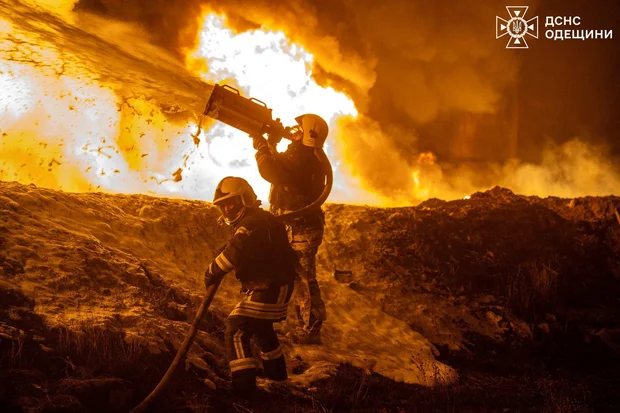
State Emergency Service of Ukraine in Odesa region/Handout via REUTERS
February 15 – A Ukrainian drone attack sparked a major fire at a Russian port on the Black Sea early Sunday, injuring at least two people and damaging key energy infrastructure, according to regional officials. The incident unfolded just days before diplomats from Russia and Ukraine are set to take part in another round of U.S.-brokered negotiations aimed at finding a path toward ending the nearly 4-year-long war, adding fresh tension to an already fragile diplomatic moment.
Authorities in Russia’s southern Krasnodar region said the strike hit the port of Taman, a strategically important hub used for oil exports and cargo transit across the Black Sea. Regional governor Veniamin Kondratyev said that an oil storage tank caught fire following the drone attack, while nearby warehouses and terminal facilities also sustained damage. Emergency services rushed to the site, with more than 100 firefighters and responders deployed to contain the blaze and prevent it from spreading further, according to Reuters.
The Taman port sits near the Kerch Strait and plays a significant role in Russia’s energy export network, making it a frequent target for Ukrainian long-range drone operations. Ukrainian officials have repeatedly said such strikes are designed to weaken Moscow’s ability to fund its military campaign by disrupting oil exports and logistics chains. Analysts have noted that attacks on ports and refineries have increased over the past year as Ukraine seeks to offset Russia’s battlefield advantages with asymmetric tactics.
While Russia dealt with the aftermath of the port fire, Ukrainian authorities reported overnight damage from falling debris linked to Russian drone activity. In Ukraine’s Odesa region, local officials said fragments from intercepted drones struck civilian and transport infrastructure, temporarily cutting electricity and water supplies in several areas. Emergency crews worked through the night to restore essential services, underscoring the daily toll of the conflict on civilian life far from the front lines. Ukrainian regional administrators, speaking to domestic media, said there were no immediate reports of fatalities from the Odesa incidents, though assessments were ongoing.
The exchange of strikes highlights the broader strategic goals pursued by both sides as winter conditions strain infrastructure and resources. Kyiv has accused Moscow of deliberately targeting energy facilities to deprive civilians of heating, light, and running water during the cold months, a tactic Ukrainian officials have described as an attempt to weaponize winter. Russia, for its part, has accused Ukraine of terrorism for hitting energy and transport sites on Russian territory.
These developments come as diplomats prepare for another round of talks mediated by the United States, scheduled for Tuesday and Wednesday in Geneva. The upcoming meetings will bring together envoys from both countries under a trilateral framework that has already convened twice this year in Abu Dhabi. While those earlier discussions produced limited agreements on humanitarian and technical issues, they failed to deliver progress toward a comprehensive ceasefire. This week’s session marks the first time the format has been hosted on European soil, and it takes place just days before the fourth anniversary of Russia’s full-scale invasion of Ukraine on Feb. 22.
Expectations for a breakthrough remain low. Neither Moscow nor Kyiv has publicly suggested that the Geneva talks will lead to an immediate halt in fighting. Still, officials from both sides have acknowledged that dialogue continues on narrower questions, including prisoner exchanges and the protection of certain types of infrastructure. Western diplomats involved in the process have said that maintaining channels of communication is essential, even when broader political compromises remain elusive.
Speaking at the Munich Security Conference over the weekend, Ukrainian President Volodymyr Zelenskyy signaled that deep disagreements persist over the shape of any future settlement. He emphasized that Ukraine remains focused on securing firm international guarantees that would protect the country from renewed aggression. Zelenskyy also raised concerns about a U.S.-proposed concept of a free trade zone in the Donbas region, an industrial area largely occupied by Russian forces and one of the most contentious issues in the negotiations.
According to Zelenskyy, Washington is pushing for a swift end to the conflict and would prefer to bundle multiple agreements into a single package. Kyiv, however, wants binding security guarantees to be signed first, arguing that economic or territorial arrangements without such assurances would leave Ukraine vulnerable in the long term. His remarks, reported by conference organizers and international media, reflected broader anxieties in Kyiv about trading short-term peace for long-term instability.
U.S. Secretary of State Marco Rubio met with Zelenskyy on the sidelines of the Munich conference. In a statement posted to social media afterward, Rubio said the discussions focused on Ukraine’s security needs as well as expanding defense and economic cooperation between the two countries. He added that President Donald Trump is seeking a solution that would permanently end the bloodshed, though he did not outline specific terms under consideration.
Concerns about security guarantees were echoed by U.S. lawmakers attending the conference. Senator Jeanne Shaheen, the ranking member of the Senate Foreign Relations Committee, warned that any peace agreement lacking credible enforcement mechanisms could pave the way for renewed conflict. Speaking to reporters in Munich, she said Russia’s military posture suggested ambitions extending beyond Ukraine, making durable guarantees essential for lasting stability.
European leaders have also weighed in, cautioning against concessions that could undermine Ukraine’s sovereignty. European Union foreign policy chief Kaja Kallas said Russia appeared to be seeking at the negotiating table what it had failed to secure on the battlefield. She argued that Moscow was counting on the United States to pressure Kyiv into accepting terms favorable to Russia, including demands for sanctions relief and the unfreezing of Russian assets. Kallas stressed that such decisions ultimately rest with European governments, not Washington alone.
“If we want a sustainable peace, concessions must come from the Russian side as well,” she said during a panel discussion at the conference, according to remarks circulated by EU officials.