
GENEVA, Feb 18 – After two days of tense and closely watched negotiations in Geneva, talks aimed at ending the war between Ukraine and Russia concluded without any concrete progress. Despite mediation efforts led by the United States, the discussions ended with unresolved disagreements over territory, security guarantees, and control of critical infrastructure, underscoring how far apart the two sides remain more than four years into the conflict.
Ukrainian President Volodymyr Zelenskiy openly criticized what he described as mounting pressure from Washington for Kyiv to make concessions, while Russian representatives characterized the discussions as professional but extremely challenging. Although both delegations agreed in principle to continue dialogue, no timeline was announced for the next round, leaving uncertainty over when talks might resume.
Deadlock
The negotiations took place in Geneva, a city long associated with diplomacy, and were hosted at a secure hotel under heavy international scrutiny. The talks were facilitated by U.S. representatives, including special envoy Steve Witkoff and Trump’s son-in-law Jared Kushner. From the outset, expectations were restrained, and Ukrainian officials privately acknowledged that major breakthroughs were unlikely in the short term.
Speaking during the talks, Zelenskiy described the first day as difficult and later accused Moscow of deliberately slowing down negotiations. In a public message shared on X, he said that Russia was attempting to prolong discussions that, in his view, could already be nearing a decisive phase if approached in good faith. According to Ukrainian officials, this frustration stemmed from what they see as repeated Russian refusals to engage meaningfully on core issues.
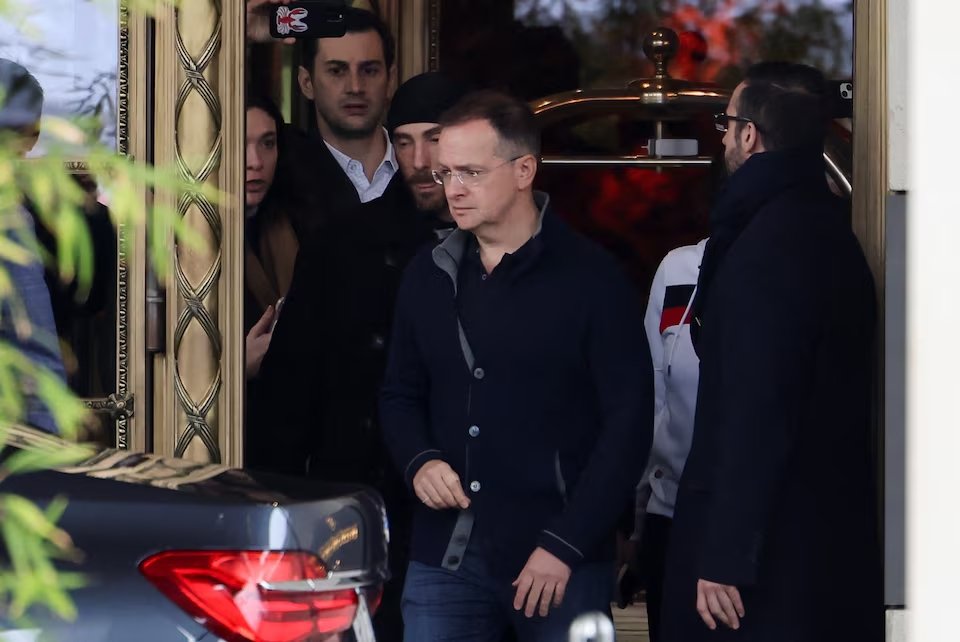
Russian negotiators offered a different perspective. The head of the Russian delegation, Vladimir Medinsky, said the discussions were tough but conducted in a business like manner. Ukrainian representatives have previously accused Medinsky of focusing on historical narratives rather than practical compromises, a criticism that resurfaced after the talks ended without tangible outcomes.
Despite the lack of formal progress, discussions did not stop entirely when the official sessions concluded. Representatives from Kyiv reported that Medinsky and Ukraine’s lead negotiator Rustem Umerov continued informal conversations for nearly two hours after the scheduled meetings ended. While these talks were described as candid, officials on both sides cautioned that they did not result in any immediate shifts in position.
Key sticking points remained unchanged. Ukrainian officials confirmed that the delegations discussed the future of occupied territories in eastern Ukraine and the status of the Zaporizhzhia Nuclear Power Plant, Europe’s largest nuclear facility. Russia continues to demand that Ukraine formally cede large parts of the eastern Donetsk region, including areas that Russian forces have not fully captured. Kyiv has consistently rejected this demand, arguing that any such concession would violate its sovereignty and constitution.
The nuclear power plant issue has proven equally intractable. Ukraine has proposed a joint arrangement involving the United States to manage and secure the facility, which has been under Russian control since the early stages of the war. Moscow has dismissed this idea as unacceptable, insisting that the plant falls within territory it now controls. Analysts familiar with the talks say neither side appears ready to compromise on this matter, given its strategic and symbolic importance.
Pressure
The Geneva talks unfolded against the backdrop of intensified diplomatic pressure from Washington. In recent days, President Trump has publicly suggested that Ukraine bears responsibility for ensuring a swift agreement. In comments to reporters earlier this week, he warned that Kyiv needed to move quickly toward a deal, remarks that sparked concern among Ukrainian officials about being pushed into unfavorable terms.
Zelenskiy responded to these comments in an interview with the U.S. news outlet Axios, saying it was unfair for Ukraine to be singled out for concessions while Russia faced no similar public demands. He emphasized that any agreement requiring Ukraine to surrender territory not fully occupied by Russian forces would be rejected by the public if put to a referendum. According to Zelenskiy, lasting peace must be built on consent and security guarantees, not coercion.
The timing of the talks is particularly sensitive. This week marks the fourth anniversary of Russia’s full scale invasion, a conflict that has killed hundreds of thousands, displaced millions, and devastated vast areas of Ukraine. Moscow continues to deny deliberately targeting civilians, even as repeated airstrikes have damaged energy infrastructure across the country. Ukrainian authorities say these attacks have left large numbers of people without heating or electricity during one of the harshest winters in recent memory.
Military realities on the ground continue to shape the diplomatic landscape. Russia currently occupies roughly 20% of Ukraine’s territory, including Crimea, which it annexed in 2014. Along the 1,200 kilometer frontline, Russian forces have made slow but steady advances since early 2024, gaining small amounts of territory at significant cost. Ukrainian officials argue that agreeing to territorial concessions now would only encourage further aggression in the future.
International involvement in the Geneva talks extended beyond the main delegations. Diplomats from France, Germany, and United Kingdom were present in the city and received briefings on the discussions, though they did not participate directly. Kyiv has been urging European allies to take a more active role in the peace process, particularly in providing security guarantees should a ceasefire be reached.
U.S. military officials were also involved on the sidelines. According to a U.S. official speaking on background, Daniel Driscoll and Michael Adamski participated in separate three way military discussions on Wednesday, reflecting Washington’s broader engagement with both strategic and operational aspects of the conflict.
Russian media outlets quoted unnamed sources describing the talks as very tense, a characterization echoed by Umerov, who said his delegation had entered the negotiations without excessive expectations. For now, both sides say dialogue will continue, but without a scheduled date for further talks, momentum appears fragile.
As winter deepens and political calendars shift, particularly in the United States with congressional elections approaching later this year, Ukrainian leaders have expressed concern that international focus could drift away from the conflict. For Kyiv, securing sustained attention and concrete security assurances remains as critical as any territorial discussion. For Moscow, maintaining leverage on the battlefield continues to inform its negotiating stance.
The Geneva talks, while inconclusive, highlighted both the necessity of continued engagement and the profound obstacles that still stand in the way of ending Europe’s largest conflict since World War II.