
WASHINGTON/TEHRAN, April 5 – Tensions between the United States and Iran escalated sharply on Sunday as President Donald Trump delivered a blunt warning tied to a looming deadline over the Strait of Hormuz, while new details surfaced about a dramatic rescue mission involving a downed American aviator inside Iranian territory. The developments come amid a rapidly intensifying conflict that has already disrupted global energy markets, strained diplomatic channels, and raised fears of a broader regional war.
Trump’s latest remarks, delivered through Truth Social, signaled a willingness to expand military operations against Iran’s infrastructure if key maritime routes are not reopened. At the same time, officials from both sides offered conflicting accounts of a high-risk U.S. rescue operation, underscoring the fog of war surrounding the ongoing crisis.
Rising Threats Over Strait of Hormuz
President Trump issued a stark ultimatum to Tehran, demanding that Iran ensure the immediate reopening of the Strait of Hormuz, a critical artery for global oil shipments. He warned that failure to comply by the stated deadline could result in direct strikes on vital Iranian infrastructure, including power grids and transportation networks.
The Strait of Hormuz remains one of the world’s most strategically important waterways, with a significant portion of global energy supplies passing through it daily. Any disruption has immediate ripple effects on international markets, as already seen in rising fuel prices and heightened economic uncertainty.
Iran, however, has shown no indication of yielding to U.S. pressure. Officials in Tehran have maintained a defiant stance, continuing military operations and signaling readiness to respond to any further escalation. Human rights organizations have also weighed in, warning about the humanitarian consequences of targeting infrastructure essential for civilian survival. Agnes Callamard, Secretary General of Amnesty International, criticized the rhetoric, stating publicly that such actions could place ordinary citizens at severe risk.
Legal experts have noted that while international law allows for attacks on infrastructure under certain conditions, the threshold is high. Any action that disproportionately harms civilians could potentially violate the laws of armed conflict.
U.S. Describes Dramatic Rescue Mission Inside Iran
Amid the escalating rhetoric, attention has also focused on the rescue of a U.S. aviator whose aircraft crashed deep within Iranian territory. According to statements from President Trump, one crew member was seriously injured but successfully recovered from a remote mountainous region, while another was extracted shortly after the crash in a separate operation.
A senior U.S. administration official, speaking anonymously due to the sensitivity of the mission, revealed that intelligence agencies employed deceptive tactics to facilitate the rescue. The Central Intelligence Agency reportedly spread misleading information within Iran, suggesting that the pilot had already been located and was being moved, creating confusion among Iranian forces.
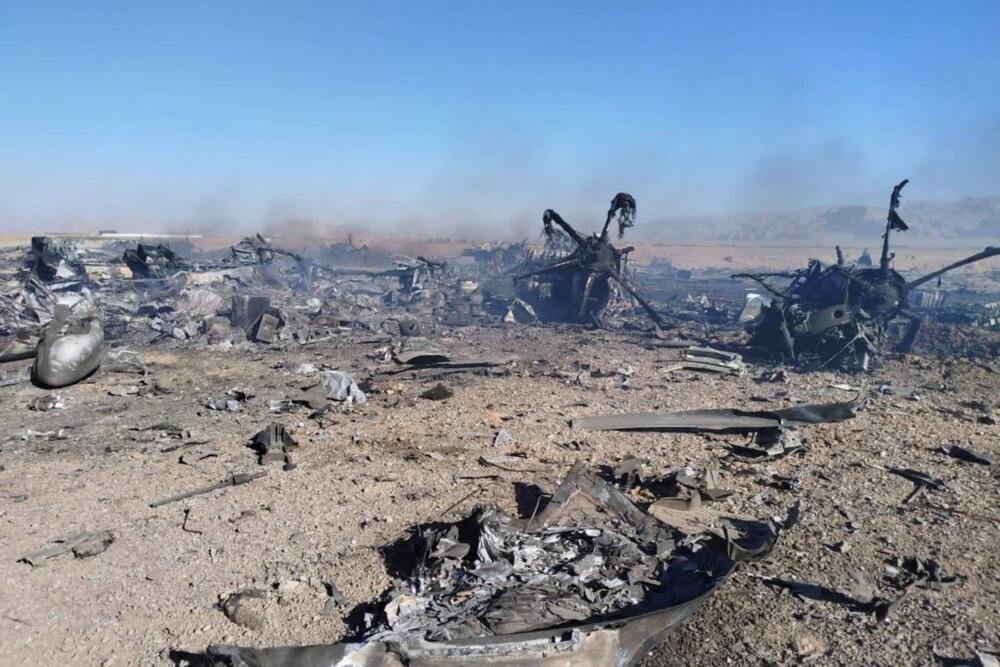
The aircraft involved, identified as an F-15E Strike Eagle, marked the first confirmed U.S. jet loss inside Iran since the war launched by the U.S. and Israel on February 28. Additional complications arose during the rescue, with reports indicating that certain U.S. aircraft involved in the operation were destroyed. A regional intelligence source indicated that at least two transport planes were deliberately taken out due to technical failures, though Iranian state media claimed these were shot down by air defenses.
Iran’s military command, in statements carried by the IRNA news agency, asserted that multiple American aircraft were destroyed during the operation and warned of stronger retaliatory measures if attacks on Iranian territory continue. The conflicting narratives highlight the difficulty in independently verifying events on the ground.
Strikes Reported Across Gulf Nations
Beyond the immediate confrontation, the conflict is increasingly spilling across the region. Iranian drone and missile strikes have targeted infrastructure in several Gulf nations, including Kuwait, Bahrain, and the United Arab Emirates. Officials in Kuwait reported significant damage to power facilities and disruptions to water desalination systems, while Bahraini authorities confirmed fires at key oil storage sites. In the UAE, emergency crews responded to industrial fires linked to falling debris following intercepted aerial threats.
These attacks followed earlier strikes by Israel on Iranian economic assets, including petrochemical facilities that Israeli Prime Minister Benjamin Netanyahu said were tied to funding military operations. The widening scope of targets has intensified concerns about civilian harm and long-term economic damage.
Despite the rising violence, diplomatic efforts are still underway. Oman’s Foreign Ministry confirmed that discussions with Iranian representatives have focused on ensuring safe passage through the Strait of Hormuz. Egypt has also been actively engaged, with Foreign Minister Badr Abdelatty holding talks with both U.S. and Iranian counterparts, as well as regional partners including Turkey and Pakistan.
Pakistan’s Foreign Ministry Ishaq Dar stated that it supports all initiatives aimed at reducing tensions and has offered to host direct talks between Washington and Tehran. Analysts suggest that such mediation efforts may be crucial in preventing further escalation, especially as allied groups in the region, including Houthi forces in Yemen, could reenter the conflict by targeting additional shipping routes.
The human toll continues to rise across multiple fronts. Reports indicate that thousands have been killed in Iran since the conflict began, while casualties have also been recorded in Israel, Lebanon, and among U.S. forces. Large-scale displacement, particularly in Lebanon, has added to the humanitarian crisis.