
WASHINGTON, March 16 – The ongoing conflict involving the United States, Israel, and Iran has entered its third week, intensifying geopolitical tensions across the Middle East and raising serious concerns for global energy markets. With military strikes continuing and the Strait of Hormuz effectively disrupted, oil prices have surged while diplomatic divisions between Washington and some of its long-standing allies have become increasingly visible.
President Donald Trump voiced frustration after several Western partners declined his request to deploy naval forces to escort commercial shipping through the critical maritime route. The refusal comes at a time when roughly one-fifth of the world’s oil and liquefied natural gas shipments normally pass through the strait, making it one of the most strategically important waterways in the global economy.
Meanwhile, Israel signaled that its military campaign against Iran is far from over, with officials revealing that detailed plans for additional strikes have already been prepared. At the same time, Iranian retaliatory attacks have targeted Israeli cities and U.S. military facilities in the region, while drone strikes have disrupted infrastructure in the UAE and Bahrain.
Allies Hold Back as Washington Pushes for Naval Escort Mission
The Strait of Hormuz, located between Iran and Oman, has become a focal point of the widening conflict. The narrow waterway links the Persian Gulf to the Gulf of Oman and is essential for global oil shipments. Recent attacks and naval mines deployed by Iranian forces have significantly disrupted traffic through the channel, forcing energy companies and governments to reassess shipping routes.
In response, the United States proposed an international naval operation aimed at protecting commercial vessels traveling through the strait. The initiative would involve allied warships escorting oil tankers and cargo vessels to ensure safe passage.
However, several major European countries have so far declined to participate.
German Chancellor Friedrich Merz stated in Berlin that his government currently lacks the legal authority to send military assets to the region. According to Merz, Germany has not received the necessary authorization from institutions such as NATO, the European Union, or the United Nations to participate in such a mission.
He also emphasized that Germany was not consulted before the United States and Israel launched their initial military actions against Iran. Because of this, Berlin does not consider direct military involvement appropriate at this stage.
Officials in Spain and Italy expressed similar positions, saying there are currently no immediate plans to deploy naval vessels to the region.
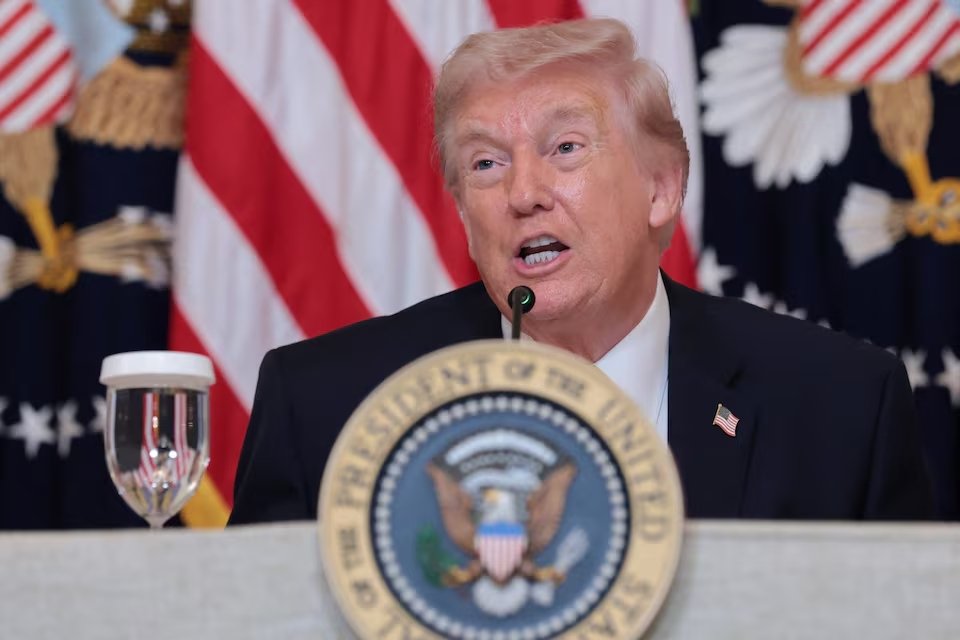
Speaking during a press conference in Washington, Trump criticized the hesitation shown by some allied governments. The president suggested that certain countries benefiting from decades of American military protection were now reluctant to assist when the United States requested support.
He acknowledged that some nations have expressed willingness to contribute but emphasized that the varying levels of commitment from partners were noticeable. According to Trump, the enthusiasm of allies for the mission would play a role in determining the next steps taken by Washington.
The lack of unified support highlights growing disagreements among Western governments over the handling of the conflict and the potential risks of deeper military involvement in the region.
Regional Conflict Expands as Strikes and Drone Attacks Intensify
While diplomatic tensions continue, the military situation on the ground has escalated rapidly. Israeli officials say the country still has a large number of potential targets inside Iran and intends to continue operations aimed at weakening Tehran’s military capabilities.
Lieutenant Colonel Nadav Shoshani, a spokesperson for the Israel Defense Forces, said the military has detailed operational plans for at least the next three weeks. These plans include attacks on ballistic missile infrastructure, nuclear facilities, and components of Iran’s security network.
According to Israeli military officials, the campaign is designed to significantly degrade Iran’s ability to threaten Israel in the future. Shoshani stated that thousands of potential targets remain under consideration.
Iran, however, has vowed to respond forcefully. The Islamic Revolutionary Guard Corps warned that it could target U.S. industrial facilities throughout the Middle East. Iranian officials also urged civilians living near American-owned industrial plants in the region to leave those areas.
Iranian Foreign Minister Abbas Araqchi stated that Tehran has neither requested a ceasefire nor exchanged diplomatic messages with Washington. In public comments, he accused some neighboring countries hosting U.S. military bases of supporting attacks against Iran.
Meanwhile, reports from Iranian media described civilian casualties following air strikes in multiple regions. Officials said several people were killed in overnight strikes in Markazi province, while separate attacks near Tehran caused additional casualties and structural damage.
In the Iranian capital, rescue teams from the Iranian Red Crescent Society were seen searching through debris after residential buildings were hit. Witnesses reported widespread disruption to internet access during the night, leaving many residents feeling cut off from outside communication.
Israel has also targeted locations linked to Iran’s aerospace and satellite programs. According to Israeli military statements, one research facility involved in satellite development was destroyed in Tehran.
The conflict has not been limited to Israel and Iran. Iranian missile and drone attacks have also targeted several locations across the Gulf region.
Air raid sirens sounded across Tel Aviv after missiles were launched toward Israeli territory. At the same time, Iran claimed responsibility for attacks against U.S. military facilities, including the Al Dhafra Air Base in UAE and a U.S. naval installation in Bahrain.
Drone strikes also affected the United Arab Emirates. Flights at Dubai International Airport were temporarily suspended after a nearby fuel storage facility was hit, sending large plumes of smoke into the sky. Authorities later restored operations after several hours.
Another attack targeted the energy infrastructure near Fujairah, where oil loading activities were briefly halted. The port is a critical export point for the UAE’s Murban crude, which accounts for a significant share of global oil supply.
Regional defenses were also activated elsewhere. Saudi officials reported intercepting dozens of drones over the country’s eastern region within a short period, though authorities said no injuries were reported.
Despite the disruption, global financial markets showed some signs of stabilization. Oil prices, which had surged above $100 per barrel amid fears of prolonged supply disruptions, later eased after U.S. Treasury Secretary Scott Bessent indicated that some Iranian fuel shipments might still be allowed to transit the strait.
Market analysts say the situation remains highly volatile, with the potential for further escalation if the conflict continues or spreads to additional countries in the region. For now, governments and energy companies around the world are closely monitoring developments as the crisis unfolds in one of the most critical energy corridors on the planet.