
SEOUL, Feb 26 – Samsung Electronics has formally introduced its next generation Galaxy S26 smartphone lineup, marking a pivotal moment for the South Korean technology giant as it navigates rising production costs, intensifying competition, and a global surge in demand for advanced memory chips. The launch comes at a time when the company is under pressure to defend its position in the premium smartphone market, while also balancing the economics of a semiconductor industry reshaped by the artificial intelligence boom.
The Galaxy S26 series arrives with higher price tags in several important markets, including the United States and South Korea. This decision reflects not only inflationary pressures but also the growing cost of key components, particularly memory chips. Industry observers note that Samsung’s move tests consumer appetite for premium devices at a time when economic uncertainty has made buyers more cautious about big ticket electronics purchases.
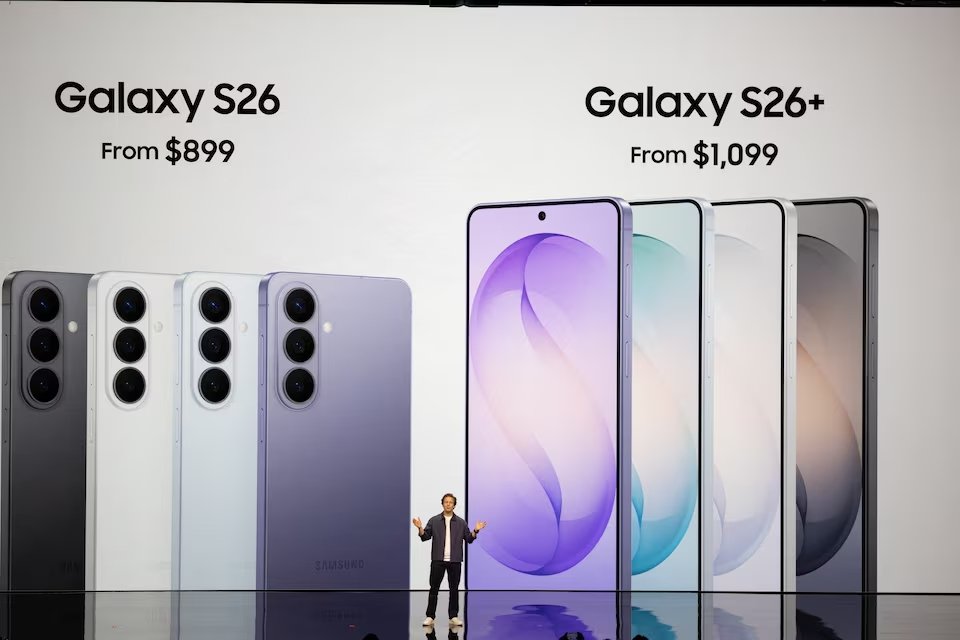
In the United States, Samsung has priced the base Galaxy S26 model at $899, representing an increase of nearly 5% compared with its predecessor. The S26 Plus now starts at $1,099, a sharper rise of around 10%. The Ultra variant, positioned as the most feature rich model in the lineup, retains its previous price point, suggesting Samsung is seeking to keep its highest end offering competitive against rival flagship devices.
The company has also implemented price increases in its home market. In South Korea, the base Galaxy S26 model is priced roughly nine percent higher than last year’s version. Market analysts interpret this as a reflection of higher domestic costs and Samsung’s confidence in brand loyalty among local consumers.
A central theme of the Galaxy S26 launch is artificial intelligence. Samsung has integrated advanced AI capabilities into the new devices, combining features developed in collaboration with Perplexity, alongside Google’s Gemini platform and a significantly upgraded version of Samsung’s own Bixby assistant. According to Samsung executives, these tools are designed to enhance productivity, search, photography, and on device personalization, bringing generative AI features closer to everyday smartphone use.
This AI driven push follows a challenging year for Samsung’s mobile division. The company lost its position as the world’s top smartphone vendor to Apple, which benefited from strong demand for iPhones in key growth markets such as China and India. Analysts say Samsung is betting that deeper AI integration and distinctive hardware features will help it regain momentum in the fiercely competitive premium segment.
Behind the pricing decisions lies a broader industry issue. Samsung has previously warned that the global supply of memory chips is tightening due to explosive demand from artificial intelligence applications. Companies building large scale AI infrastructure are consuming vast quantities of advanced memory, particularly high bandwidth memory used in data centers. This has driven up prices and squeezed availability for consumer electronics manufacturers.
Executives at Samsung have indicated that while strong memory demand is supporting profits in its semiconductor division, the same trend is putting pressure on margins in smartphones and display panels. Industry analysts point out that chipmakers are increasingly prioritizing higher margin components for servers and AI accelerators over parts destined for consumer devices, contributing to higher costs across the electronics supply chain.
Global technology companies including Meta, Google, and Microsoft have announced massive investments in AI infrastructure. This spending spree has intensified competition for memory supplies, with ripple effects felt by smartphone makers worldwide.
One notable shift in the Galaxy S26 lineup is Samsung’s decision to equip certain models with its in house Exynos processors. The previous Galaxy S25 series relied heavily on Snapdragon chips from Qualcomm. Analysts say the partial return to Exynos could help Samsung strengthen its chip design capabilities and potentially improve profitability by reducing reliance on external suppliers. However, performance comparisons between Exynos and Snapdragon processors remain a point of close scrutiny among consumers and reviewers.
Samsung has also emphasized hardware innovation in the new lineup. The Galaxy S26 Ultra introduces what the company describes as the industry’s first built in mobile privacy display. This feature limits viewing angles to prevent others from seeing sensitive information on the screen, a function aimed at professionals and privacy conscious users. Samsung believes such differentiation can justify premium pricing in an increasingly crowded market.
The company has announced that the Galaxy S26 series will begin rolling out globally on March 11. Early demand indicators will be closely watched by investors and competitors alike, as they may signal whether consumers are willing to absorb higher prices amid broader economic pressures.
Market research firm TrendForce has forecast a dramatic rise in conventional DRAM contract prices, estimating increases of between 90 and 95% in the January to March period compared with the final quarter of last year. Such projections underscore the scale of the challenge facing device makers dependent on memory intensive designs.
Even rivals are bracing for impact. Apple chief executive Tim Cook acknowledged during a recent earnings call that memory chip prices are expected to climb sharply. While he stopped short of confirming whether Apple would pass those costs on to consumers, his comments reinforced the view that higher component prices are becoming an industry wide concern rather than an isolated issue for Samsung.