
ISLAMABAD/WASHINGTON, April 12 – The fragile diplomatic momentum between the United States and Iran unraveled over the weekend, as high-stakes negotiations failed to produce a breakthrough, prompting President Donald Trump to escalate tensions with a dramatic military warning. In a forceful statement issued Sunday, Trump declared that the U.S. Navy would begin enforcing a blockade of the Strait of Hormuz, a critical maritime corridor that handles a significant portion of the world’s oil shipments.
The announcement comes at a delicate moment, just days after a temporary ceasefire paused nearly six weeks of intense conflict that has left thousands dead and rattled global markets. With both sides blaming each other for the breakdown in talks, the risk of renewed confrontation now looms large over an already volatile region.
Iran Blames US For Failure To Build Trust
President Trump’s remarks, delivered through his official platform Truth Social, signaled a sharp pivot from diplomacy to deterrence. He emphasized that U.S. naval forces would immediately begin monitoring and potentially blocking any vessels entering or exiting the Strait of Hormuz if they were found to have complied with Iranian-imposed transit fees. According to Trump, such payments would be treated as illegitimate under international norms.
He further stated that U.S. forces had been instructed to intercept ships in international waters if necessary and to neutralize any threats, including naval mines that Washington alleges Iran has deployed in the area. His language underscored the seriousness of the move, warning that any hostile action from Iranian forces would be met with overwhelming military response.
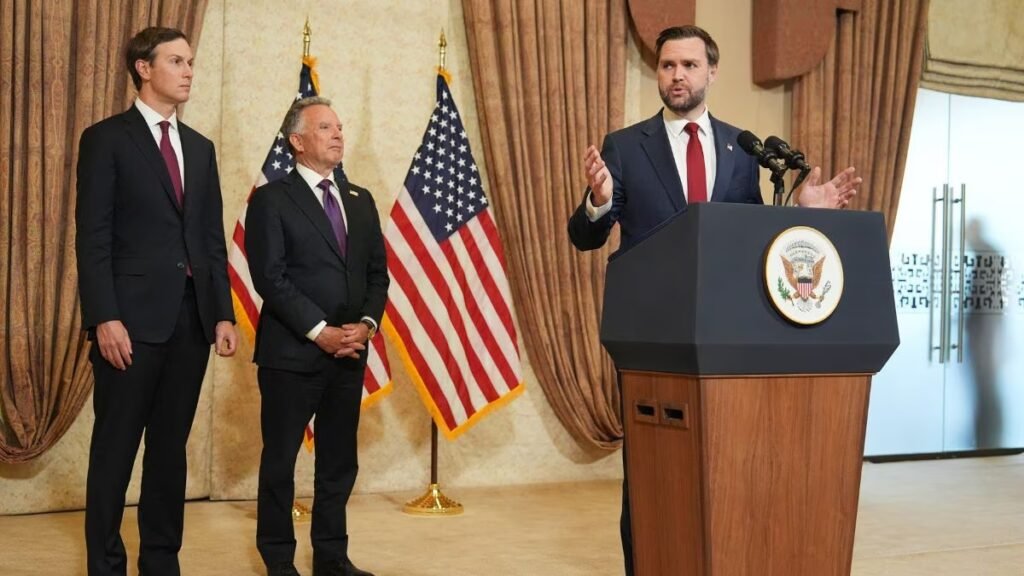
Vice President JD Vance, who led the American delegation during the talks held in Islamabad, echoed the administration’s frustration. Speaking to reporters, Vance said the United States had clearly outlined its non-negotiable conditions, particularly regarding Iran’s nuclear ambitions. He stressed that Washington’s primary objective remains ensuring that Tehran does not develop nuclear weapons, describing it as a fundamental security concern.
According to Vance, while some progress had been made during the discussions, the core disagreements proved insurmountable. He indicated that Iran ultimately chose not to accept key terms proposed by the U.S., leading to the collapse of the negotiations.
On the Iranian side, senior officials offered a starkly different interpretation. Parliamentary Speaker Mohammad Baqer Qalibaf, who participated in the talks alongside Foreign Minister Abbas Araqchi, publicly criticized the United States for failing to build trust. In a statement shared on social media, Qalibaf argued that Iran had approached the discussions with constructive proposals but was met with excessive demands
Iranian media outlets, including Tasnim News Agency, also suggested that while there had been alignment on certain issues, the most contentious sticking points remained Iran’s nuclear program and control over the Strait of Hormuz. These issues, deeply tied to national sovereignty and regional influence, continue to define the impasse.
What This Means for the Region and Global Trade
The Strait of Hormuz holds immense strategic importance, serving as a narrow passage through which nearly one-fifth of the world’s oil supply flows. Any disruption to traffic in this corridor has immediate global repercussions, particularly on energy prices and supply chains. Trump’s proposed blockade, if implemented, could significantly alter maritime dynamics and escalate tensions not only with Iran but also with other nations dependent on Gulf oil exports.
Tehran has long asserted its right to exert influence over the strait, and recent statements from Iranian officials suggest an even more assertive posture. Among their demands are the authority to manage transit through the waterway, financial reparations for damages sustained during the conflict, and a broader ceasefire that extends beyond Iran to include its regional allies, particularly in Lebanon.
The situation in Lebanon remains a parallel flashpoint. Despite the ceasefire between the U.S. and Iran, Israeli military operations against Hezbollah have continued. Israeli officials maintain that their actions are separate from the U.S.-Iran conflict, though Iran insists that any comprehensive peace arrangement must address hostilities involving its allies. Overnight strikes and retaliatory rocket fire along the Lebanon-Israel border highlight the fragility of the broader regional security environment.
Pakistan, which hosted the recent negotiations, has urged both sides to preserve the ceasefire and continue pursuing diplomatic solutions. Foreign Minister Ishaq Dar described the truce as “essential” for preventing further escalation and stabilizing the region. His remarks reflect broader international concern that the collapse of talks could reignite a wider conflict with far-reaching consequences.
Meanwhile, maritime activity in the Gulf remains cautious. Shipping data indicates that a small number of oil tankers have resumed transit through the Strait of Hormuz following the ceasefire, though many vessels are still waiting for clearer security assurances. The uncertainty surrounding U.S. enforcement measures and potential Iranian retaliation has created a tense environment for global trade.
At the heart of the dispute lies a fundamental clash of objectives. The United States is seeking unrestricted navigation through international waters and firm guarantees that Iran will halt any pursuit of nuclear weapons capability. Iran, on the other hand, continues to deny any intention of developing such weapons while demanding recognition of its regional role and economic rights.