
TOKYO, Feb 9 – Japan’s political landscape shifted decisively after Prime Minister Sanae Takaichi’s ruling party secured a commanding victory in Sunday’s general election, a result widely seen as strengthening her hand to pursue controversial tax cuts and expansionary fiscal policies. The outcome has intensified debate over how far the government can go in stimulating the economy without unsettling already jittery financial markets.
Takaichi’s Liberal Democratic Party, along with its coalition partners, captured 352 of the 465 in the lower house, delivering one of the strongest mandates seen in recent years. Central to the campaign was a promise to temporarily suspend the 8% sales tax on food for 2 years, a measure aimed at easing pressure on households struggling with higher living costs. Takaichi has repeatedly described the proposal as a long-held ambition, framing it as a necessary response to persistent inflation in essentials.
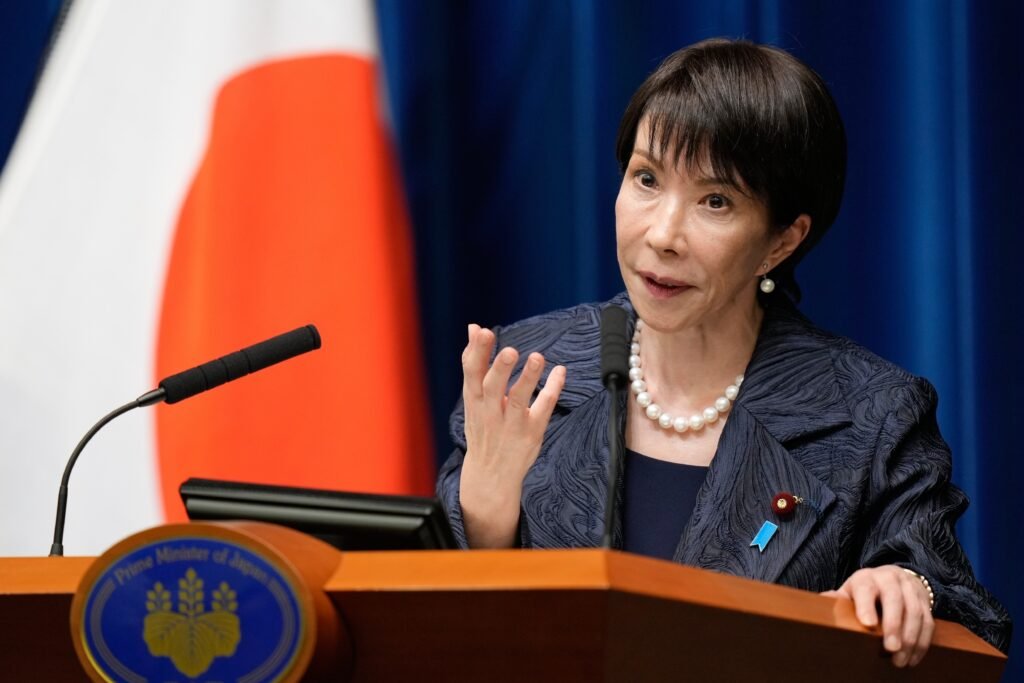
The scale of the victory has sharpened expectations that the prime minister will move quickly to turn campaign pledges into policy. She is expected to outline her post-election priorities at a news conference on Monday, where questions about funding, market reaction, and fiscal discipline are likely to dominate.
Political mandate strengthens fiscal push
The election result has altered calculations in both political and financial circles. Prior to the vote, some analysts speculated that a strong mandate might allow Takaichi to soften or delay the tax cut plan, particularly after opposition parties advocating even deeper reductions suffered heavy losses. Instead, the prime minister used brief television appearances on election night to reaffirm her commitment, saying the government would act swiftly to fulfill its promise to voters.
Within the ruling party, the landslide has also weakened the influence of fiscal conservatives who have long warned against aggressive stimulus. Several economists say the result effectively sidelines internal resistance, giving Takaichi greater freedom to challenge orthodox budgetary thinking that has traditionally been shaped by the finance ministry and senior party experts.
Ryutaro Kono, chief Japan economist at BNP Paribas, noted that the vote has materially changed the outlook. “The election outcome has clearly increased the likelihood of a consumption tax cut,” he said, adding that the prime minister has consistently argued that Japan’s fiscal stance has been overly restrictive. According to Kono, her vision points toward a rebalancing of policy priorities away from strict consolidation and toward growth support.
Markets responded swiftly to the political clarity. Japanese equities rallied on Monday, reflecting expectations of looser fiscal conditions, while government bonds sold off as investors priced in heavier pressure on public finances. The yen, which had weakened sharply in recent weeks, recovered some ground, though currency traders remained cautious.
The government is acutely aware of the sensitivity of financial markets. Chief Cabinet Secretary Minoru Kihara told reporters that authorities were closely monitoring foreign exchange movements with a strong sense of urgency, underscoring concerns that policy uncertainty could trigger further volatility.
Funding questions and market risks
Despite the political momentum, the central challenge facing Takaichi is how to pay for the proposed tax suspension. The measure is estimated to cost around ¥5 trillion per year, roughly equivalent to Japan’s annual spending on education. With public debt already about twice the size of the economy, the highest ratio among advanced nations, investors have been demanding clarity.
The prime minister has ruled out issuing new government bonds to cover the shortfall, a stance intended to reassure markets about fiscal responsibility. However, she has so far offered few concrete alternatives, saying details would emerge through cross-party discussions on social security reform and taxation. That lack of specificity has been a key factor behind recent bond market turbulence.
Speculation has grown around the possibility of using non-tax revenues, including income from state assets. Attention has focused in particular on Japan’s vast foreign exchange reserves, estimated at about $1.4 trillion, which are primarily held to support currency intervention. Any suggestion of tapping those reserves has raised alarms among investors, who worry it could imply selling foreign assets such as U.S. Treasury bonds, potentially straining relations with Washington and destabilizing global markets.
Analysts warn that prolonged uncertainty could prompt another wave of bond selling. Higher yields would increase the cost of servicing Japan’s already enormous debt burden, narrowing the government’s room for maneuver. At the same time, renewed weakness in the yen could push up import prices, especially for food and energy, eroding the relief that tax cuts are meant to provide.
Shinichi Ichikawa, senior fellow at Pictet Asset Management Japan, said financial markets may pose the toughest test for the new administration. “Winning the election does not automatically mean winning the confidence of investors,” he said. Ichikawa cautioned that sharp currency moves driven by fiscal concerns could feed back into higher prices, undermining public support for the government’s agenda.
Takaichi appears keenly aware of these risks. Since taking office in October last year, she has already moderated earlier proposals for larger spending packages after market backlash. Following Sunday’s victory, her public demeanor was notably restrained. In one interview, when asked why she appeared so serious despite the scale of the win and how she would take responsibility if policies fell short, she responded sharply, saying it was unfair to question someone preparing to give their all.